Rio de Janeiro/Practical advice
Rio is farther than it looks
A week in Rio is settled by geography long before anyone chooses a single thing to do.

At a glance
- CITY TRAVEL
- Allow for longer rides
- TOUGH HIKE
- Pedra da Gávea: 8 h
In this article
Look at Rio on a map and it reads as a strip. Beach along the bottom, city behind it, a few green patches inland, and five or six names you already recognize, all of them apparently within reach of each other. It is a reasonable thing to conclude from a map. It is also wrong, and the mistake costs whole afternoons.
The mountains here are not scenery, they are structure.
Granite runs through the middle of the city and out into the sea, the forest sits on top of the granite, and between them they cut Rio into pieces that look adjacent on paper and are not.
What the map does not show
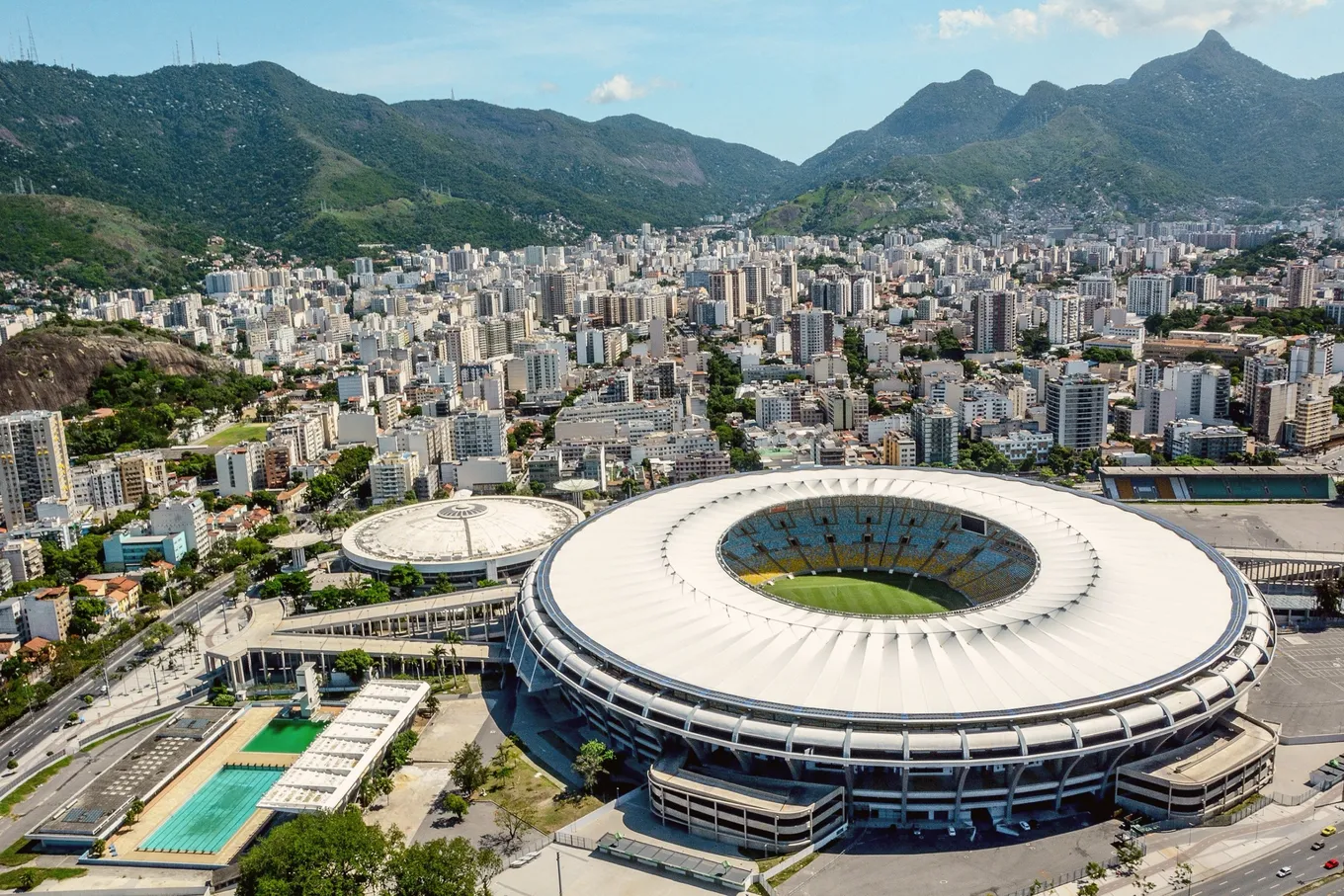
The Tijuca massif is not at the edge of Rio. It is in the middle of it. Christ the Redeemer stands inside a national park, and that park has neighborhoods pressed against it on every side. To get from one side to the other, you go around it or through a tunnel.
This is the part that catches people who have planned other cities well. In most places the green is at the edge, and you leave town to reach it. Here you leave one part of town to reach another, and the forest is the thing you drive around to do it.
So a day that reads as Copacabana in the morning, Santa Teresa after lunch, and Christ before sunset is not one day.
It is a plan drawn by someone looking at a map instead of a clock.
The far days are whole days
Three of the trips in our Rio catalog run twelve hours or more, door to door. Ilha Grande is fourteen. Arraial do Cabo is fourteen. Petrópolis is twelve. Every one of them opens with more than ninety minutes on the road, and closes with the same ninety minutes in the other direction.
Put two of them side by side and the week has no middle left.
That is not an argument against the trips. They earn the time they take. It is an observation about arithmetic. A seven day trip that gives three days to the road has four days left, and one of those is the first day, which the route keeps short on purpose.
The five longest activities in the catalog start between seven and eight in the morning. That is not dramatic. Rio is not a place of departures before dawn, the way high-altitude places are, and the sun is up here before seven all year. But an early start still spends the evening before it, and it spends the morning after.
The city days are what hold a week together
The short rows in the catalog do the quiet work. Santa Teresa is three hours. The Tijuca forest is five. Copacabana, walked the length of the promenade rather than crossed, is five. None of them is the reason anyone books a flight, and a week built only from the big days does not survive contact with the fourth morning.
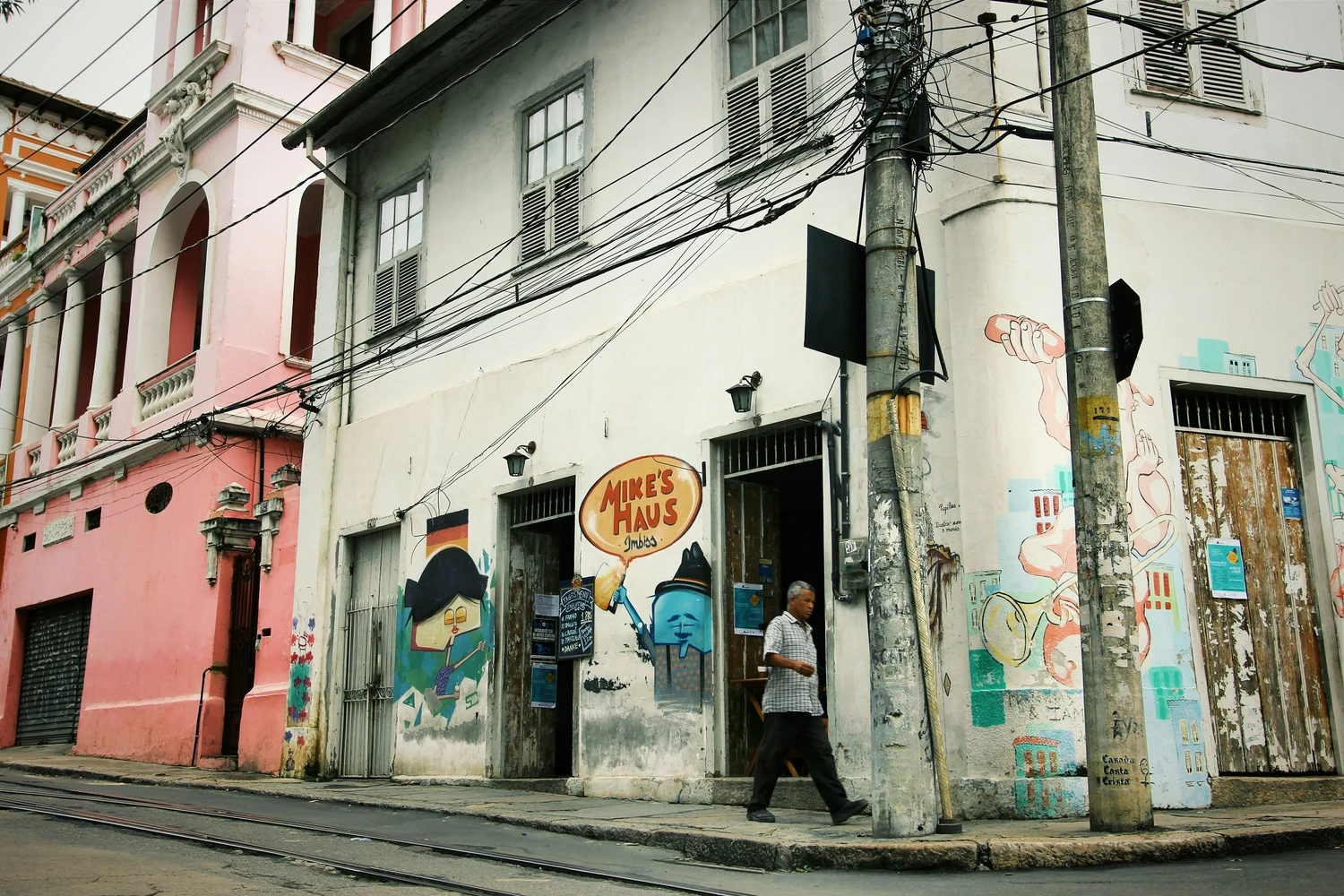
Santa Teresa is the clearest case. A tram climbs it, which tells you something before you have read a word about the place: this is a hill the city grew around rather than through. The streets turn cobbled, studios and galleries appear behind old facades, and the way down runs through tiled steps into Lapa, which fills up after dark.
We keep arriving at the same sentence from different directions. In Rio, the thing that decides the day is almost always the ground it is standing on.
There is a second kind of quiet work, and travelers plan for it least. Not restaurants, which everybody plans. The ordinary meal in the middle of an ordinary day.
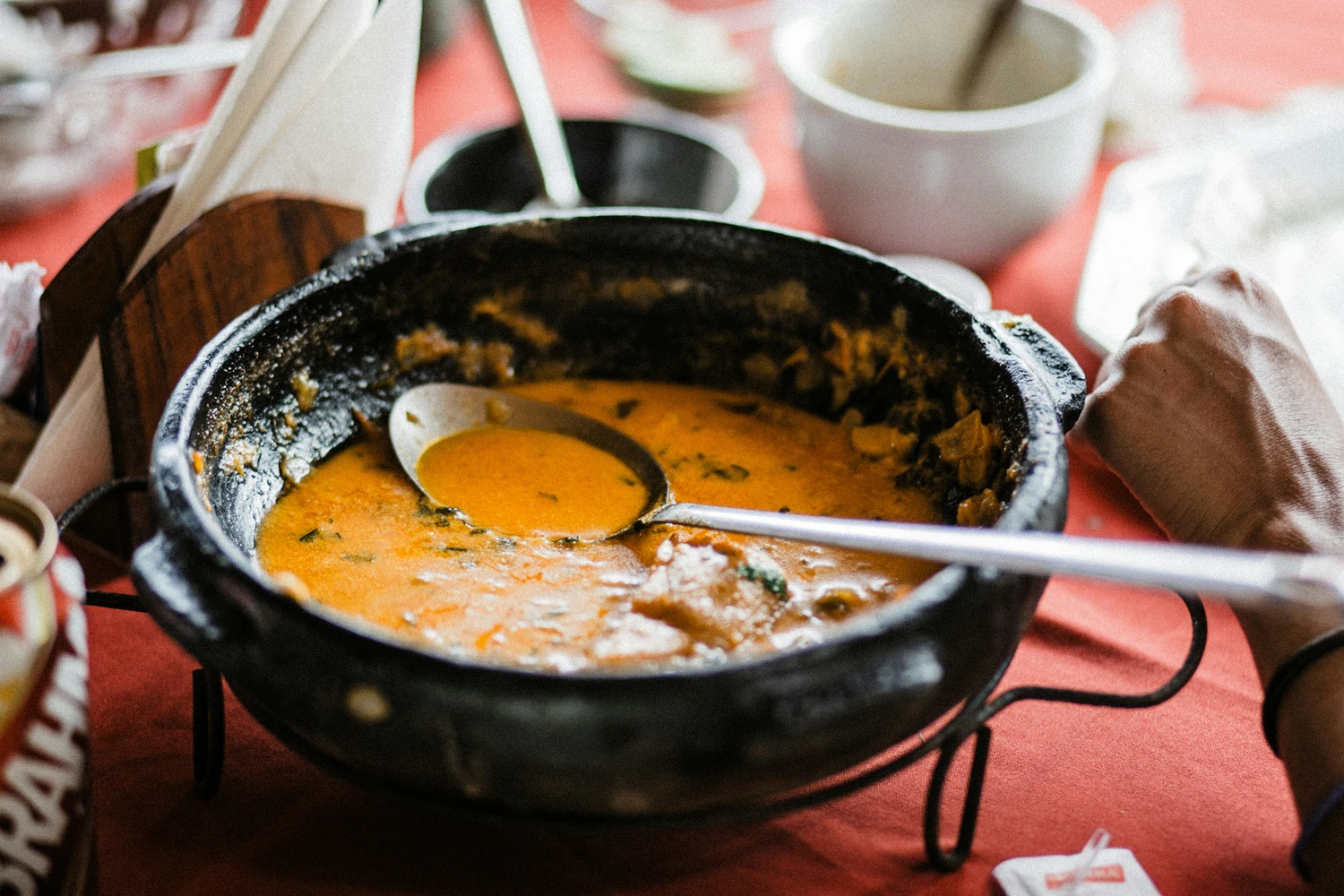
A pot of moqueca kept hot on its stand while people help themselves is not a meal that can be squeezed between two transfers. On a day with a fourteen hour trip inside it, there is no room for one. On a city day, making room for lunch is part of what the day is for.
No closed season, so the weather decides
Nothing in the Rio catalog has a closed season. All twenty-five places stay available across the year, and no month drops out of the calendar. That is not the same as saying nothing ever shuts, because weather and operations still close a gate now and then. But there is no season to plan around, and that sounds like freedom.
What moves is the weather. Three months carry a hundred and thirty five millimeters of rain or more, and all three fall in the warmer half of the year. July, the driest, carries forty. The difference between January and July is not whether the week can happen. It is what the week will feel like, and which hours of it you will want indoors.
A route that ignores the month is not wrong. It is only worse than the one that did not.
One hard day, and it should stay a choice
One day in the Rio catalog asks more than any other. Pedra da Gávea runs eight hours as a day, of which around five are walking, and it climbs more than eight hundred meters. The park itself calls the trail heavy, says it is for people with good fitness who are used to technical walking, and records that accidents and deaths have happened on it. It recommends a harness and rope, and an experienced companion.
It is not a default, and it should not become one. Most weeks in Rio do not include it, and the weeks that do give something else up to make room. That is the honest way to describe a hard day. Not as a highlight, but as a trade.
Why the order is most of the work
All of the above is knowable. Anyone with enough time and enough browser tabs can work it out on their own, and plenty of people do. The trouble is that it takes a long evening, and the mistakes it prevents are the kind nobody notices until the fourth day, sitting in traffic on a road they did not expect to be on.
So the arithmetic happens before the week is printed. Two fourteen hour boat days do not land next to each other. The hard climb never lands on the last day, and the day that follows it is always a lighter one. The last day is kept clear of the long excursions, because it belongs to a table rather than a road. None of that is taste. It is the same set of facts as this article, written down as rules.
Rio is not a hard city to visit. It is a hard city to put in order.
Every day in the route comes out of checked data: real durations, real driving bands, real opening months, real start times. Nothing is invented, and nothing is generated at the moment you press the button. The choosing is done by rules, and the rules were written from the ground up.

You can plan Rio yourself. People do, and they come home happy. But the difference between a good week here and a very good one is almost never which places were chosen. It is which order they went in, and how many hours were left between them.
Worth knowing
- Tijuca National Park covers almost 4,000 hectares, more than 11 times the size of New York's Central Park.
- The five longest trips start between seven and eight in the morning, so keep the evening before them short.
- Cash is still king. Cards are widely accepted. Keep small cash for beach kiosks, markets, and tips.