The days
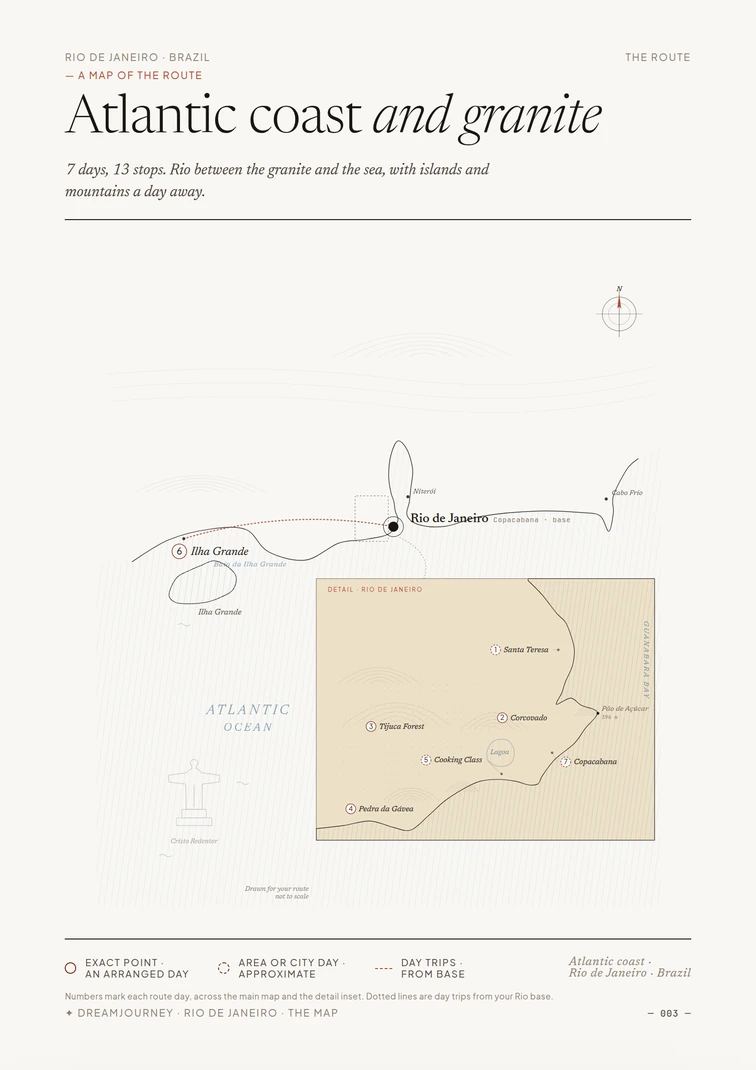
The shape of the 7 days
Hours of planned activity. A day beyond the city counts door to door.
- City daySanta Teresa or Copacabana5–7 h
- City dayChrist the Redeemer, Sugarloaf, and Selarón9 h
- City dayTijuca Forest or Dois Irmãos7–8.5 h
- Beyond the cityIlha Grande or Petrópolis14 h
- City dayThe Maracanã or Rocinha6.5–8.5 h
- Beyond, or the cityArraial do Cabo, or a day in the cityUp to 14 h
- City dayThe Feira Hippie or a cooking class5–7 h
A typical route. Yours follows your dates, pace, and interests.
Why this order
- The first day stays lightThe first day never carries a long excursion.
- Long days stay apartThe long days of the week are never adjacent.
- The far day stops being optionalAt seven days the fourth day is a long day, every time.
- Closed days are shownVerified closed days are shown with the place, so you can match the route to your actual dates before booking.
- Road time countsTime on the road is counted as time, not as a footnote.
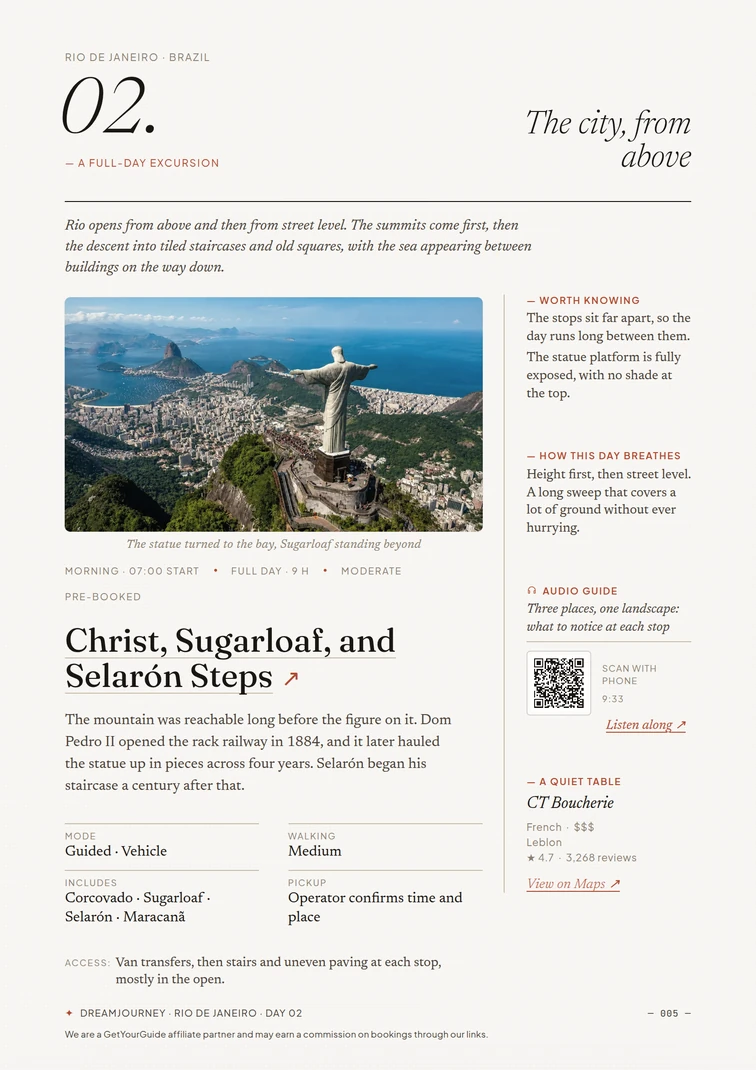

Pages from a Rio de Janeiro edition
The full Rio guide, page by page
Complete guides from $19
See a real Rio guideThe day beyond the city stops being a question, and the city itself stops being a shortlist.
The rhythm does not change. A light day, then a heavy one, alternating from the first day to the last, with the two longest days never touching. What changes is what the heavy days are allowed to be, and how much of the city fits around them.
Looking for the broader city guide? Read the Rio de Janeiro page.
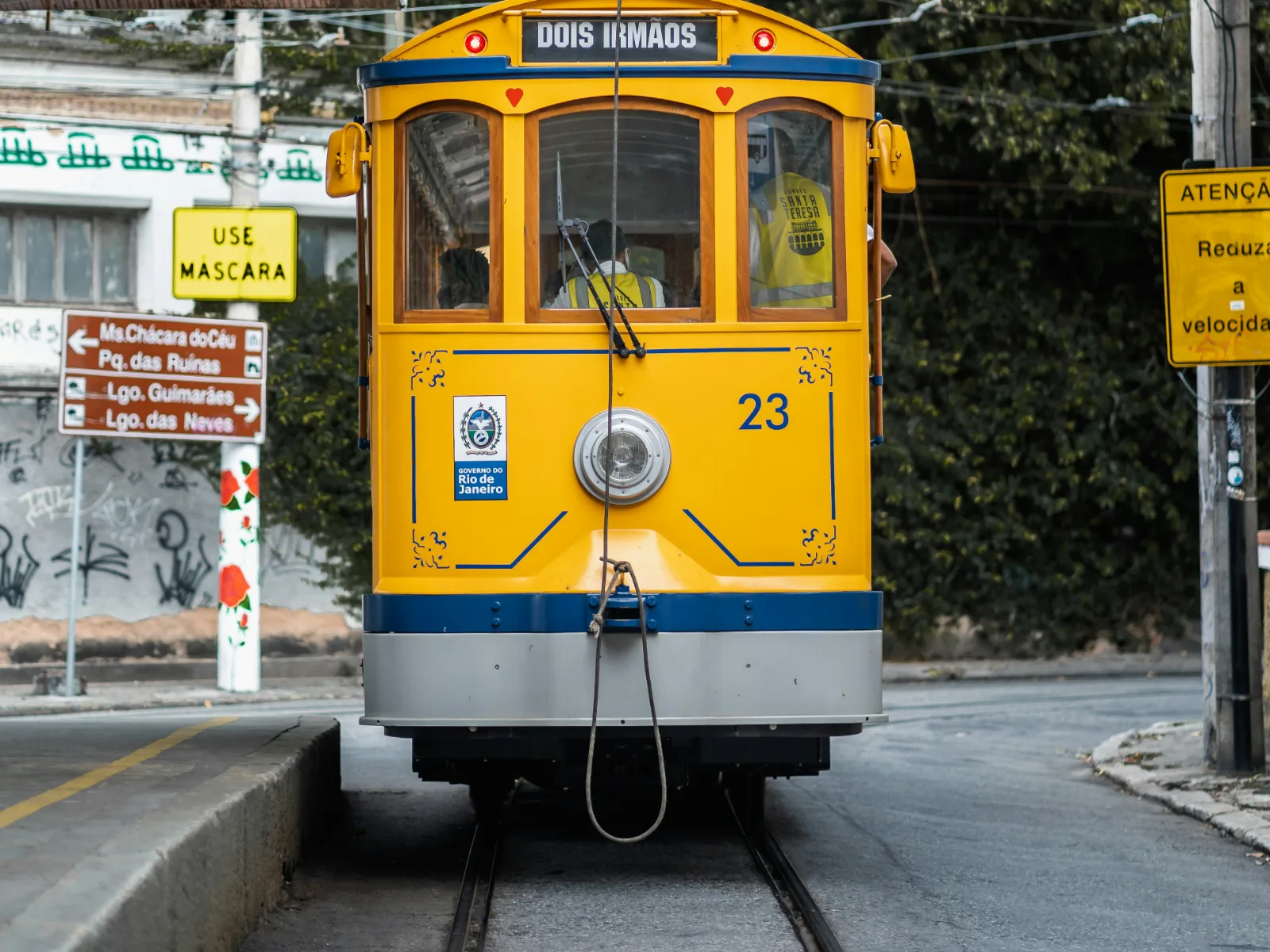
City day5–7 h
Santa Teresa or Copacabana
The first day stays short
The first day carries no long excursion: a long day here begins early and ends late, and the first day is the one the trip spends getting its bearings. What fits is a few hours on foot in one neighborhood.
The arches that carry the tram into Santa Teresa were built as an aqueduct. When it was retired in 1896 the city laid rails across the top, and the yellow bonde still climbs the same way.
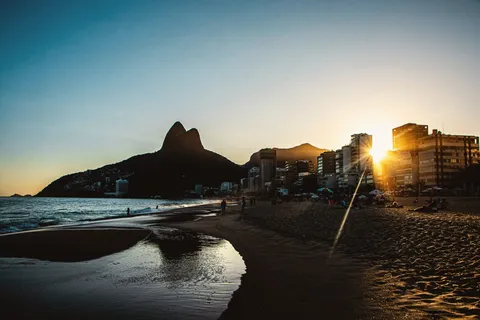
Or Copacabana, where Roberto Burle Marx redrew the promenade in 1970 and kept its wave, black basalt against white stone.
Or swap for
- Ipanema, two kilometers of sand that divides by lifeguard post, each with its own crowd
- The Museu do Amanhã, carried out over the old pier on wings of solar panels
City day9 h
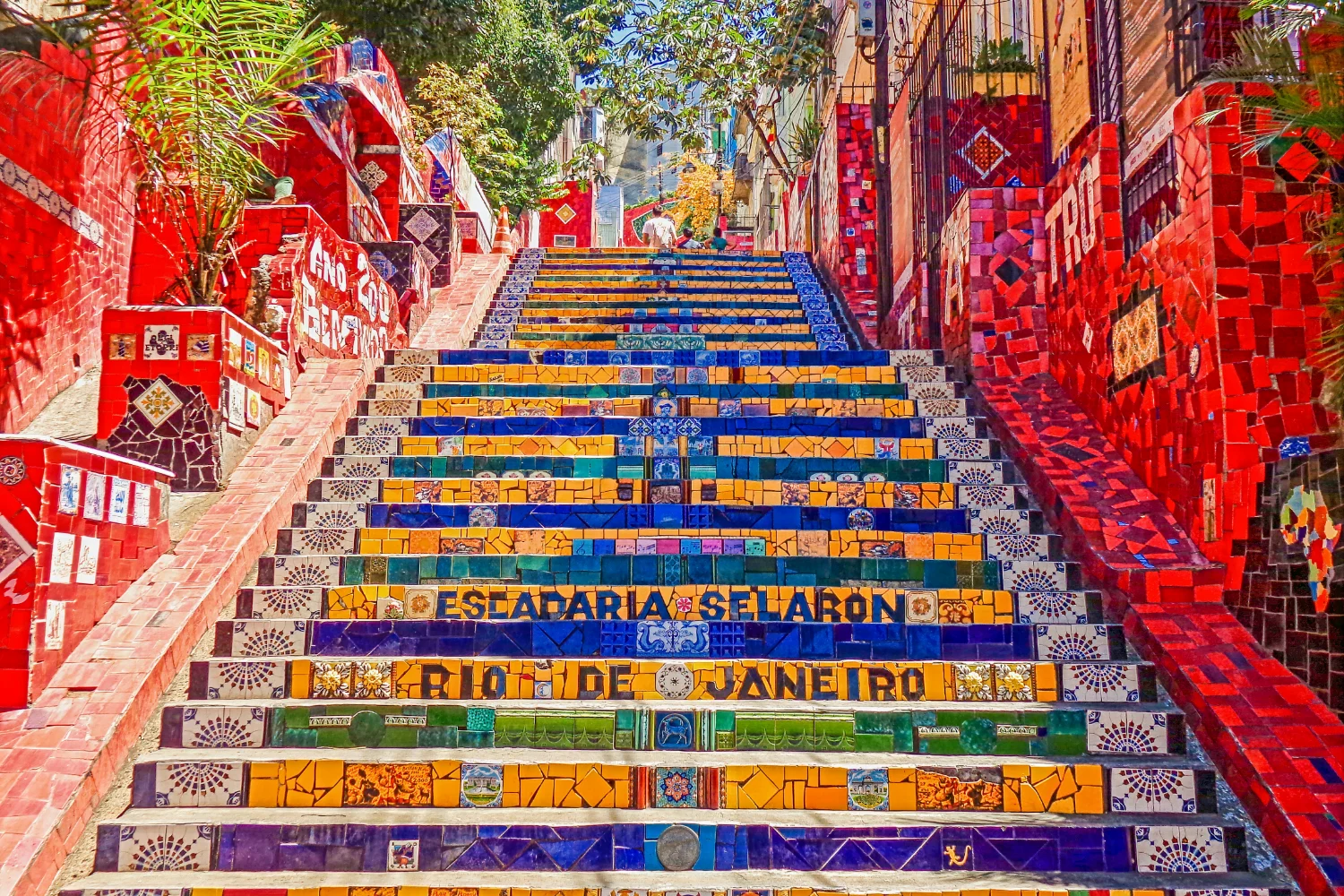
Christ the Redeemer, Sugarloaf, and Selarón
The day that takes nine hours
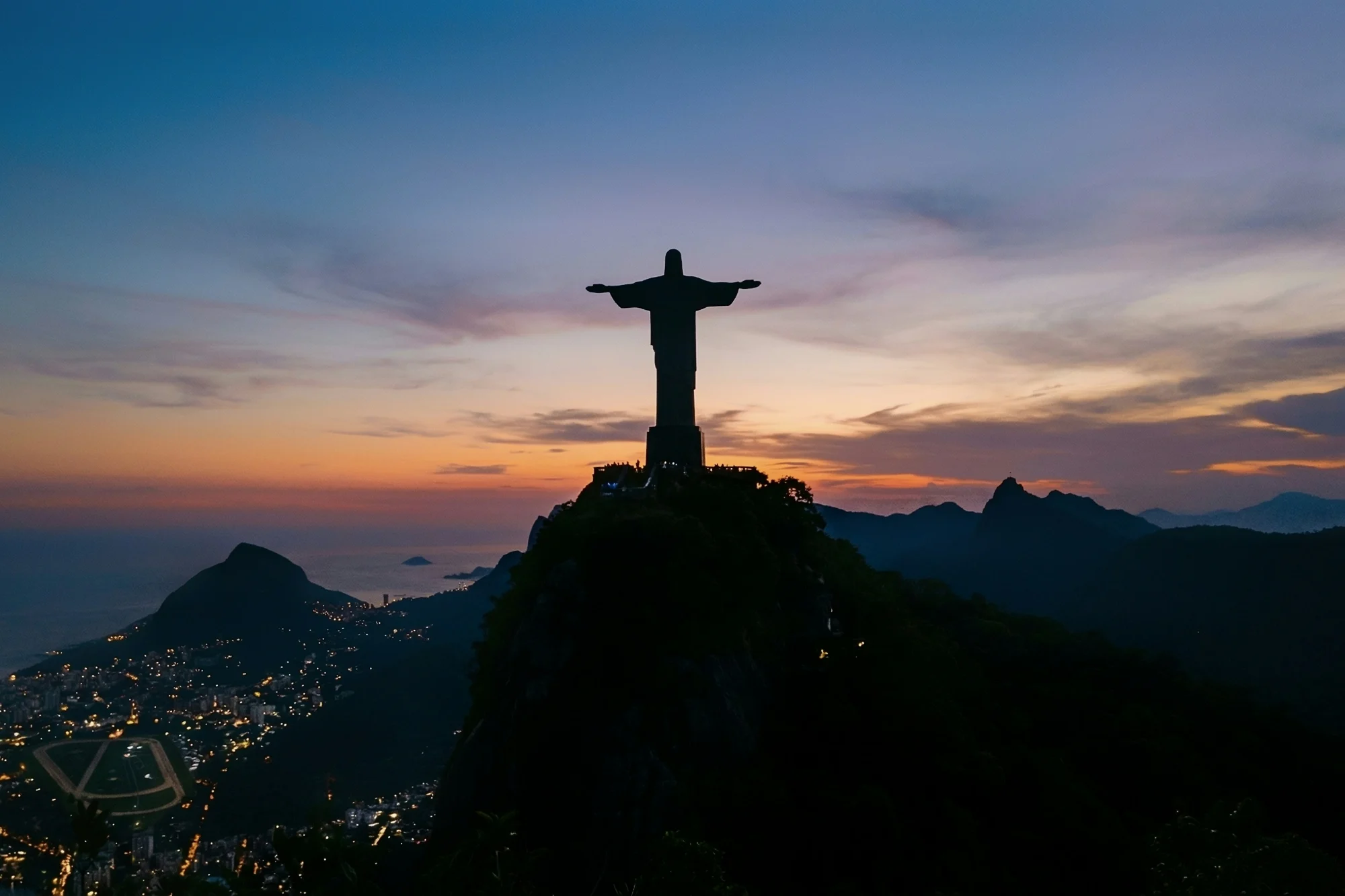
Christ the Redeemer stands on Corcovado, inside the forest. Sugarloaf rises at the mouth of the bay. With the Selarón steps they make the longest day this route ever keeps inside Rio, about nine hours, and as much of it goes to the city between the summits as to the summits themselves.
The pieces are older than they look and oddly ordered. Dom Pedro II opened the rack railway up Corcovado in 1884, and it later hauled the statue up in pieces across four years. Selarón began his staircase a century after the railway.
It goes second because it starts early, and the first day is the one the route keeps short.
With Signature, this day carries an original audio guide of its own, saved before you go and playing without a signal.
City day7–8.5 h
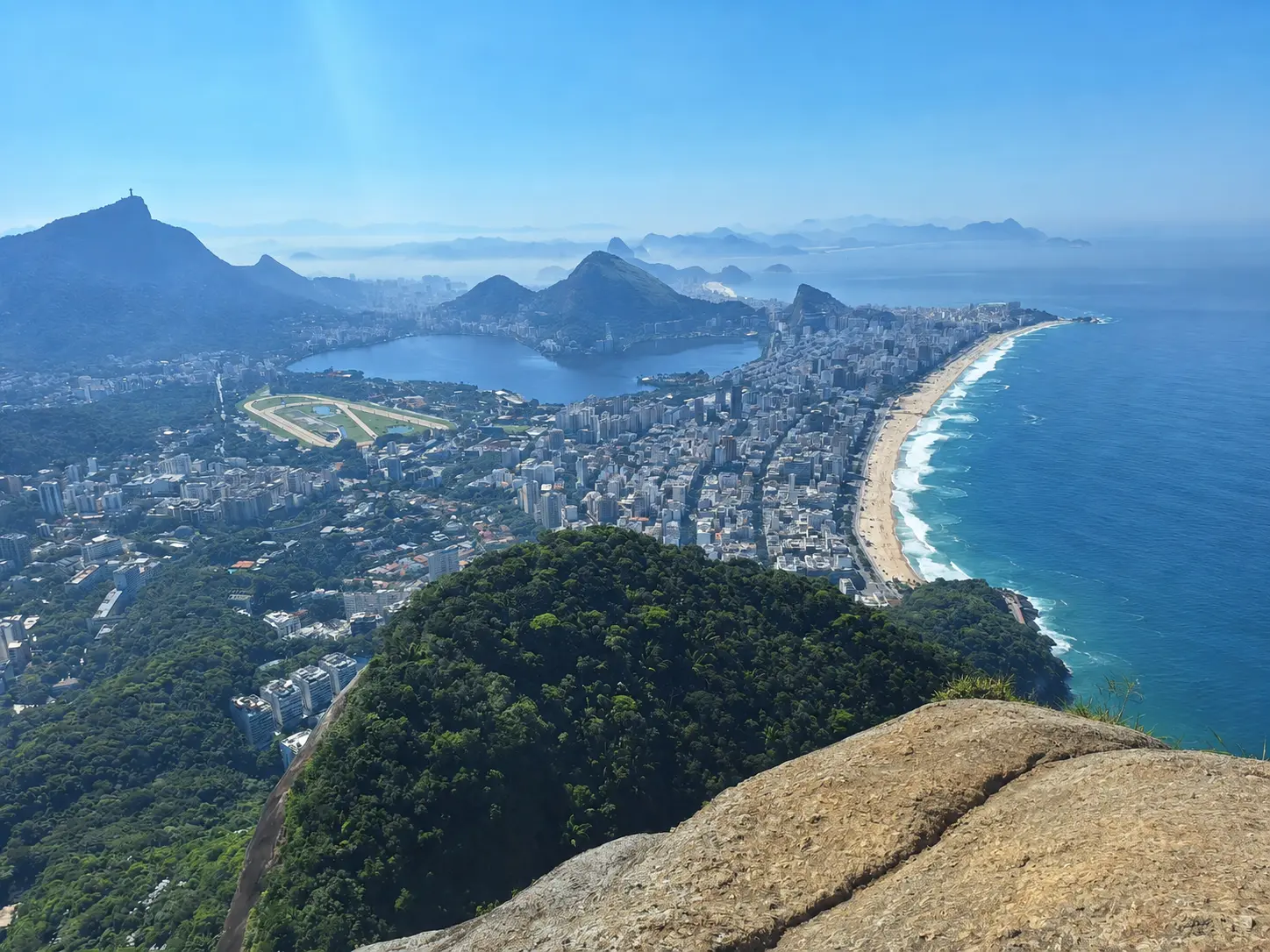
Tijuca Forest or Dois Irmãos
The day that absorbs the one before it
The day after a nine-hour day is never another one. It carries shorter pieces, chosen from what you said you came for, and nothing on it takes a whole day.
This is where the extra length starts to show: the forest above the city, or the trail that climbs out of Vidigal.
Or swap for
- A sunset sail across Guanabara Bay, past the forts that answered a French colony founded here in 1555
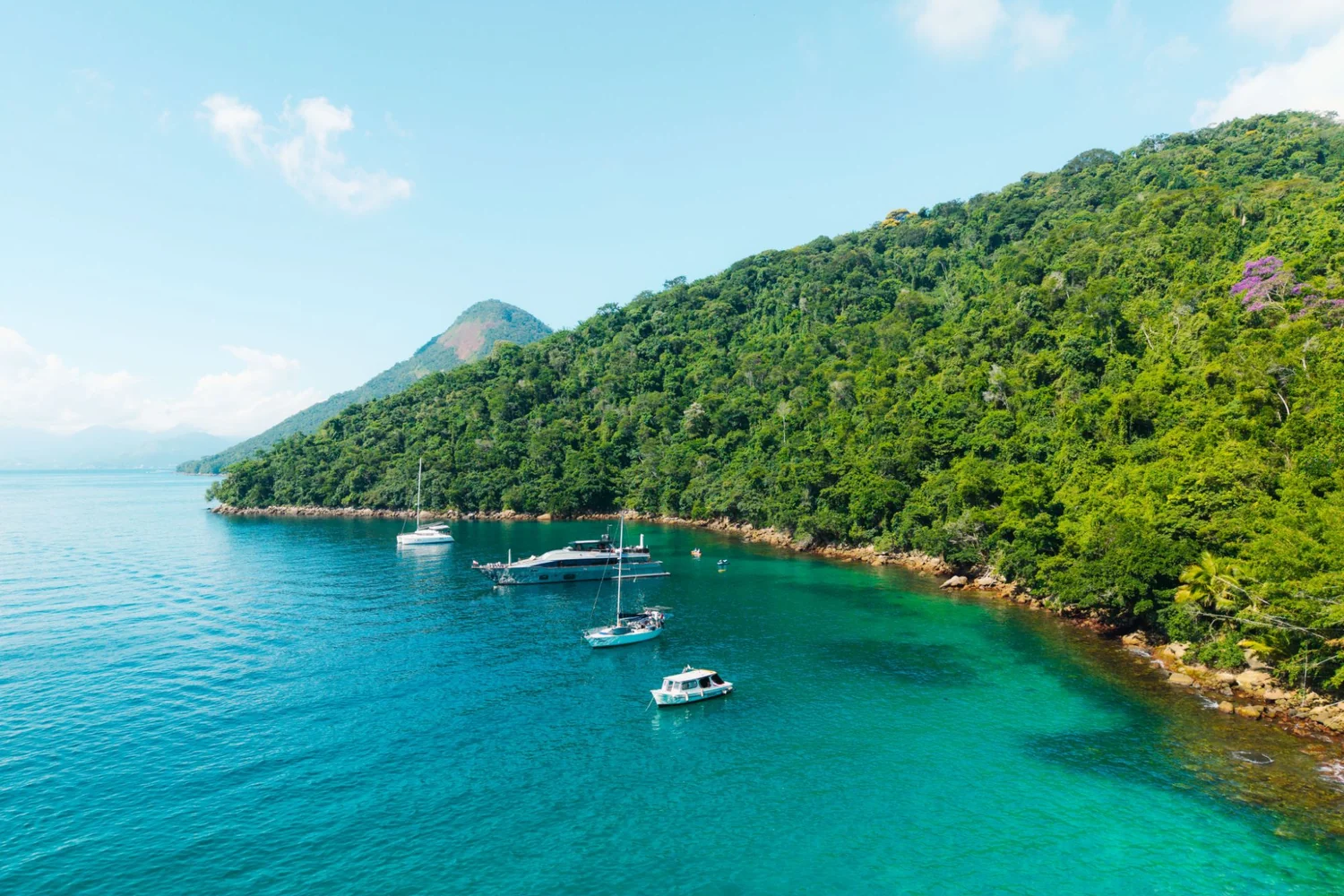
Beyond the city14 h
Ilha Grande or Petrópolis
The day that leaves the city
At seven days this day stops being a question: a long day always sits here, and it almost always leaves Rio, most often for Ilha Grande. In other weeks it goes up into the mountains instead, twelve hours to Petrópolis, where Brazil's last emperor kept his summer court more than 800 meters up, above the heat of the coast, and paid for the palace out of his own pocket over seventeen years.
It sits fourth for plain arithmetic. Put it earlier and it lands beside the nine-hour day. Put it last and the trip ends on a road, with no light day after it.
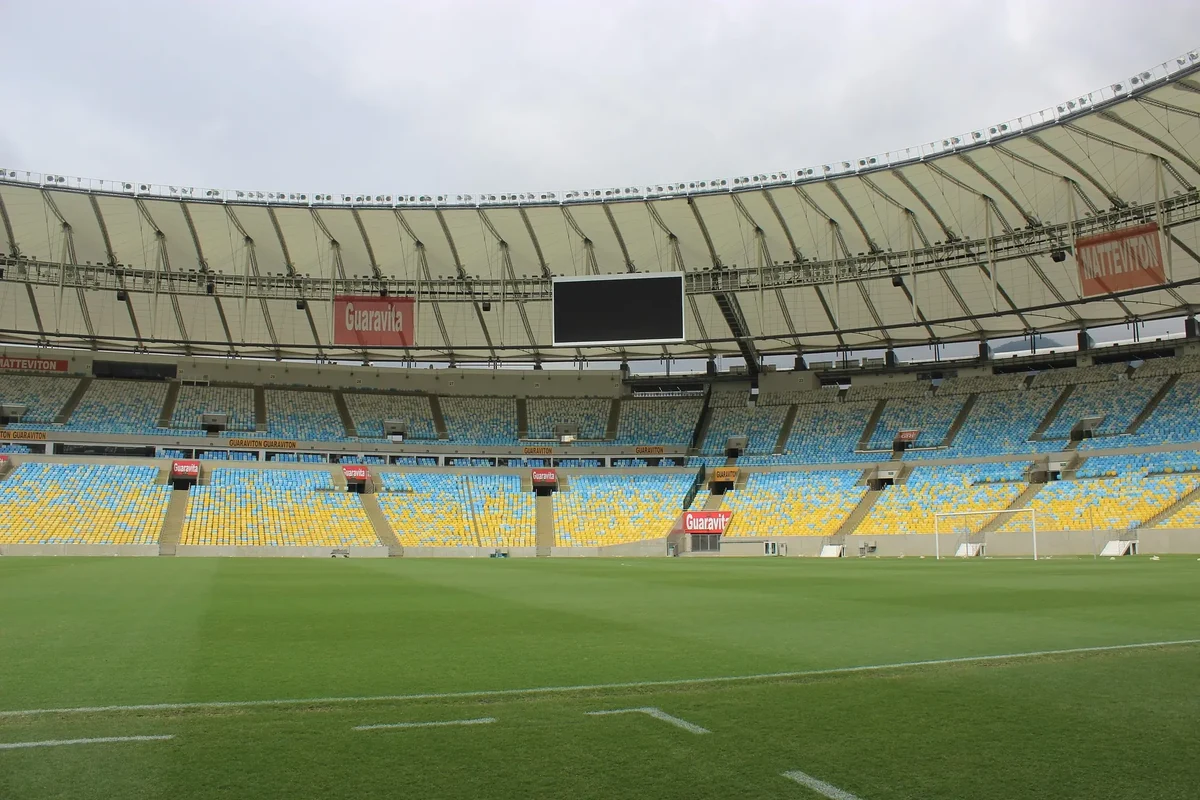
City day6.5–8.5 h
The Maracanã or Rocinha
The day the week breathes out
The day after the far day asks nothing. Nothing longer than an afternoon is placed on it, and what fills it is where the extra length pays.
Most weeks it goes to the Maracanã. On one afternoon in 1950 that bowl took 173,850 paying spectators for the World Cup final, and the visit goes where they could not: the changing room, the players' tunnel, the dugout, and the press room.
Or to Rocinha, walked with a guide from the community along the lanes and stairways its residents use to get home, on a tour built to observe rather than intrude.
Or swap for
- Carnival backstage at Samba City, where what crosses the avenue in a single night spends most of a year being built
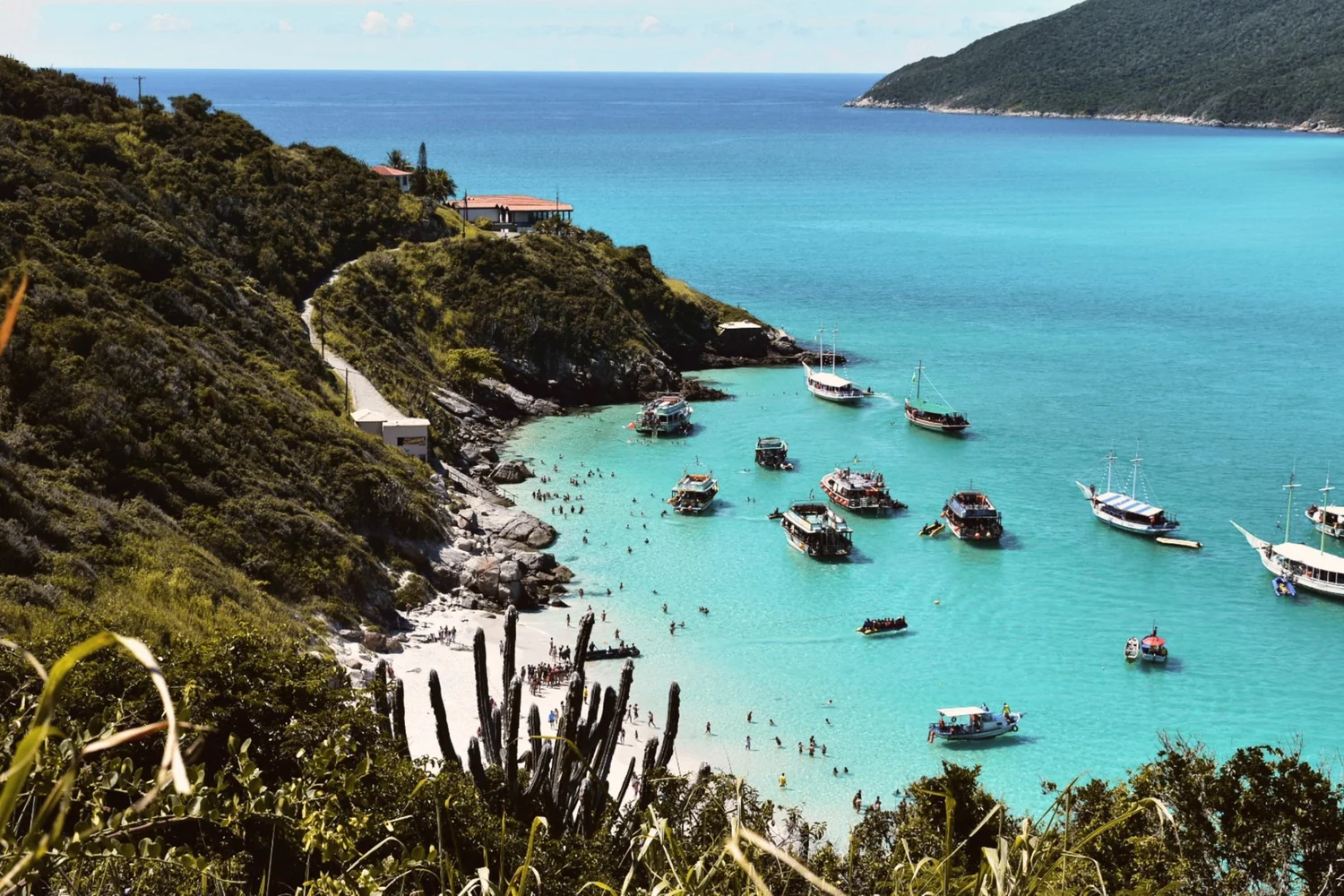
Beyond, or the cityUp to 14 h
Arraial do Cabo, or a day in the city
The second day away, when the pace asks for it
This is the day the extra length buys. At a slow or a balanced pace it stays in Rio and stays short. At an active pace it leaves the city a second time, and most often that means Arraial do Cabo: a cape where an upwelling Brazilians call ressurgência lifts cold, clear Atlantic water against the islands, and a 2023 law named the town Brazil's capital of diving.
A shorter trip has room for one long day, and the fourteen hours at Ilha Grande take it. This one needs a second.
Or swap for
- Half an hour by helicopter, the one way to see a city built along a coast no street can show you whole
- An hour of samba in Ipanema, taken down to walking pace and handed back at speed
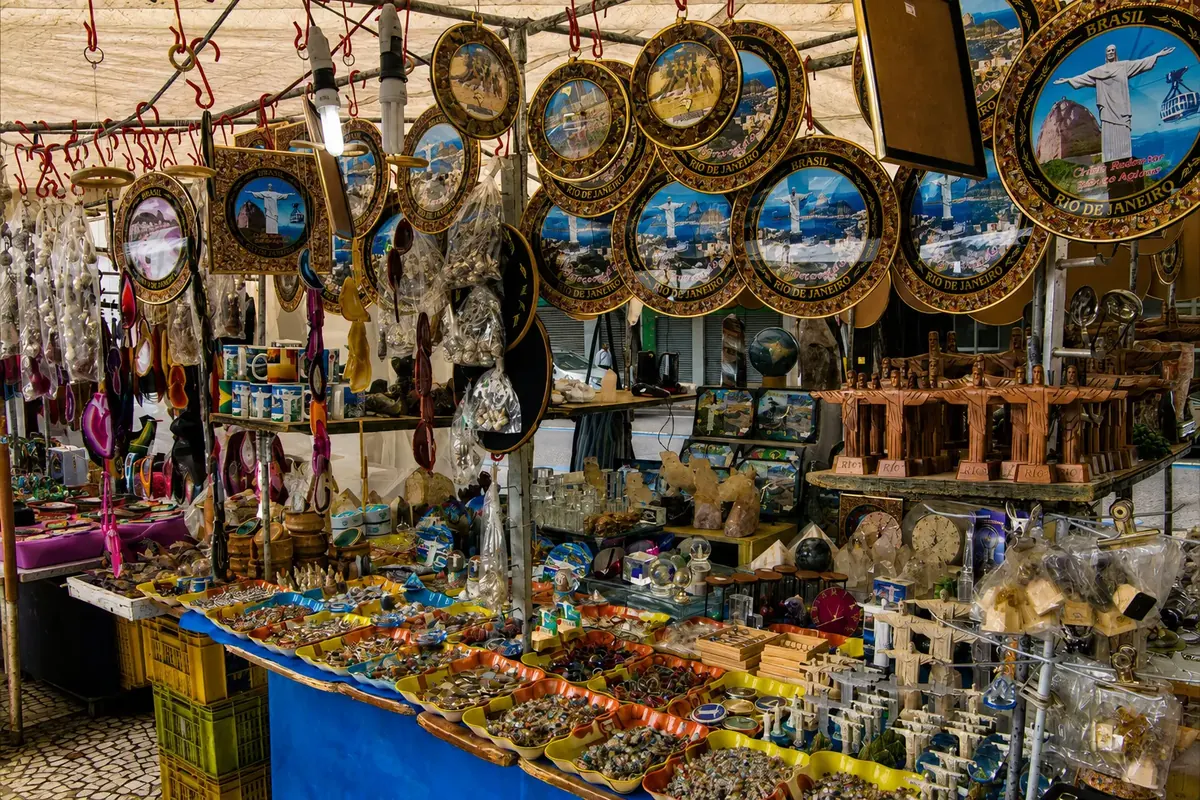
City day5–7 h
The Feira Hippie or a cooking class
The last day stays light
The last day carries no long excursion, which is the only promise this route makes about it. What it does carry can be a real morning rather than a placeholder. On a Sunday that is the Feira Hippie, running since 1968, when Praça General Osório fills with leather, silver, prints, and canvases, sold across the stall by the people who made them.
Or a cooking class: nine dishes in an afternoon, cooked rather than watched. What goes on the last day depends on how early you have to be at the airport.
When to go
Drier months · May–Oct
- Jan29°135
- Feb30°130
- Mar29°135
- Apr28°95
- May26°70
- Jun25°45
- Jul25°40
- Aug26°45
- Sep25°55
- Oct26°85
- Nov27°100
- Dec29°135
Day °CRain mm
The difference
Your 7 days in Rio. Built around you.
This is the shape. Build the route that fits inside it.
Complete guides from $1930-day money-back guarantee · One-time purchase
| What you get | This page | Yours |
|---|---|---|
| A typical route, day by day | ||
| Matched to your dates, pace, and interests | ||
| Up to 15 activities, by trip length | ||
| Up to 12 hotels and 12 restaurants | ||
| A PDF of up to 13 pages and a web guide | ||
| Audio guides at up to four highlights | Signature |
What changes, and what stays fixed
Pace
Your pace decides whether the route leaves Rio once or twice.
Fixed day
The nine-hour landmark day stays in place. Your answers shape the rest.
Extra time
The two added days belong as much to Rio itself as to the places beyond it.
Opening days
Where a place has verified closed days, they are shown with it, so you can check them against your dates.
Three long days out, and two places for them
Even at seven days the coast beyond Rio offers more than the week can take. Ilha Grande is fourteen hours, Arraial do Cabo is fourteen, Petrópolis is twelve, and a week has at most two days long enough to hold one of them. Only an active week leaves the city twice. None leave it three times.
One thing stays out for a different reason entirely. Rio traces its surf culture to the rock at Arpoador, where locals were riding improvised wooden boards by the 1950s, and a first lesson there takes an hour, on a break that stays gentle on a small swell. It is an hour the route never adds to a week on its own. It is here because the rock is worth knowing about, not because the week is promising it to you.

Questions, answered
Does the route assume I have already arrived?
Is seven days too long for Rio?
What does a seven-day Rio itinerary add over five days?
Can one week hold both Ilha Grande and Arraial do Cabo?
Should I take a full-day trip on my last day in Rio?
Before you go