Cancún/When to go
Sargassum in Cancún: what to expect, month by month
The brown seaweed comes and goes with the seasons. Here is what the monitoring says, which months bring the most, and how to check the beach before you go.

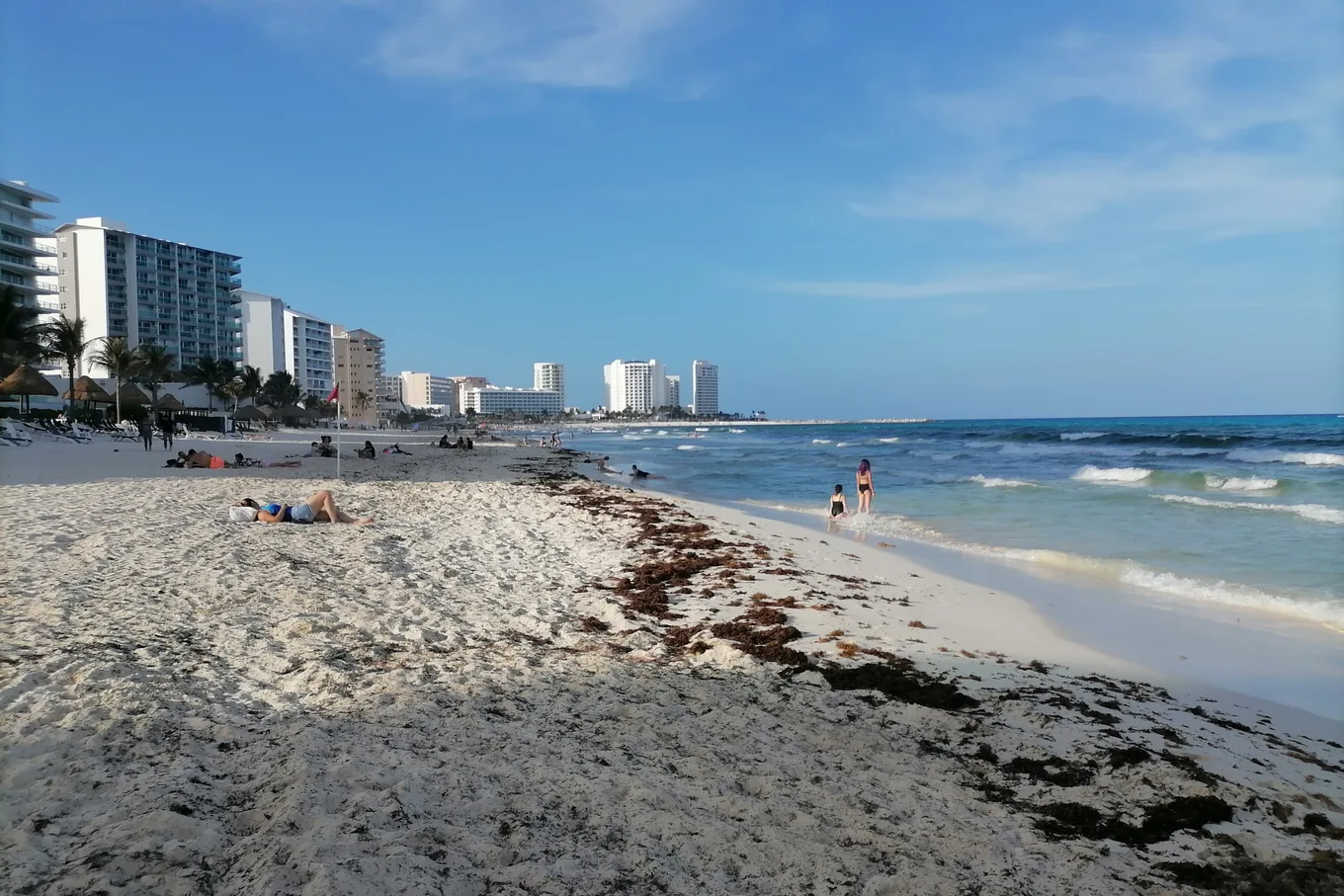
At a glance
- PEAK
- July and August
- QUIETEST
- January, on the beach
- CHECK
- The state traffic light
In this article
Sargassum is the brown seaweed that drifts across the Atlantic and washes up on Caribbean beaches. In Cancún it is the question behind almost every "is it a good time to go" search: will the water be turquoise, or will the sand be lined with seaweed?
No one can promise what a single beach will look like on a single day. What we can do is show what the official monitoring and the scientists who track it say, when the seaweed usually builds and fades, and how to check conditions yourself before you head to the sand. Every figure below comes from monitoring reports, research institutions, or the press that reports on them, with the date we read it.
Where the seaweed comes from
The sargassum that reaches Mexico comes from what scientists call the Great Atlantic Sargassum Belt. According to the University of South Florida, it first formed in 2011 and has appeared every year since except 2013. In 2018 it held more than 20 million tons of seaweed. In its October 2026 outlook, USF described a narrow belt still stretching from the coast of West Africa to the Gulf of Mexico.
How the official beach traffic light works
The state of Quintana Roo, where Cancún sits, publishes a sargassum traffic light, the Semáforo de Sargazo. It is issued by the state's environment department, the Secretaría de Ecología y Medio Ambiente (SEMA), on the Quintana Roo government portal, and daily maps by municipality appear on the state's Red de Monitoreo del Sargazo, according to the regional press. The report for November 6, 2026, covered 140 beach points, 100 in the north of the state and 40 in the south.
- BlueNo sargassum
- GreenLow presence
- YellowModerate
- OrangeAbundant
- RedExcessive
The practical habit is simple: look at the latest map the evening before a beach day, and pick a beach in blue or green.
Sargassum month by month
Two sources give the clearest picture of the season: the monthly outlook from the University of South Florida, which tracks the amount at sea across the Caribbean, and satellite work by researchers at UNAM, Mexico's national university, on the Mexican Caribbean coast itself.
| Months | What the sources say |
|---|---|
| January | Lowest month on the coast, UNAM 2025 |
| February to spring | Building, USF January 2026 |
| July and August | The peak, 78 percent of the year's area |
| September and October | Easing, USF September 2026 |
| November and December | Much lower, USF October 31, 2026 |
From this article, November 2026
July and August: the peak
A 2025 technical report from UNAM's LANOT satellite laboratory found that sargassum along the Mexican Caribbean coast was concentrated in July and August, which together held about 78 percent of the year's total area, with August as the peak month. In 2023, the university's Gaceta UNAM quoted researchers from its marine science institute who put the peak months more broadly at May to August.
September and October: easing
In its September 2026 outlook, USF reported that the total amount "continued to decline" in every region, and said beaching would continue "but not as severe as in the summer months."
November and December: much lower
USF's latest outlook, from October 31, 2026, expected the amount to keep decreasing "until possibly end of November or December," with some beaching still likely but "the severity is much lower." On the beaches, the state announced the official close of the 2026 season on November 4. Even so, Mexico's navy, SEMAR, was still clearing sargassum from Quintana Roo beaches in November, Isla Mujeres among them, according to Por Esto, so the traffic light is worth checking late in the year too.
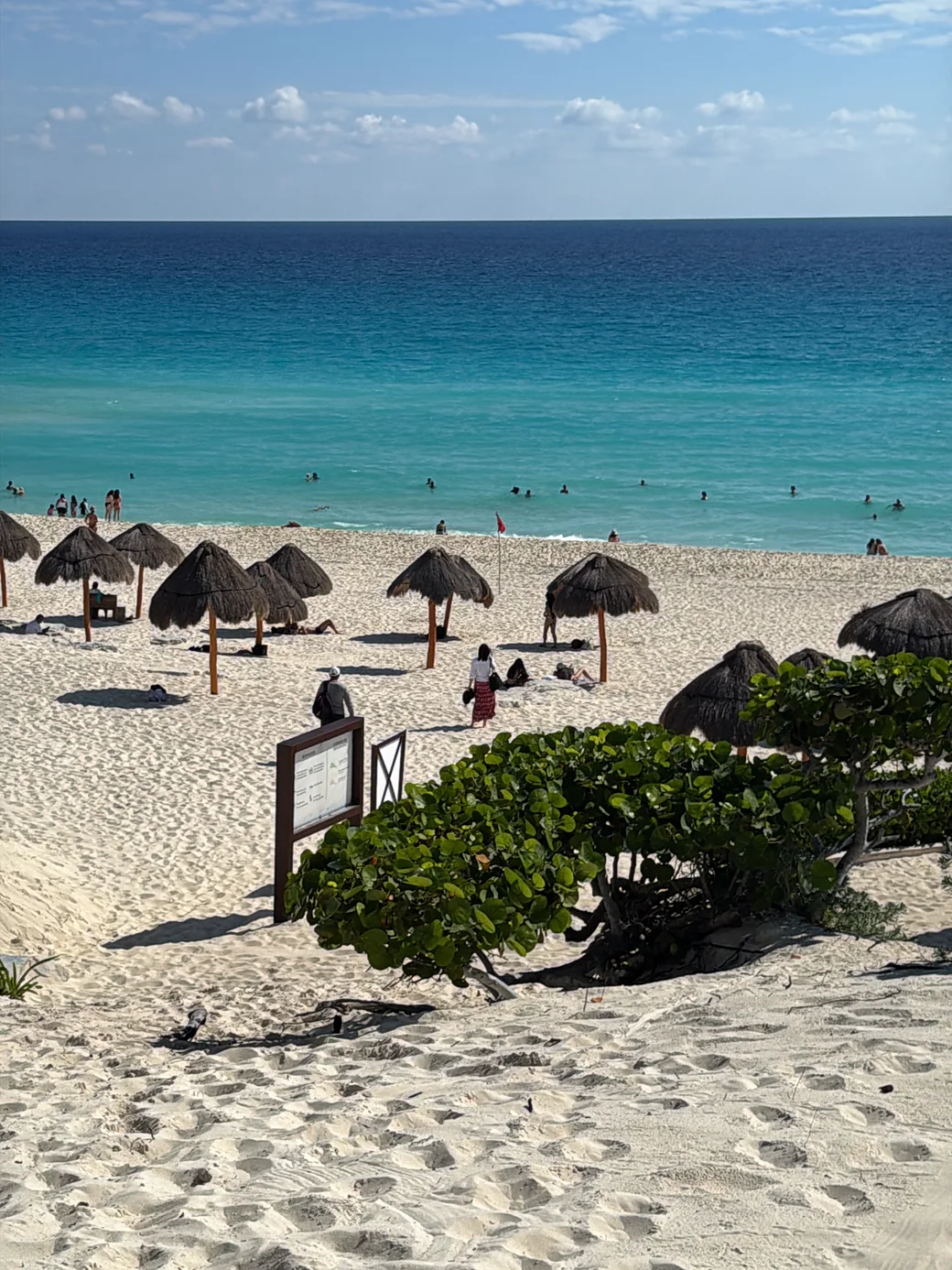
January: the quietest month on the beach, while growth begins at sea
In the UNAM 2025 data, January was the lowest month of the year, with just 0.37 square kilometers of sargassum along the coast, against 0.62 in December. Offshore, though, the cycle starts again: in January 2026, USF described "continuous growth from November to January," with the amount in the Caribbean rising from 0.45 million tons in December 2025 to 1.7 million tons in January 2026.
February to spring: building
The same January outlook said the amount "is likely to increase in the coming month," and that parts of the western Caribbean, including the Mexican Caribbean coast, "should have already seen some beaching events."
Two cautions. These are patterns, not a forecast for your hotel's beach, and the years are not alike. USF classed 2026 as "very likely another major Sargassum year," meaning amounts above 75 percent of historical values, and as of its October bulletin it had not yet published an outlook for 2027.
What 2026 looked like in Cancún
The 2026 season was a heavy one. According to SEMA figures reported by the regional press and by Mexico News Daily, 156,631 tons of sargassum were collected in Quintana Roo, a record, and the season closed a month later than in 2025. Only 25,751 tons of that, about 16 percent, was caught at sea before it reached the shore.
By early November, the picture had improved. In the traffic light for November 6, 2026, Heraldo de México listed Delfines, Ballenas, Marlín, and Chac-Mool among the Cancún beaches with low presence, while a few points, including Playa Coral, were still marked abundant.
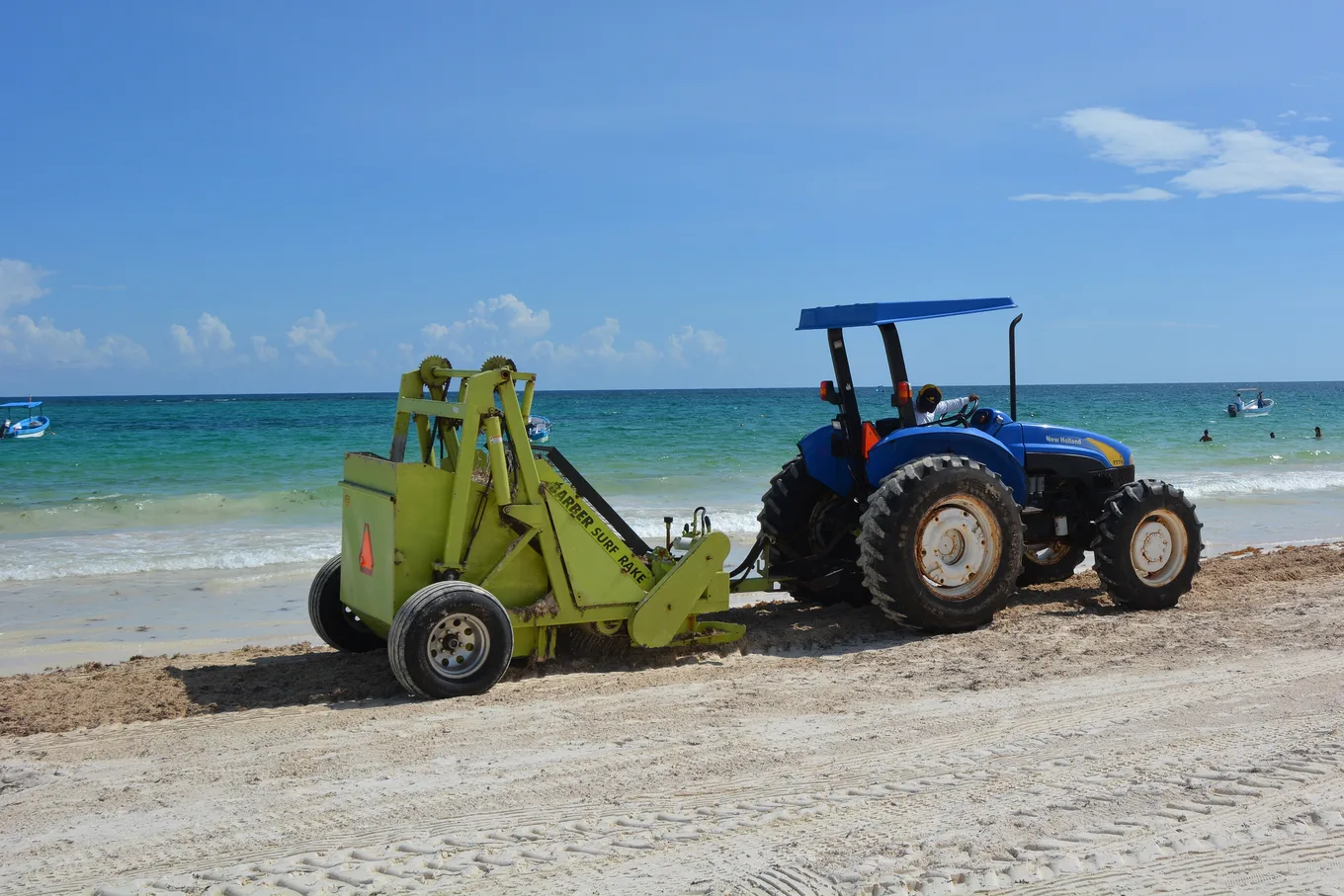
The work does not stop between seasons. In July 2026, Mexico's navy, SEMAR, said it would deploy 11 coastal sargassum vessels, an ocean-going vessel, an amphibious collector, and 18 smaller boats, and by the end of the season SEMA reported 13,560 meters of floating barriers installed. The regional press reported in October 2026 that 17 new vessels are planned for 2027.
Choosing a beach when sargassum is around
Check the traffic light first. Conditions can differ a lot between beaches only a few kilometers apart.
Shape matters. A UNAM researcher noted in 2023 that sargassum gathers more in bays than on points of land, so a sheltered cove is not necessarily cleaner.
Stay flexible. If your beach turns orange or red, another beach or a day inland often solves it.
Plan a day off the sand. Chichén Itzá, Valladolid, the cenotes, and the Mayan Museum of Cancún are all good days whatever the beach looks like.
Our guide to the best beaches in Cancún describes the main public beaches along the Hotel Zone, and our guide to the best time to visit Cancún covers weather, crowds, and prices through the year.
Is it safe to swim with sargassum?
Mexico's health ministry has not published a specific position that we could find. Two other official and scientific sources give practical guidance:
The U.S. Environmental Protection Agency advises avoiding recreation in water with excessive sargassum, which can irritate the skin. The rotten-egg smell on affected beaches comes from hydrogen sulfide, a gas released as the seaweed decomposes.
A 2024 note from UNAM's marine science institute in Puerto Morelos found no immediate and significant risk from that gas for residents or tourists. The higher exposure is for the workers who clean the beaches, and the note recommends removing sargassum within 48 hours and limiting exposure for pregnant women, children, and people with asthma.
The simple rule: swim where the water is clear, and keep your distance from thick piles of rotting seaweed.
Before you go
Sargassum is a reason to stay flexible, not a reason to stay home. Our free Cancún itineraries for 3 days, 5 days, and 7 days mix beach days with days inland, so a seaweed morning can be swapped for Chichén Itzá or Valladolid without losing the trip.
Frequently asked questions
When is sargassum season in Cancún?
Satellite data from UNAM shows the peak on the Mexican Caribbean coast in July and August, with August the highest month. In 2026, Quintana Roo officially closed the season on November 4.
Is there sargassum in Cancún in December and January?
Much less than in summer. In UNAM's 2025 data, January was the lowest month of the year, although USF notes that the amount at sea begins to grow again from November to January.
How do I check sargassum in Cancún today?
Use the Semáforo de Sargazo published by Quintana Roo's environment department. It rates 140 beach points from blue (none) to red (excessive).
Which Cancún beaches have less sargassum?
It changes week to week. In the November 6, 2026, traffic light, Delfines, Ballenas, Marlín, and Chac-Mool were among the beaches with low presence.
Is it safe to swim when there is sargassum?
The U.S. EPA advises against swimming in water with excessive sargassum. UNAM found no immediate significant risk for tourists from the gas it releases, but advises children, pregnant women, and people with asthma to limit exposure.
Is sargassum still a problem in Cancún?
Much less than in summer. Quintana Roo officially closed the 2026 season on November 4, but Mexico's navy, SEMAR, was still clearing sargassum from Quintana Roo beaches in November, so check the traffic light before a beach day.
Will sargassum be bad in 2027?
There is no forecast for 2027 yet. The University of South Florida's latest outlook, from October 31, 2026, expected the amount to keep falling until possibly late November or December, and the regional press reported in October 2026 that 17 new vessels are planned for 2027.
Worth knowing
- In 2026, Quintana Roo collected a record 156,631 tons of sargassum, and only about 16 percent of it was caught at sea.
- Look at the sargassum traffic light the evening before a beach day, and pick a beach in blue or green.
- Cash is still king. Cards work in resorts and restaurants. Carry some cash for taxis and markets.