Cancún/When to go
When is the best time to visit Cancún?
The sea stays warm all year. What changes is the rain, the storm season, and the seaweed on the sand.


At a glance
- By day
- 27–32 °C
- Wettest month
- September
- Coldest nights
- January
- Sea
- 26–29 °C
In this article
There is no wrong month to swim in Cancún. The Caribbean here sits between 26 and 29 degrees Celsius through the year. Choosing your dates is really a choice between three other things: how much rain falls, where the hurricane season stands, and how much sargassum reaches the beach.
The sea is warm all year
The water is at its coolest from December to March, around 26 degrees, and at its warmest from July to September, around 29. Even the coolest months are warm enough for a long swim.
The sun is strong in every season. Shade matters more than the calendar, so plan the middle of the day under a palapa or indoors.
The driest and the wettest months
Rain falls in every month in Cancún, so there is no fully dry season. March is the driest month, with about 45 millimeters on average, and February and April are close behind. From May the rain builds, and September is the wettest month, with about 190 millimeters.
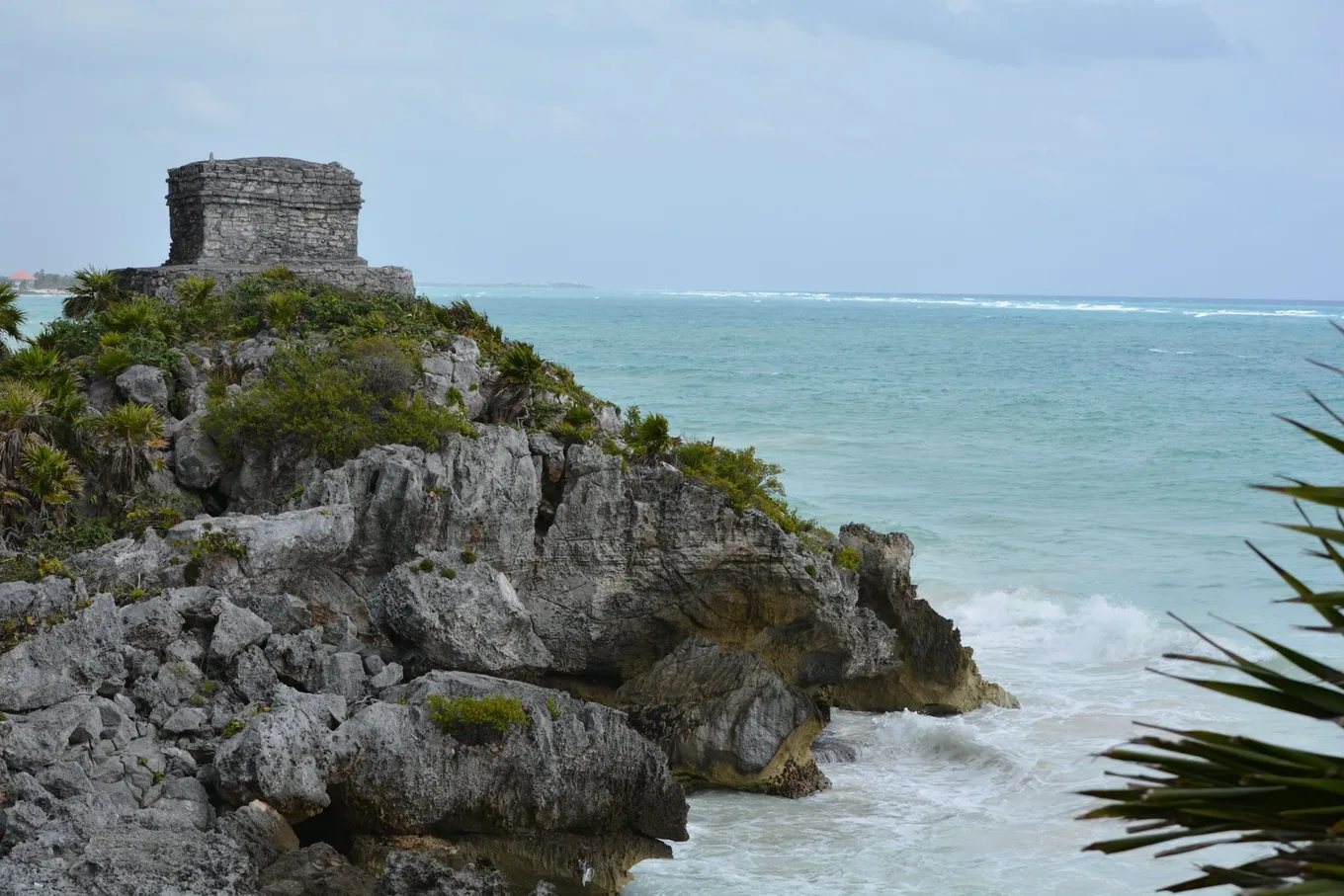
In the wetter months, keep a long day trip flexible, so it can move to a clearer day if the forecast turns.
In Cancún, the calendar changes the sky more than the sea.
Hurricane season
The Atlantic hurricane season runs from June 1 to November 30, according to NOAA, and activity peaks in early to mid September. The peak falls in the same weeks as the heaviest rain.
If you travel between June and November, book what can be changed, take travel insurance that covers weather, and follow the official forecast in the days before you fly. For the sea, the taxis, and the official travel advice, see Is Cancún safe?
Sargassum on the sand
Sargassum is a brown seaweed that drifts across the Atlantic and washes up on Caribbean beaches. The amount changes from one year to the next, and from one beach to another.
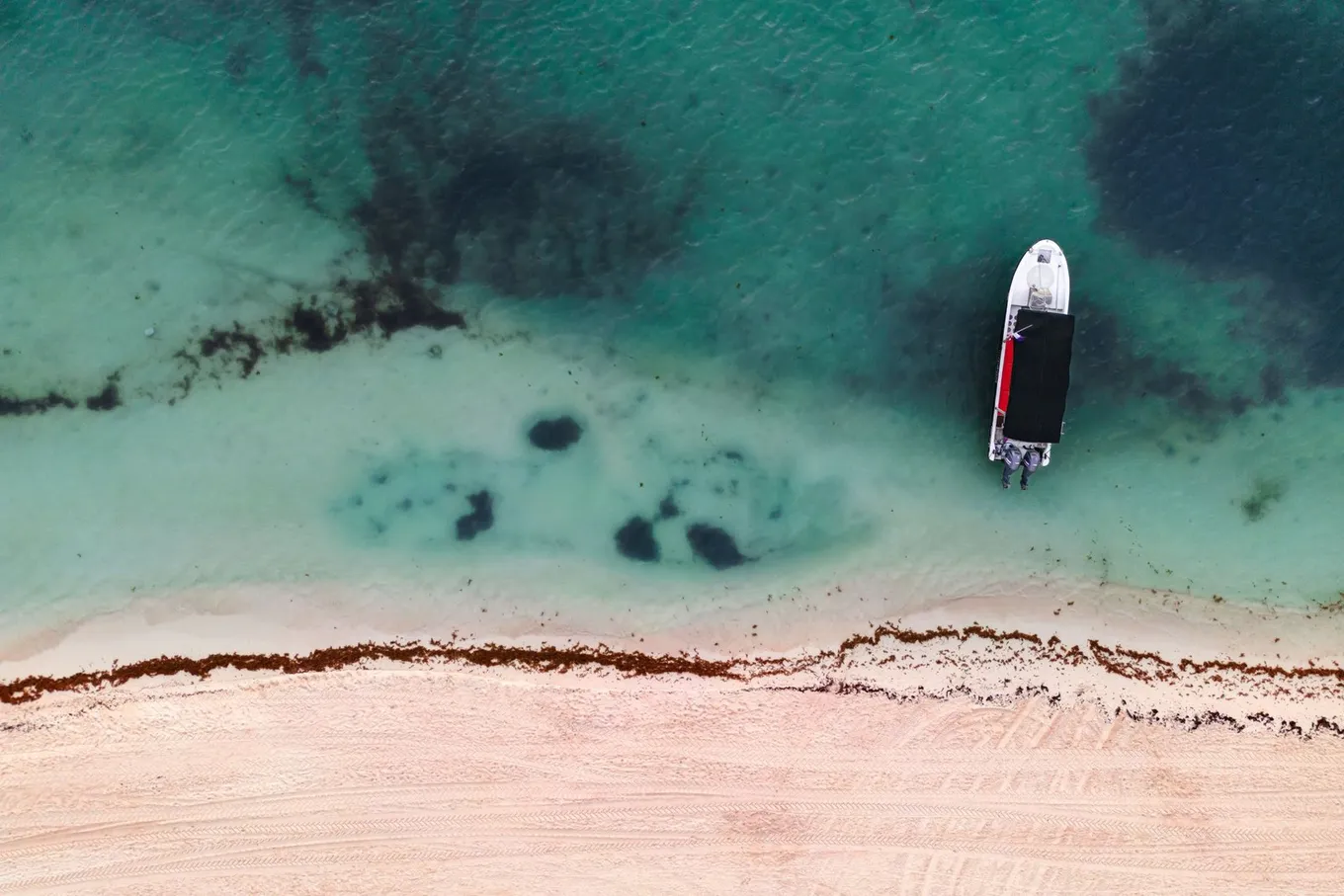
Quintana Roo publishes a sargassum traffic light beach by beach, from blue for none to red for excessive, and Mexico's Navy, SEMAR, tracks the seaweed still out at sea. Check the latest report in the week you travel, rather than any forecast made months ahead.
How to choose your dates
If the beach is the point of the trip, February to April gives the least rain and a sea of 26 to 27 degrees. If you want the warmest water and can live with showers, July and August bring 29 degrees, inside the hurricane season.
Choose the month for the rain, and the beach for the seaweed.
September is the wettest month and sits at the peak of the storm season, and October is still wet. They suit a flexible trip better than one built around a single fixed day.
Whatever the month, a Cancún week works best when its days are different. We wrote about why in Why Cancún should not be planned as one kind of trip, and the same days sit in our free routes for 3 days, 5 days, and 7 days in Cancún.
Worth knowing
- In October 2005, Hurricane Wilma dropped more than 1,500 millimeters of rain on Isla Mujeres in 24 hours, about eight times Cancún's wettest month.
- Cash is still king. Cards work in resorts and restaurants. Carry some cash for taxis and markets.