Rio de Janeiro/Day trips
Christ the Redeemer and Sugarloaf in one day
Rio's two summits fit into a single day. It is a long one, and the order inside it matters.


At a glance
- Duration
- 9 h
- Starts
- 7:00 a.m.
- Effort
- Moderate
In this article
Yes, Christ the Redeemer and Sugarloaf can be seen on the same day. A full-day tour covers both, with the Selarón Steps on the way and a stop at Maracanã. Plan on about nine hours, starting around seven in the morning.

The two summits sit on opposite sides of the city, so much of the day is spent getting between them. That is the part worth knowing before you book.
Corcovado first
Dom Pedro II opened the rack railway up Corcovado in 1884. The same line later hauled the statue up in pieces across four years, and Christ the Redeemer was inaugurated in 1931. The summit stands at 704 meters, according to the Tijuca National Park.
Going early is not only about crowds. Cloud can sit on the summit for an hour and then lift completely in minutes, and an early start leaves room for it. The statue platform is fully exposed, with no shade at the top.
Cloud on the summit can lift in minutes.
Sugarloaf by cable car
Sugarloaf stands at the mouth of the bay, across the city from Corcovado. Its cable car first ran in 1912, almost three decades after the railway reached the other summit.
On many tours the cable car ticket comes only with the higher options, together with lunch. Check what your option includes before you book, because it changes the day.
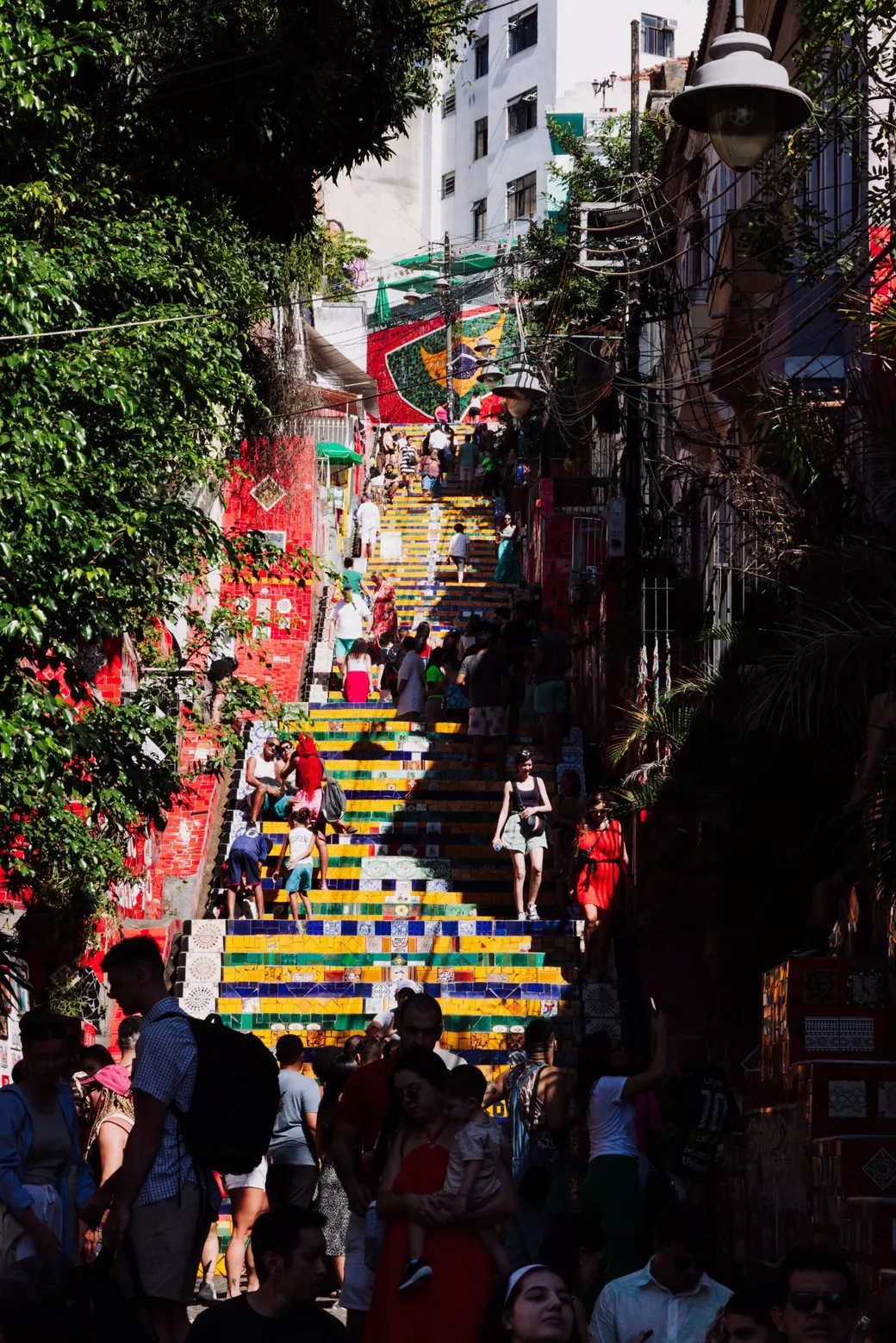
The Selarón Steps on the way
Between the summits, the tour usually stops at the Selarón Steps. Selarón began his tiled staircase in 1990, on the steps that climb from Lapa toward Santa Teresa. Tiles cover the steps and the walls on either side.
What the day asks of you
The stops sit far apart, and the transfers between them are by van. Each stop has stairs and uneven paving, mostly in the open. Physically it is a moderate day, but a full one, and the evening after it is best kept short.
Most of the day is the city between the summits.
Wear comfortable shoes, bring water, a hat, and sunscreen, and keep a light layer for the summits.
Where it sits in a week
On our free 5-day Rio route, this is the second day. The first day stays short, so the long day does not land on the day you arrive. You can see it in context in the 5-day Rio route, or read about the rest of the city in What to do in Rio de Janeiro.
Worth knowing
- Christ the Redeemer stands 30 meters tall on an 8-meter pedestal, and his arms span 28 meters, almost his full height.
- The stops sit far apart, so the day runs long between them.
- Cash is still king. Cards are widely accepted. Keep small cash for beach kiosks, markets, and tips.