Rio de Janeiro/Where to stay
Copacabana or Ipanema?
Rio's ocean beaches run in one line, broken by rock. Each stretch has its own crowd and its own day.


At a glance
Arpoador Surf
- Duration
- 1 h
- Starts
- Flexible
- Effort
- Moderate
Dois Irmãos
- Duration
- 3.5 h
- Starts
- Flexible
- Effort
- Challenging
From Leme to Leblon, the city's best-known beaches sit end to end along the Atlantic. Leme and Copacabana share one long curve. The rock of Arpoador closes it. Past the rock, Ipanema and Leblon share the next. The question is less which beach is best than which one suits the day you have.
Leme and Copacabana
Copacabana is the long one. Roberto Burle Marx drew its promenade in 1970, four kilometers of black and white stone laid as a wave. A fort holds each end of the curve, and lifeguard posts number the sand between them, which is how locals say where to meet.
Leme is the short stretch at the northern end, under a rock that still belongs to the army. A trail of about 800 meters climbs to the fort on top, and at its foot the fishermen's path runs along the water.
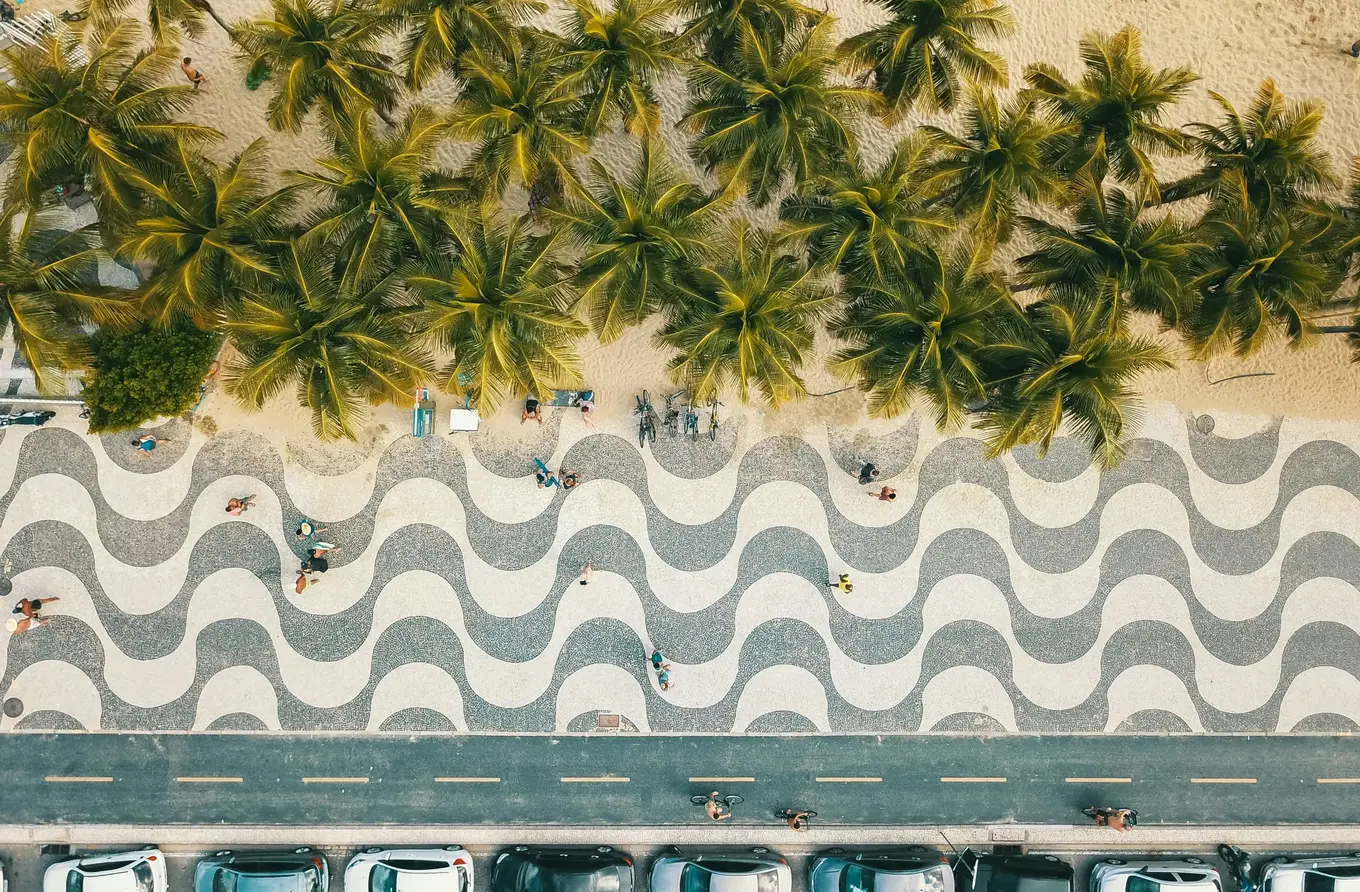
Early mornings belong to runners and swimmers, before the vendors set up. Chairs and umbrellas are rented on the sand. Agree the price before you sit.
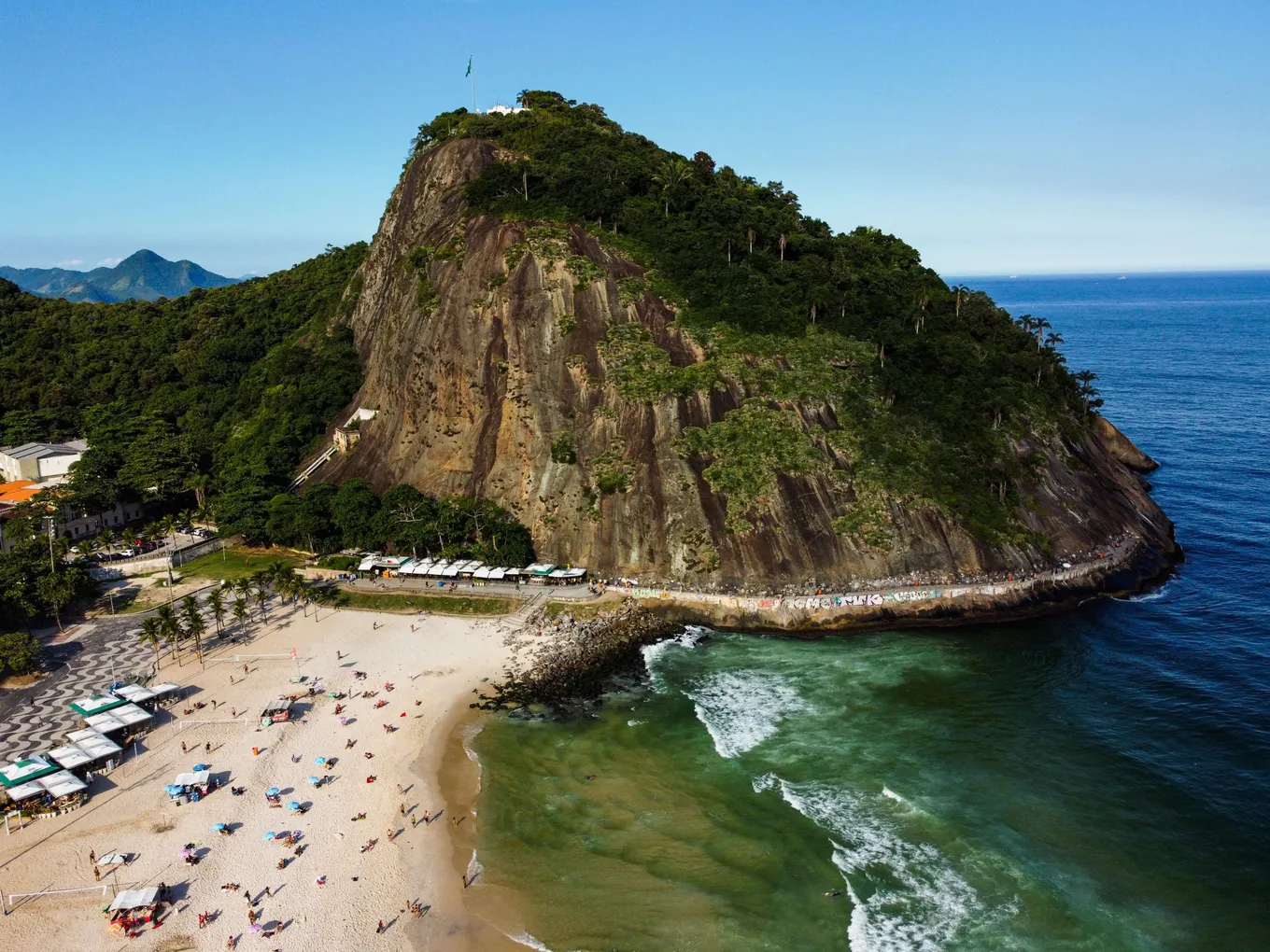
Arpoador
Arpoador faces west, which is why this end fills at sunset and the far end does not. When the light drops behind Dois Irmãos, the crowd on the rock often applauds. Arrive half an hour ahead, because there is no room late.
The rock between the two beaches is where the day ends.
It is also where Brazilians date the start of their surf culture, in the fifties. On a small swell the inside stays gentle enough for a first lesson.
Ipanema and Leblon
Ipanema and Leblon are one beach with two names, divided by the canal at Jardim de Alah. Ipanema splits again by lifeguard post, each with its own crowd, and Posto 9 is the best known. Frescobol paddles knock at the water line all day, and the promenade behind sells everything you would otherwise carry.

Leblon, past the canal, reads more classic. Its Baixo Bebê stretch is known for kiosks set up for small children. Above both, the Dois Irmãos trail starts in Vidigal and climbs to a summit at 533 meters, with Leblon and Ipanema lined up below.
The sea itself
The sun is strong and the currents can pull. Swim near a lifeguard post and read the flags, because Ipanema's shore break can be heavy. The sea is warmest in late summer, and we wrote about the seasons in The best time to visit Rio de Janeiro.
How to choose
Choose Copacabana for the long walk and the early swim. Choose Ipanema for a day on the sand among the people who live here, and Leblon for a quieter version of it. Keep Arpoador for the end of the day, whichever beach you spent it on.
Pick the beach by the hour, not by the name.
The beaches are only part of the city. We wrote about the rest in What to do in Rio de Janeiro, and the same places are laid out by day in our free 5-day Rio route.
Worth knowing
- Copacabana takes its name from a chapel that held a replica of Our Lady of Copacabana, the patron saint of Bolivia.
- Cash is still king. Cards are widely accepted. Keep small cash for beach kiosks, markets, and tips.