Rio de Janeiro/Destination guides
Rio de Janeiro for couples
How the two of us spend a day in Rio: the beaches on foot, a staircase in tiles, the bay from above, and a dinner that keeps arriving.

At a glance
- PROMENADE
- Four kilometers on foot
- DONA MARTA
- At about 350 meters
- RODÍZIO
- Palace, since 1951
In this article
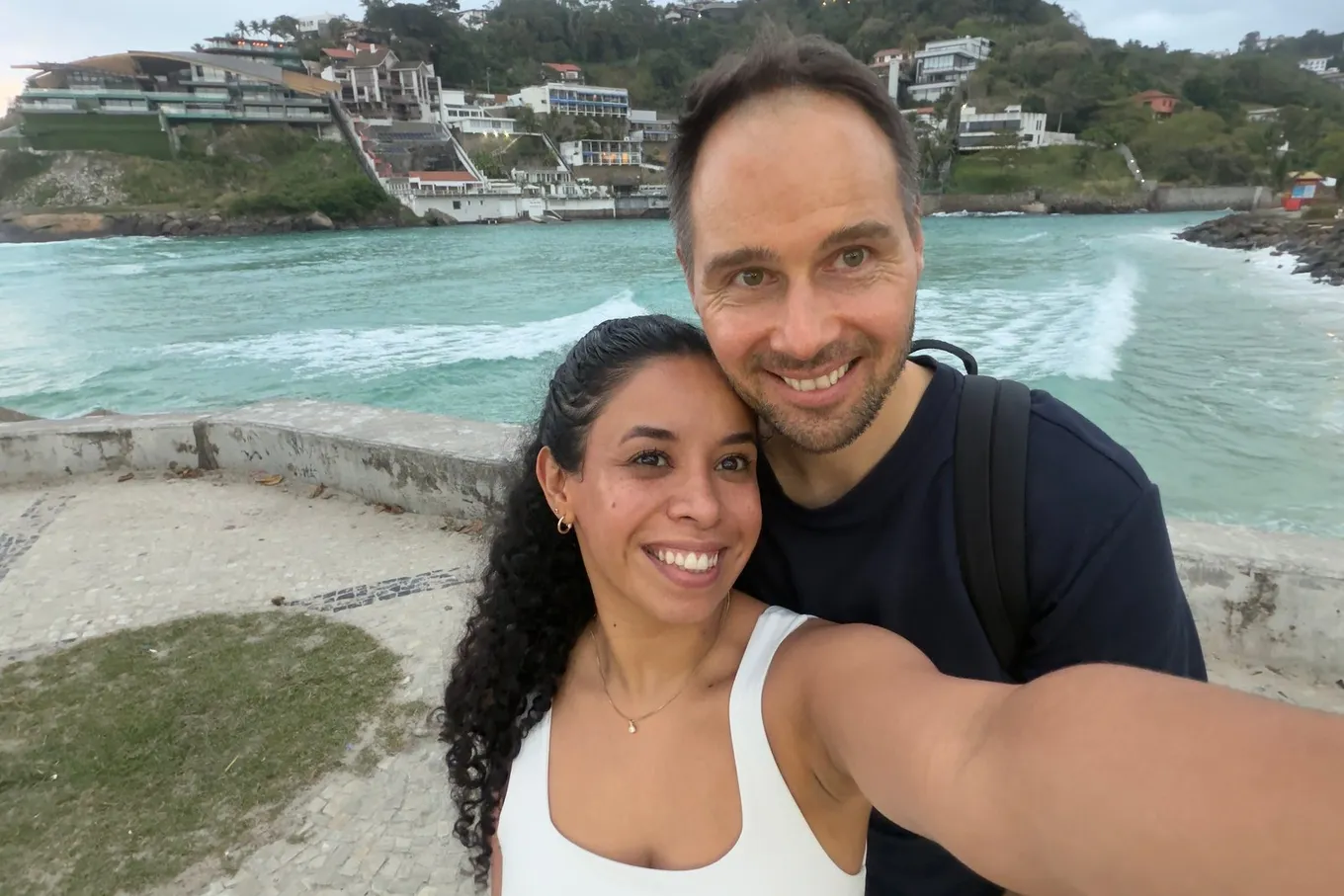
We are Melissa and Aleksejs, and we build DreamJourney routes together. Melissa grew up in Peru, Aleksejs came to it from Latvia, and between us there are more than 50 countries. Rio is one of the three cities we write routes for, and the photographs with us in them are our own.
This is not a ranking of the most romantic places in Rio. It is what we did here together, with the facts behind each stop checked first.
The beaches, on foot
We walked the beaches together, Copacabana and Ipanema both, and the walk is the point. Copacabana's promenade was drawn by Roberto Burle Marx in 1970, four kilometers of black and white stone laid as a wave.
Past the rock of Arpoador, Ipanema and Leblon share the next curve, divided by the canal at Jardim de Alah. Lifeguard posts number the sand, and Posto 9 is the best known.
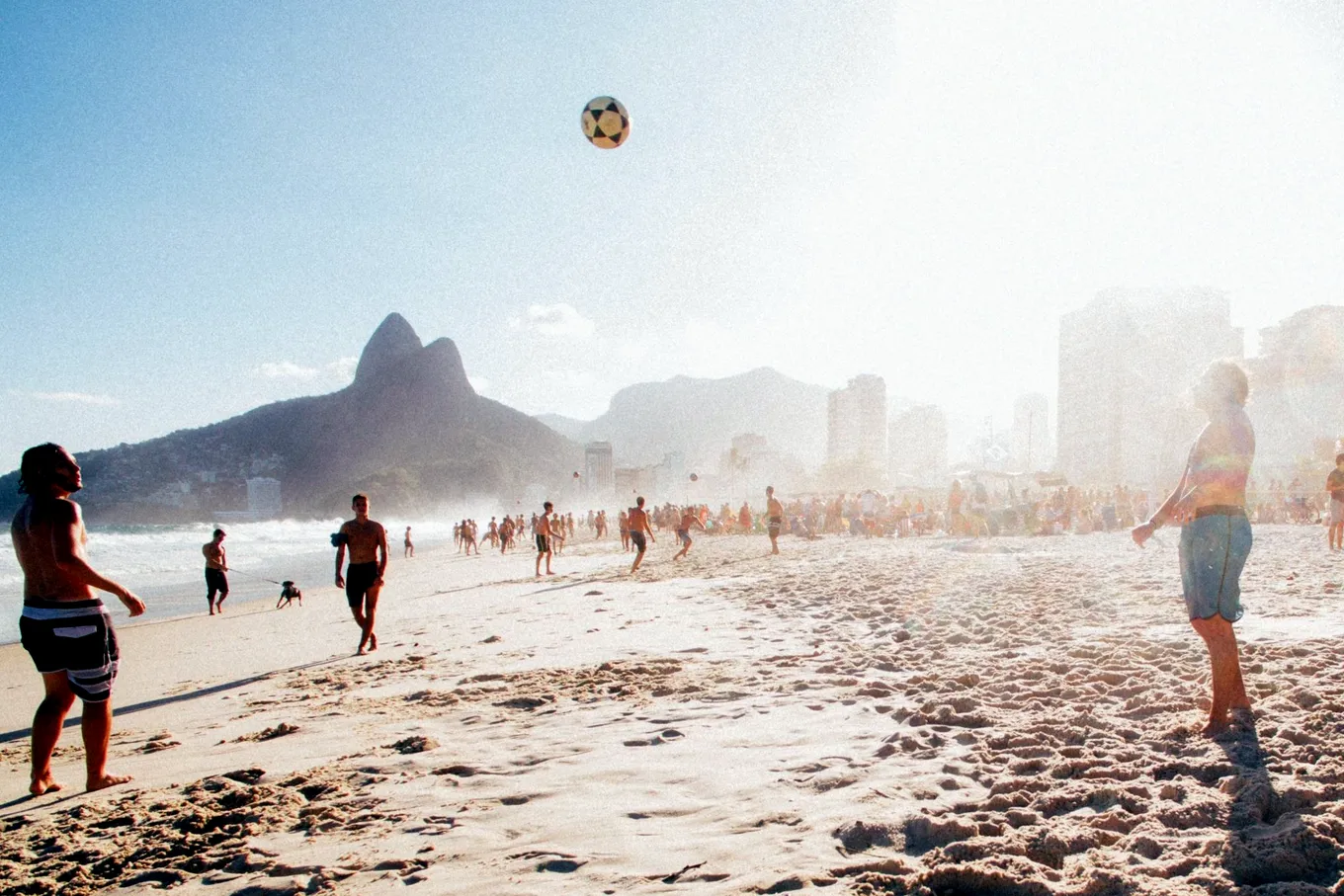
The early hours are the quiet ones, before the vendors set up. The sun is strong and the currents can pull, so swim near a lifeguard post and read the flags. We compared the beaches stretch by stretch in Copacabana or Ipanema?.
Walk the whole curve once, then choose your stretch of sand.
A staircase in tiles
The Selarón Steps climb 215 steps from Rua Joaquim Silva in Lapa to Rua Pinto Martins in Santa Teresa. The Chilean-born artist Jorge Selarón began covering them in 1990, and he kept working on them until 2013. The tiles come from more than 60 countries, set among his own red ones.
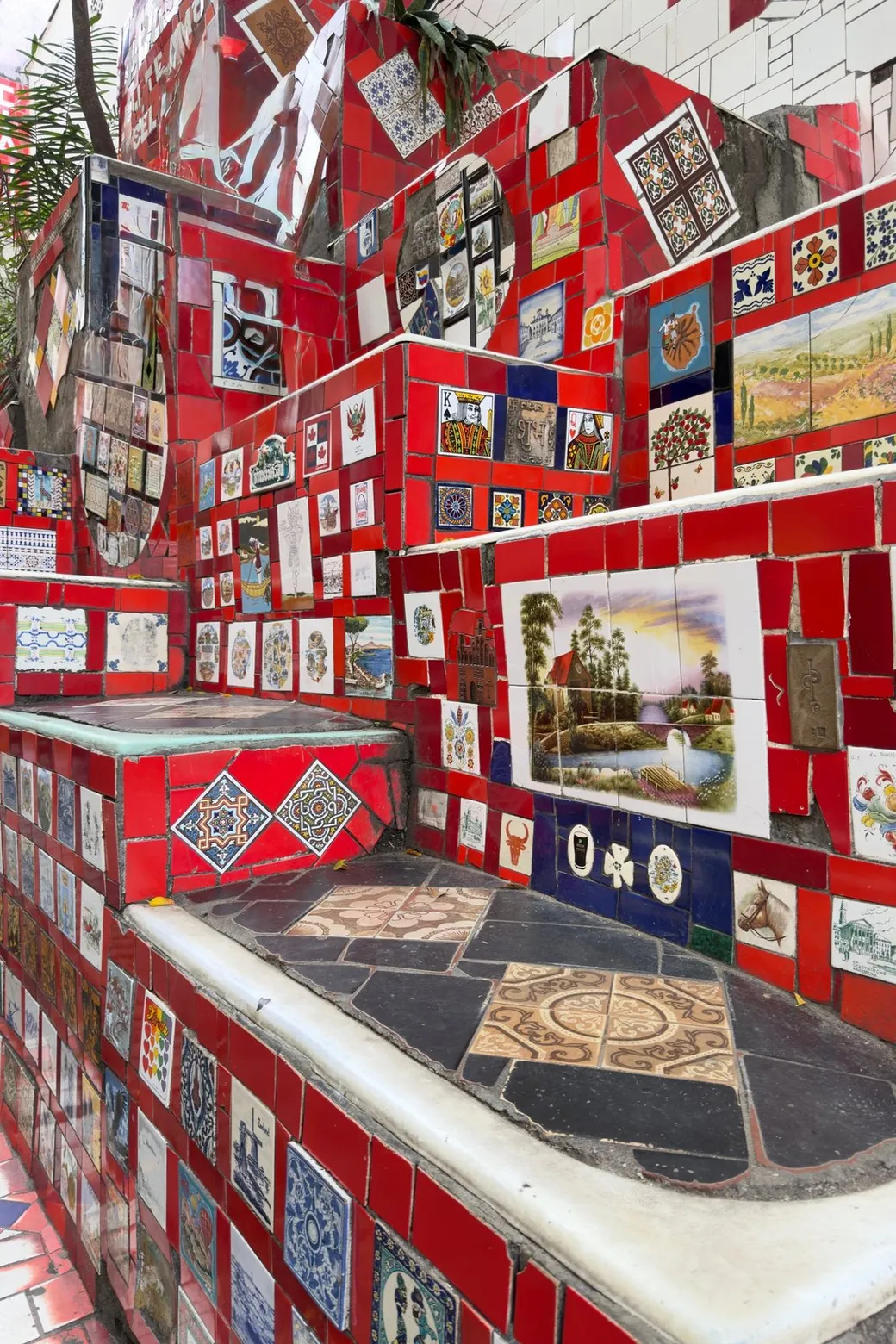
Look closely and the steps turn into a collection. Scenes, flags, and city names sit side by side along the walls.
Most couples stop here for a photograph, and we did too. The steps fill as the day goes on, so come early if you want them clear.
The bay from above
We have each been up Sugarloaf and Corcovado, though not on the same trip. The rack railway up Corcovado opened in 1884, and a full-day tour pairs Christ the Redeemer with Sugarloaf and the Selarón Steps in about nine hours. We wrote about that day in Christ the Redeemer and Sugarloaf in one day.
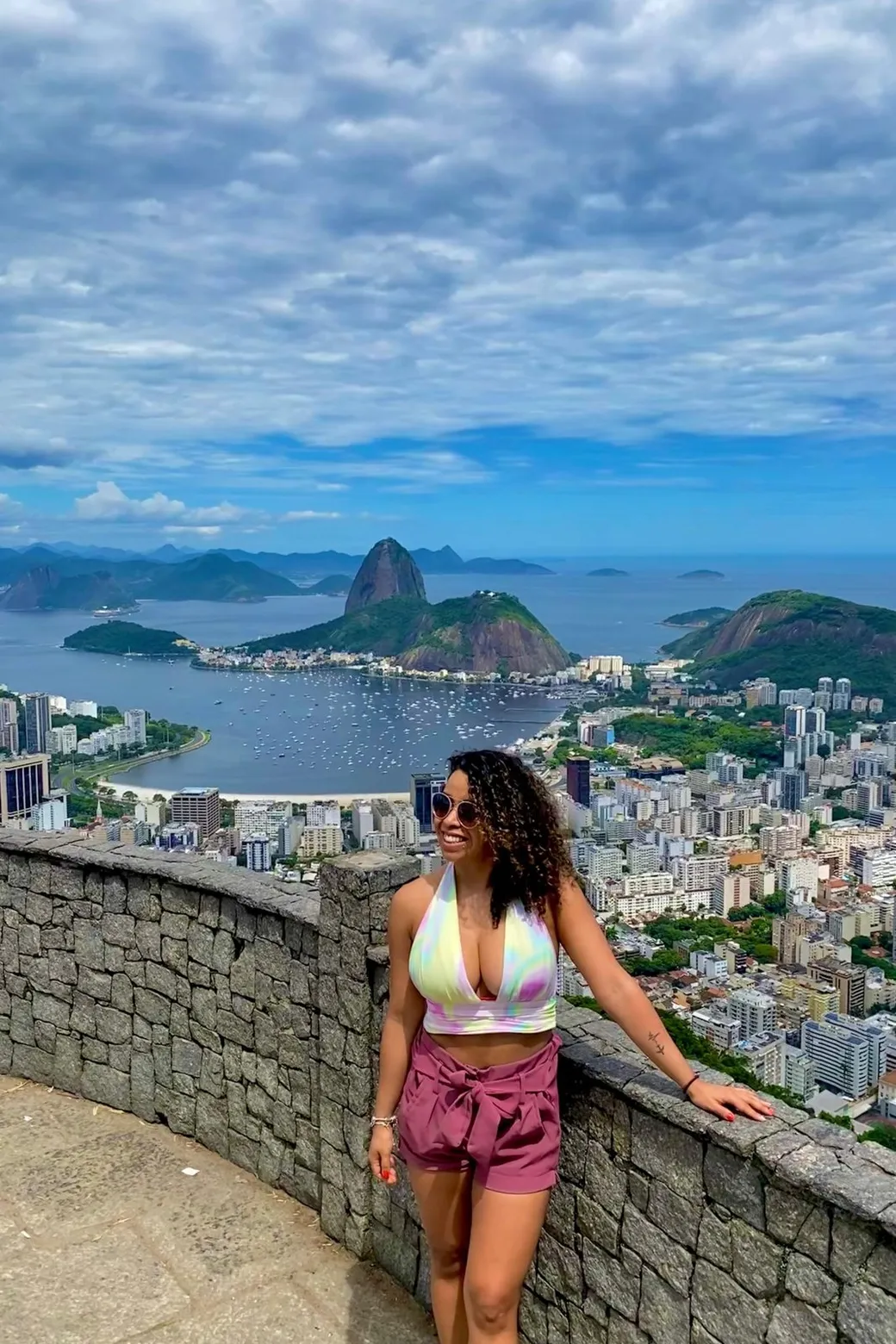
For a second view of the same bay, Mirante Dona Marta sits at about 350 meters inside Tijuca National Park, with Sugarloaf, the lagoon, and the statue in sight from its wall.
From up high the city's geography makes sense at last. The mountains split Rio into neighborhoods, and the water reaches in between them.
A dinner that keeps arriving
For Aleksejs, the best of Rio was at the table. In a rodízio, the waiters keep coming to the table with skewers and carve at your plate until you signal that you have had enough. Many places put a two-colored card by your plate, one side for more and the other for a pause.
Meat is the classic, and some rooms bring fish and seafood in the same way. In our Rio catalog, Churrascaria Palace in Copacabana has grilled since 1951, is listed as Carioca cultural heritage, and brings forty cuts to the table. Marius Degustare, at the quiet north end of Copacabana, brings meat, fish, and shellfish in turn.
Turn the card over before the next skewer, not after.

Sunset at Arpoador
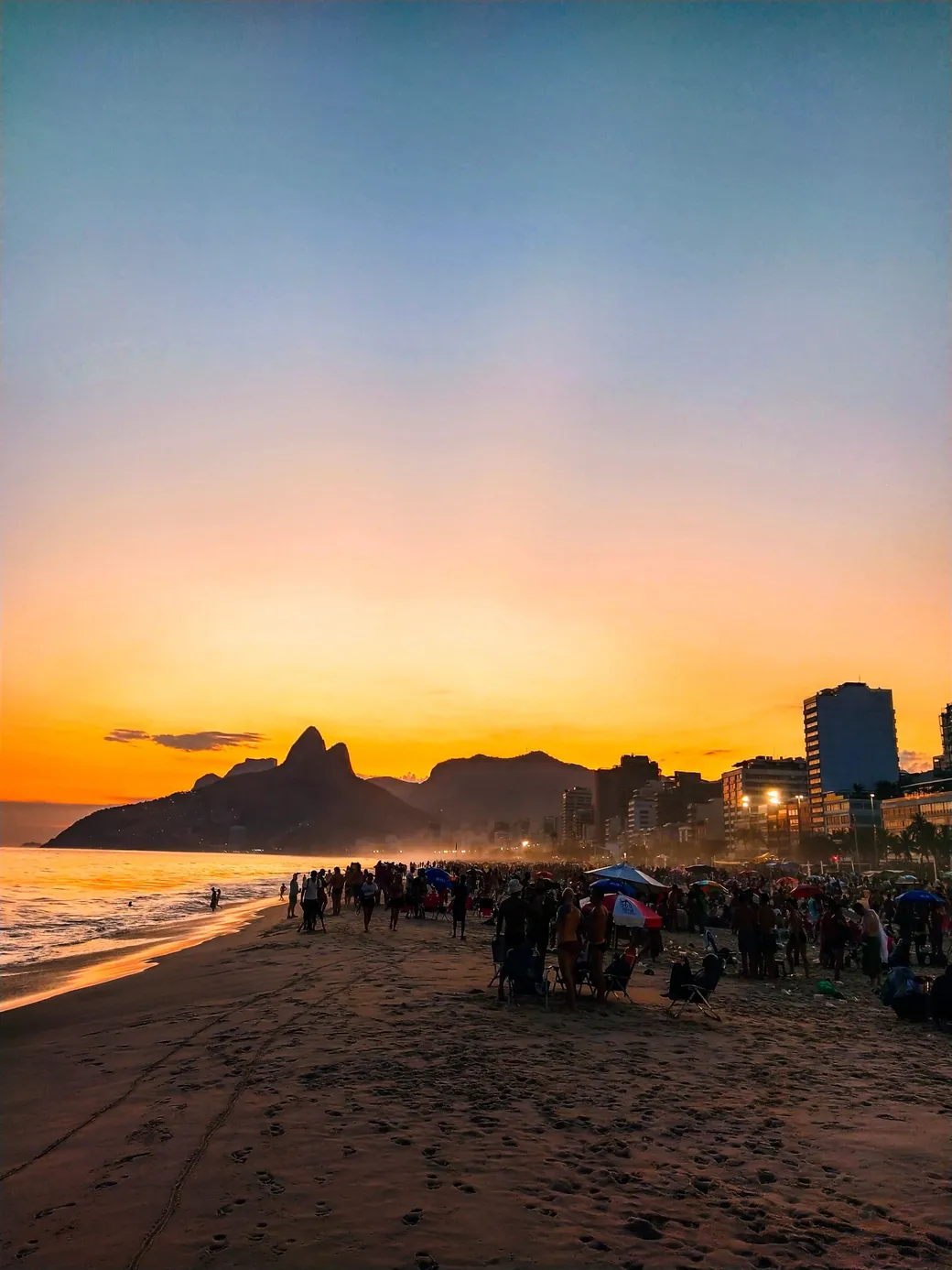
Arpoador faces west, and as the light drops behind Dois Irmãos the crowd on the rock often applauds. Nobody agrees on who started it. Arrive half an hour ahead, because there is no room late.
If you would rather be on the water, sunset sailings cross Guanabara Bay while Sugarloaf holds the last light. Every evening here ends late, so book the ride home before you leave the table or the rock. We wrote about Rio after dark in Rio de Janeiro at night.
Our day, in a route
The beaches, the Selarón Steps, and the sunset at Arpoador each have their place in our free routes for 3 days, 5 days, and 7 days in Rio.
Worth knowing
- In the 1979 James Bond film Moonraker, Bond fights Jaws on top of a Sugarloaf cable car, high above the bay.
- Swim near a lifeguard post and read the flags, because the currents can pull.
- Cash is still king. Cards are widely accepted. Keep small cash for beach kiosks, markets, and tips.