Cusco/Practical advice
Why altitude changes the shape of a Cusco trip
Cusco rewards ambition. It also punishes bad timing.
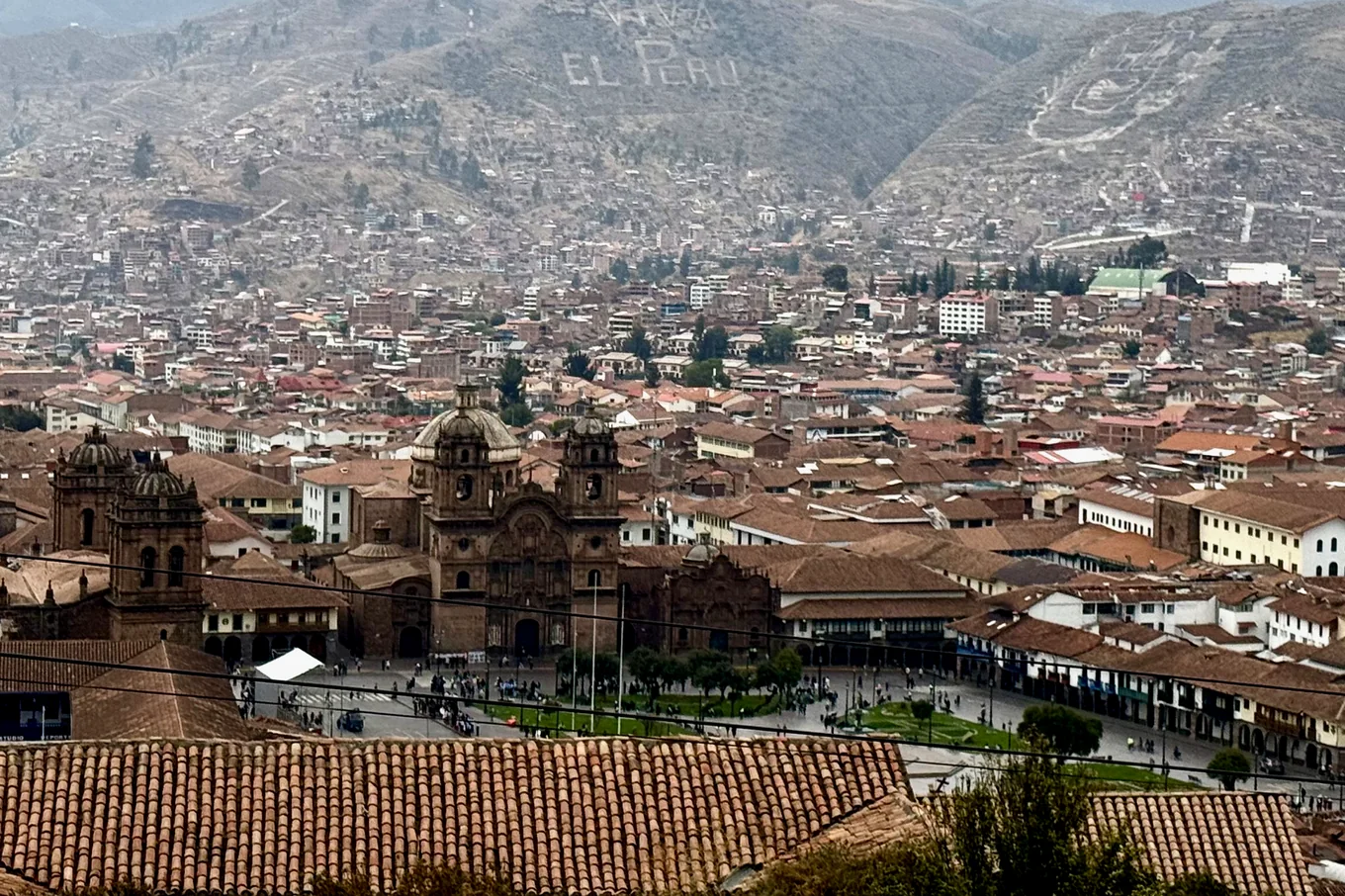
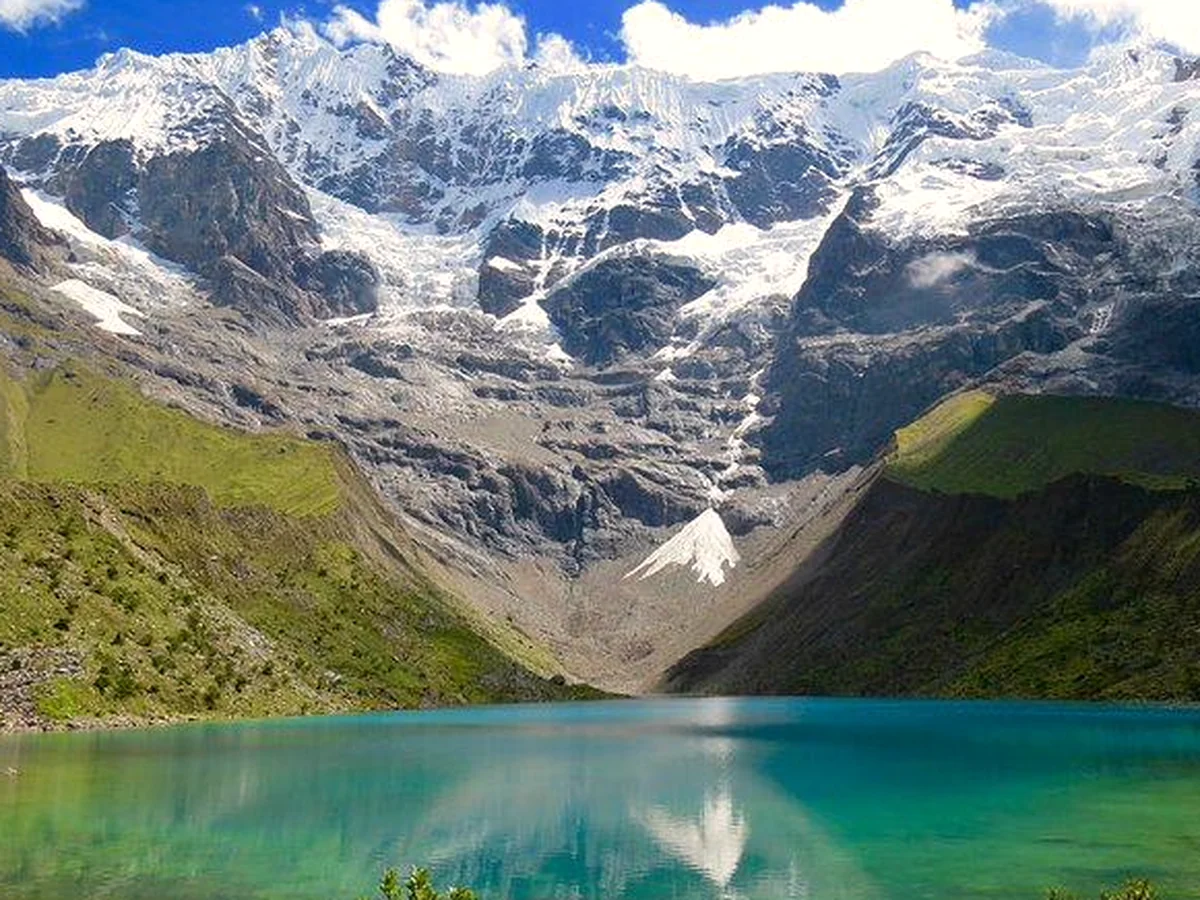
The city sits at almost 3,400 meters above sea level. Many of the places people travel here to see climb much higher. Rainbow Mountain reaches above 5,000 meters. Humantay Lake asks for a steep ascent above 4,000.
That changes the way a trip should be built.
A good Cusco itinerary is not simply a collection of the best places.
The order matters.
The first day should feel deliberately easy
It is tempting to arrive in Cusco and start immediately.
There is a lot within reach: the historic center, San Blas, markets, restaurants, ruins above the city. A short trip makes every free hour feel valuable.
But altitude does not care how many days are on the calendar.
For many travelers, the better first day is the quieter one. Walk the center. Sit down for lunch. Explore a few streets. Drink water. Leave enough room to notice how your body responds.
That is not a wasted day. It is part of the route.
A demanding hike placed too early can affect much more than the hike itself. Fatigue carries into dinner, the following morning, and sometimes the next major experience.
Good planning protects the days that matter most.
At a glance
- ALTITUDE
- Almost 3,400 m
- FIRST DAY
- Take it slowly
In this article
Not every mountain day is interchangeable
Rainbow Mountain and Humantay Lake often appear together on lists of things to do around Cusco. On paper, they are two excursions. In practice, they ask different things from the traveler, and both deserve space around them.
Early departures, altitude, walking, weather and long transfers all affect how a day feels. Putting another demanding experience immediately before or after one of them may look efficient on a calendar and feel completely different on the ground.
The question is not only, “Can this fit?”
It is also, “What should come next?”
Sometimes the right answer is a long lunch, a slower afternoon or an early night.

Weather changes the route, not just the packing list
Cusco has distinct seasonal patterns, and the highest parts of a trip are especially sensitive to them. A place can be technically open and still be a poor choice for a particular day.
Rain changes trails. Cloud changes visibility. Cold matters more at altitude. The same excursion can feel very different depending on the month, the hour and what happened the day before.
This is why weather belongs inside itinerary planning rather than in a separate box marked “things to know.”
The route should respond to it.
During wetter periods, flexibility becomes more valuable. During the drier months, the most popular places may become easier to reach but busier once you arrive.
Neither season removes the need to plan. It simply changes what good planning means.
The hours between the landmarks matter
Cusco is often sold through its biggest names: Machu Picchu, the Sacred Valley, Rainbow Mountain. They deserve the attention.
But a trip made only from headline attractions can become strangely exhausting.
Some of the strongest hours in Cusco happen between them: breakfast before the city wakes fully, a quiet square in the afternoon, a meal that lasts longer than expected, a walk through San Blas without another booking waiting at the end.
Food belongs here too.
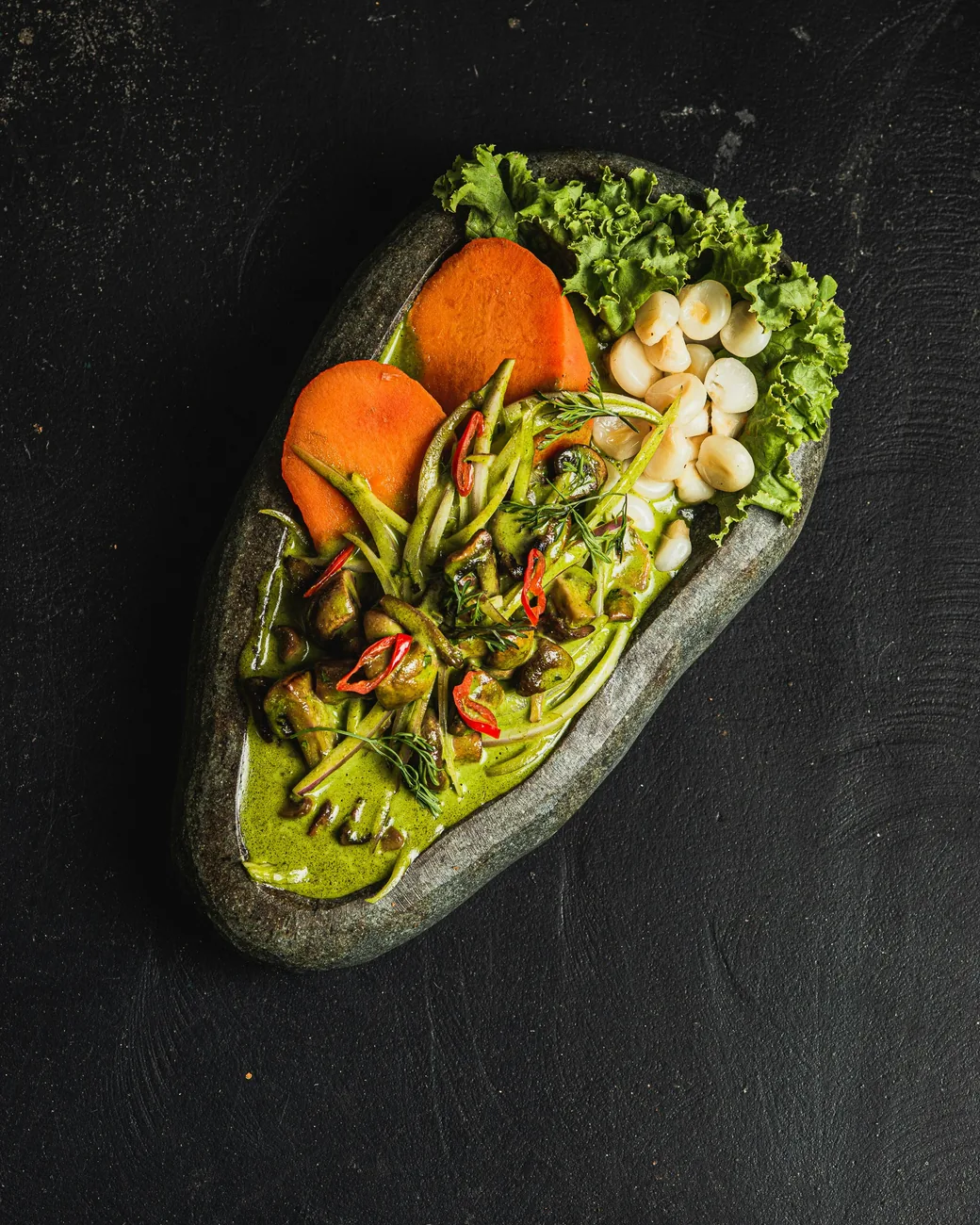
Peruvian cuisine is not something to squeeze into whatever hour remains between excursions. Restaurants can become anchors of the day in their own right, especially after an early start or a physically demanding excursion.
A route should leave space for that.
Machu Picchu needs context around it
For many travelers, Machu Picchu is the reason the trip exists. That makes the surrounding days more important, not less.
The night before matters. The transport plan matters. The start time matters. What you schedule after returning matters.
A landmark this significant should not be treated as another item between breakfast and dinner. The same principle applies throughout Cusco.
The strongest itinerary is rarely the one that fits the greatest number of famous places into the shortest possible time. It is the one where each day makes the next one better.
This is why DreamJourney plans in sequences
DreamJourney starts with a few choices about pace and priorities, then builds one route around them.
Stays, restaurants and experiences are selected together rather than independently. Timing, location, altitude, weather and the practical details of moving through a destination are considered as part of the same journey.
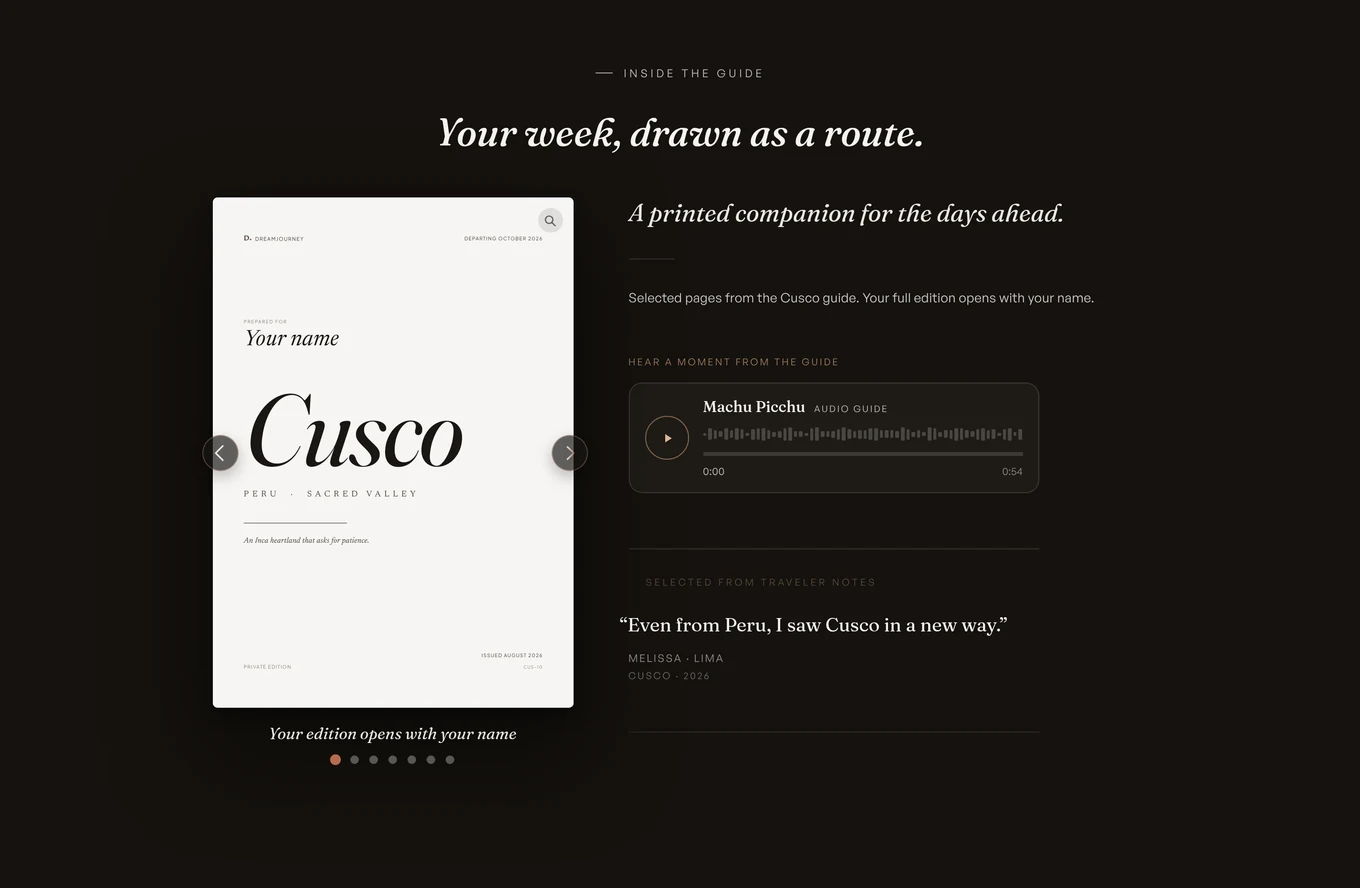
The Cusco guide also brings together the information travelers usually have to find separately: weather by month, altitude guidance, transport and safety notes, maps, booking links and practical details for the road.
Every place in the collection is reviewed by a person, and the travel data behind the route is checked regularly.
The result is not a longer list.
It is a trip with an order.
Machu Picchu matters.
So does everything around it.
Worth knowing
- Cusco sits more than twice as high as Denver, the Mile High City, which stands at 1,609 meters.
- Do not put Rainbow Mountain and Humantay Lake back to back. Each deserves space around it.
- Cash is still king. Cards work in central spots. Keep some cash for taxis, markets, and tips.