Rio de Janeiro/When to go
New Year's Eve in Rio de Janeiro: the night on Copacabana
Millions in white on one beach, twelve minutes of fireworks over the sea, and a metro that runs by its own rules that night. What is known for December 31, 2026.

At a glance
- FIREWORKS
- At midnight, about 12 min
- WHERE
- Copacabana and Leme
- METRO
- Special pass, buy ahead
In this article
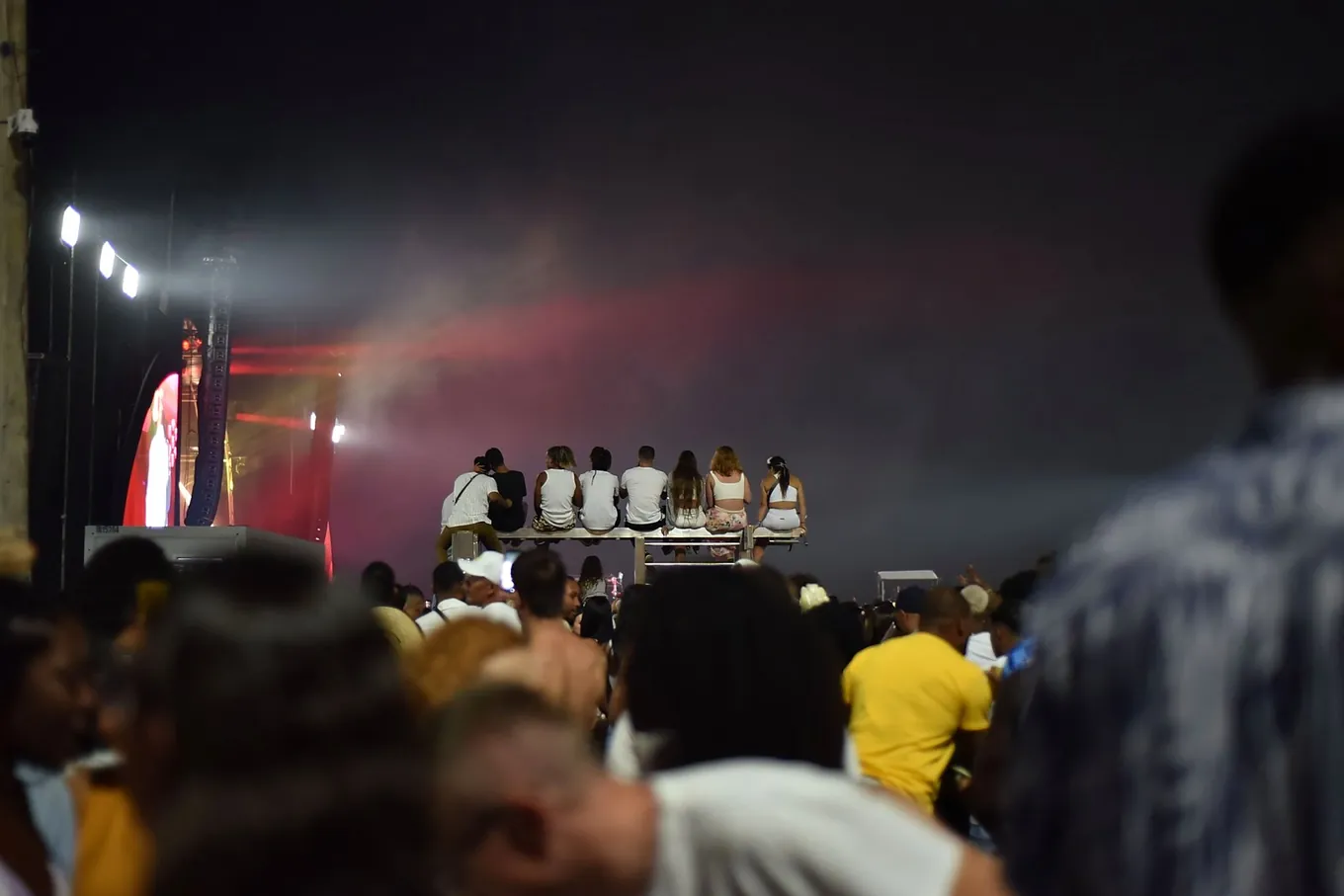
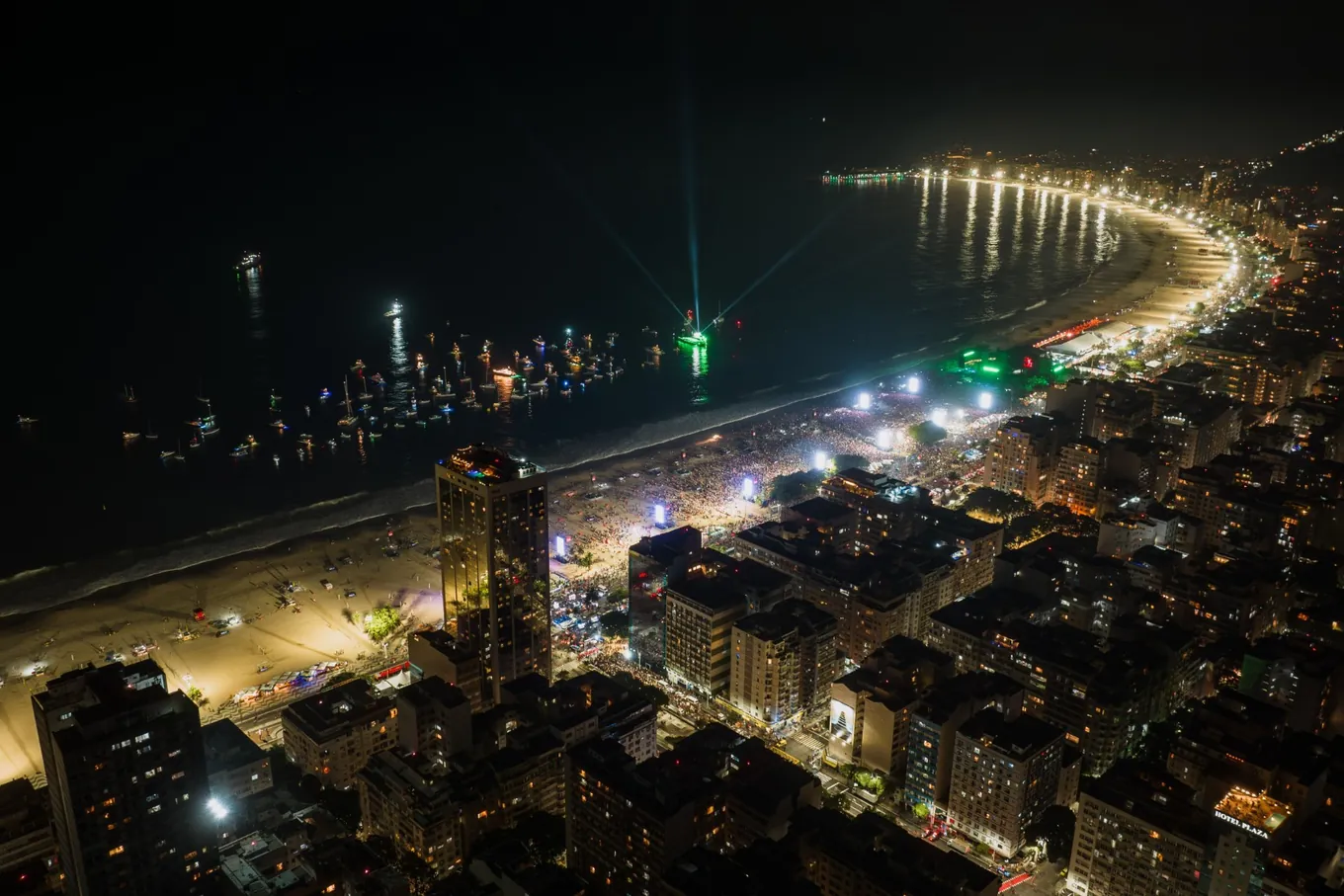
Rio calls it Réveillon, and the city holds it on the sand. On the last night of 2025, about 2.6 million people filled Copacabana, by Riotur's estimate. On December 31, 2026, the night falls on a Thursday, and New Year's Day on a Friday.
Midnight over the water
The fireworks do not rise from the beach. They are fired from barges anchored along the shore, nineteen of them for the last edition, so the whole bay lights up at once and every stretch of sand has a view. The show opened 2026 and ran for about twelve minutes. For the first time, it came with a ballet of 1,200 drones drawing shapes in the sky.
Before and after midnight, the music runs on stages along the sand. For the last edition, Copacabana and Leme had three: the Palco Rio, the samba stage and a third stage at Leme.
What is set for December 31, 2026
As of October 28, 2026, the city has named one artist for the main stage. On October 27, the Prefeitura announced that Djavan will play his first Réveillon on Copacabana, in the year he marks fifty years of music. The rest of the line-up, the stage times, and the transport plan for the night had not been published.
For the last edition, the city presented its operating plan on December 26, five days before the party. Expect the 2026 plan around the same time, and treat the rules below as last year's, a good guide but not a promise.
White clothes, flowers, and seven waves
Most of the beach dresses in white. The custom comes from Umbanda and Candomblé, the Afro-Brazilian religions, where white is the color of the clothes worn to make offerings, and in Candomblé it honors Oxalá, the orixá of life, peace, and transformation. Long before the party became a world show in the 1990s, Umbanda followers had made Copacabana a place of offerings on the last night of the year.
Flowers go into the sea as an offering to Iemanjá, the goddess of the waters. Gladioli are the usual choice. At midnight, many people walk into the surf and jump seven waves. Local belief holds that the seven waves open the way through the difficulties of the year ahead.
At midnight, the whole beach faces the sea, and the sea answers with light.
Getting there and back
On the night, Copacabana closes to cars. For the last edition, tour buses and vans were barred from the neighborhood from the start of December 31. Private cars were stopped from 7 p.m., and from 9 p.m. every road into Copacabana closed, buses and taxis included. Avenida Atlântica, the beachfront avenue, was closed from 7 a.m. on the 31st, and most roads reopened at 5 a.m. on January 1. Parking along the avenue was banned from the morning of December 30.
The metro is the way in, and it works differently that night. For the last edition, MetrôRio sold a special pass only on its app and website, until 6 p.m. on December 31 or until it ran out. From 7 p.m. that evening until 7 a.m. the next day, ordinary transit cards and contactless payment were not accepted. After midnight, only five stations took passengers on board: Cardeal Arcoverde, Siqueira Campos, Cantagalo, General Osório, and Jardim Oceânico. The other stations were for getting off only. Bags larger than 25 liters, bottles, fireworks, boards, and bicycles were not allowed on the trains.
On the sand
The city puts thousands of agents on the street. For the last edition, there were about 7,500 municipal agents across Rio, around 1,370 of them in Copacabana, with 307 cameras on that beach alone. Street vendors were not allowed to sell drinks in glass bottles. With crowds this size, plan how you will find your group again after midnight. For the rest, read Is Rio de Janeiro safe?.
Beyond Copacabana
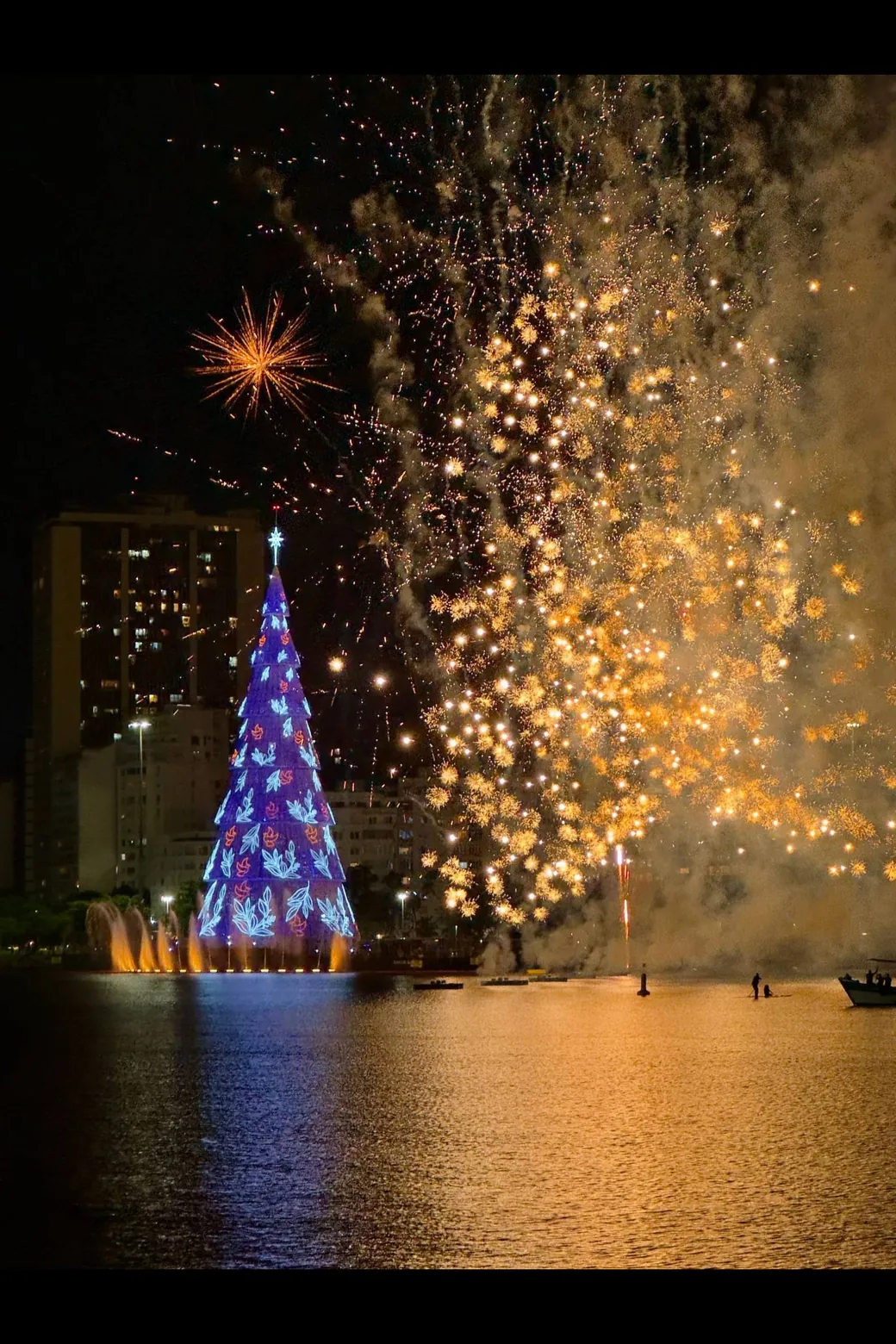
Copacabana is the main party, not the only one. For the last edition, the city ran thirteen stages, from Flamengo and Paquetá to Madureira, Penha, and the West Zone. Flamengo had its own fireworks, ten minutes from three barges. If the crowds on Copacabana feel like too much, these are other places to spend the same midnight.
Some watch from the water. For the last edition, boats needed an inspection approval and had to keep out of a zone around the barges from 6 p.m. on December 31 to 2 a.m. on January 1.
Some prefer to start the night indoors. For the last edition, the Roxy Dinner Show in Copacabana held a special New Year's Eve dinner show, with the show at 9:30 p.m. and service ending at 11 p.m., time enough to reach the sand before midnight. Its plan for 2026 had not been announced.
Where to stay, and when to plan
Staying within walking distance of Copacabana changes the night. You avoid the closed roads and the metro queues, and you can walk back when you want to. Read Copacabana, Ipanema, or Leblon? Where to stay in Rio and Copacabana or Ipanema? before you book, and see Rio de Janeiro at night for the rest of the week.
Worth knowing
- In December 2025, Guinness World Records named Copacabana's party the largest New Year's Eve celebration in the world.
- Buy the metro pass ahead on the MetrôRio app: last year, regular cards stopped working at 7 p.m. on December 31.
- Cash is still king. Cards are widely accepted. Keep small cash for beach kiosks, markets, and tips.