Cusco/Day trips
Inca Trail or Salkantay: which trek to Machu Picchu?
One walks into Machu Picchu through an Inca gateway. The other crosses a glacier pass to get there. Here is how to choose.

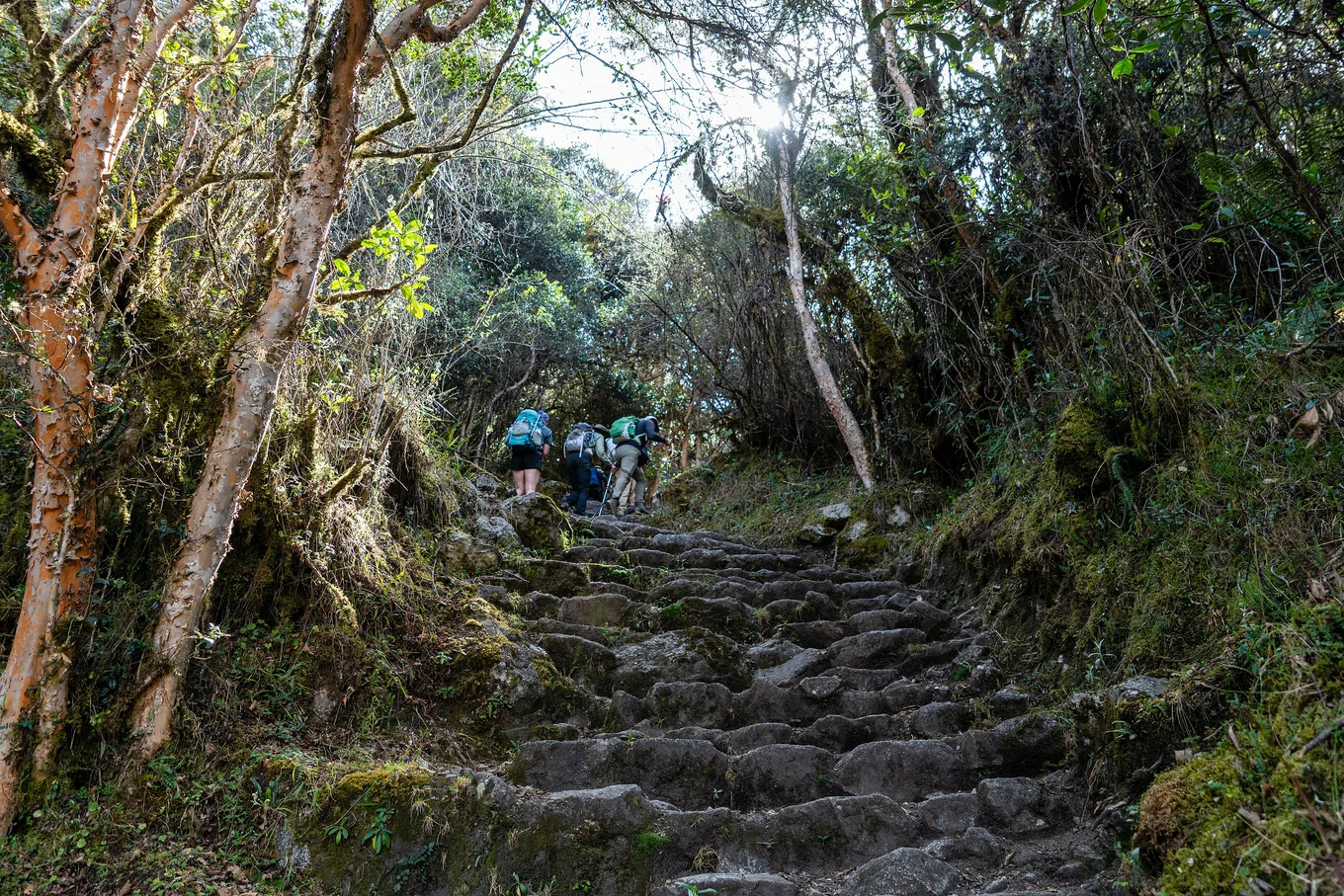
At a glance
- HIGHER PASS
- Salkantay, about 4,600 m
- PERMIT
- Inca Trail only
- FEBRUARY
- Inca Trail closed
In this article
Most people who want to walk to Machu Picchu end up choosing between two routes. The Inca Trail follows a stone road the Incas built and finishes at the site itself, through the Sun Gate. The Salkantay Trek climbs higher, needs no permit, and reaches Machu Picchu by a longer way around.
Both are serious multi-day walks at altitude, and neither is better in every way. The right one depends on when you travel, how far ahead you can book, and what you want the last morning to feel like. This guide sets them side by side, with every figure taken from official notices, the press, or the operators that run the treks, and the date we checked it. We have not walked either route ourselves.
The short answer
Choose the Inca Trail if you want to arrive at Machu Picchu on foot along an Inca road, and you can book months ahead.
Choose Salkantay if you are booking late, traveling in February, or want big mountain scenery and a higher pass.
| Inca Trail (classic) | Salkantay Trek | |
|---|---|---|
| Distance and days | 43 km over 4 days | Usually 5 days and 4 nights, with a 4-day version |
| Permit | Required, places limited | Not required, no daily quota |
| How you book | Through an accredited travel agency | Usually with an operator |
| Highest point | Dead Woman's Pass, about 4,215 m | Salkantay Pass, about 4,600 m |
| Nights | Huayllabamba, Pacaymayo, Wiñay Wayna | Soraypampa, then lower camps, then Aguas Calientes |
| Ends at | Machu Picchu, through the Sun Gate | Aguas Calientes, then up to the site the next morning |
| February | Closed for maintenance | Open, in the rainy season |
From this article, November 2026
The road the Incas built
The Inca Trail is a short stretch of something much larger. It belongs to the Qhapaq Ñan, the Inca road system, which UNESCO added to its World Heritage List in 2014 and describes as covering about 30,000 kilometers across six countries.
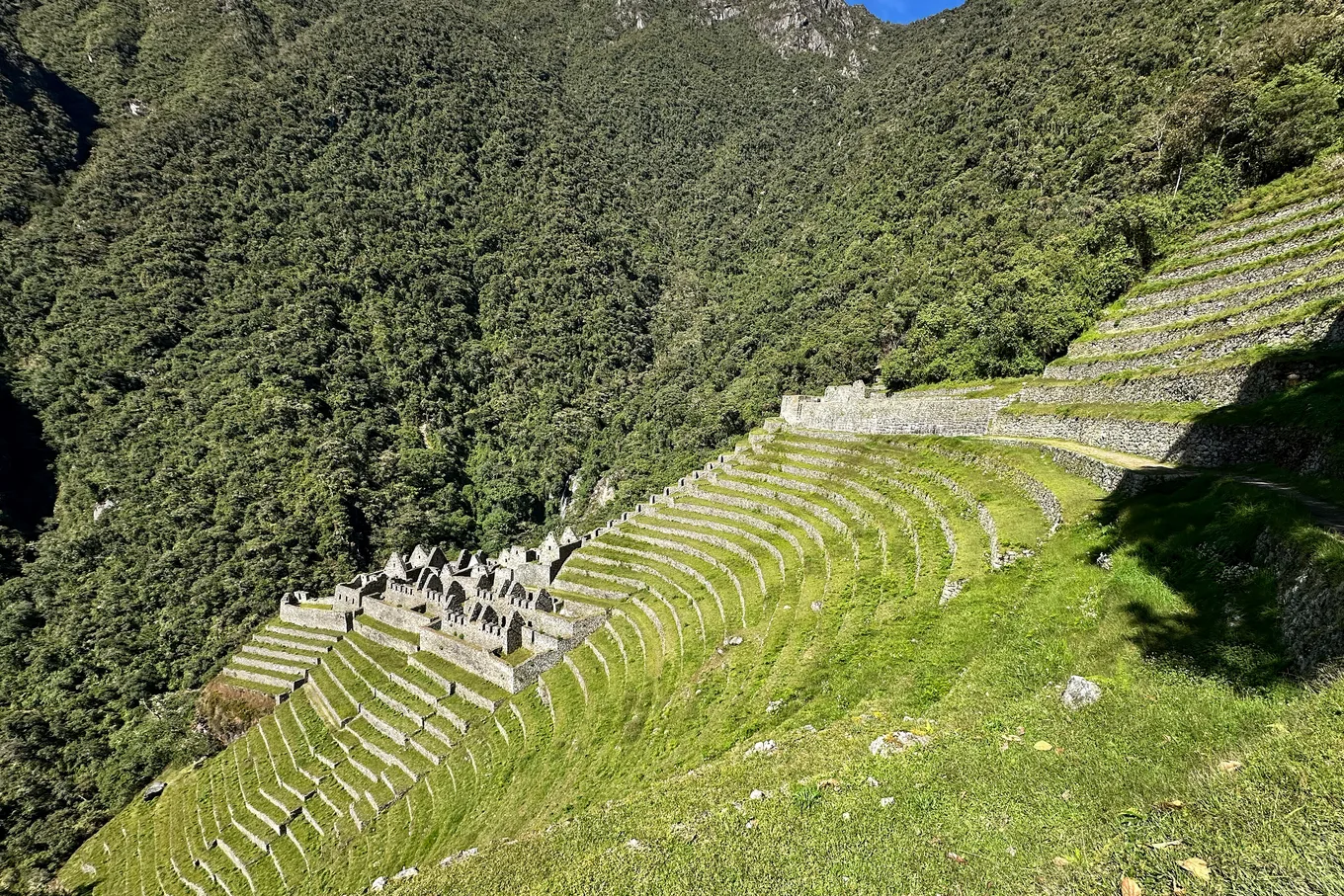
The classic route itself is modest by comparison. According to Andina, Peru's state news agency, it covers 43 kilometers over four days: about 13 kilometers to Huayllabamba on the first day, then on to Pacaymayo, then to Wiñay Wayna, and a last day of about 3 kilometers that leads through Inti Punku, the Sun Gate, above Machu Picchu.
Who each trek suits
The Inca Trail suits travelers who plan well ahead and care most about the history. You walk on stone the Incas laid, pass Inca sites such as Wiñay Wayna, and arrive at Machu Picchu on foot. Salkantay suits travelers who decide later, travel in February, or want a higher and wilder landscape beneath a 6,271-meter peak. If neither the booking window nor the season decides it for you, ask yourself one question: is the walk into Machu Picchu the moment you want, or the mountains on the way?
Permits: the biggest difference
The Inca Trail is a protected route with limited places. The regulation sets a shared limit of 500 users a day on routes 01 to 04, the classic trail among them, and it does not say whether guides, cooks, and porters count inside that number, as our guide to Inca Trail permits explains. El Comercio reports that the trail usually receives about 500 people a day. The trek must be booked through an accredited travel agency, as the Peruvian press has reported, and you cannot hike it on your own.
That limit is why timing matters. Intrepid Travel, an operator that runs the trek, notes that permits go on a first-come, first-served basis, so booking well in advance is essential.
Salkantay works differently. No government trekking permit is needed and there is no daily quota, as Responsible Travel, Chullos Travel Peru, and Salkantay.org all state. Most people still go with an operator, which provides a guide, cooks, and horses for the gear. On both routes you need a Machu Picchu entry ticket for the day you visit the site.
Altitude and difficulty
Both treks are demanding, and most operators recommend two or three days in Cusco first to adjust to the altitude.
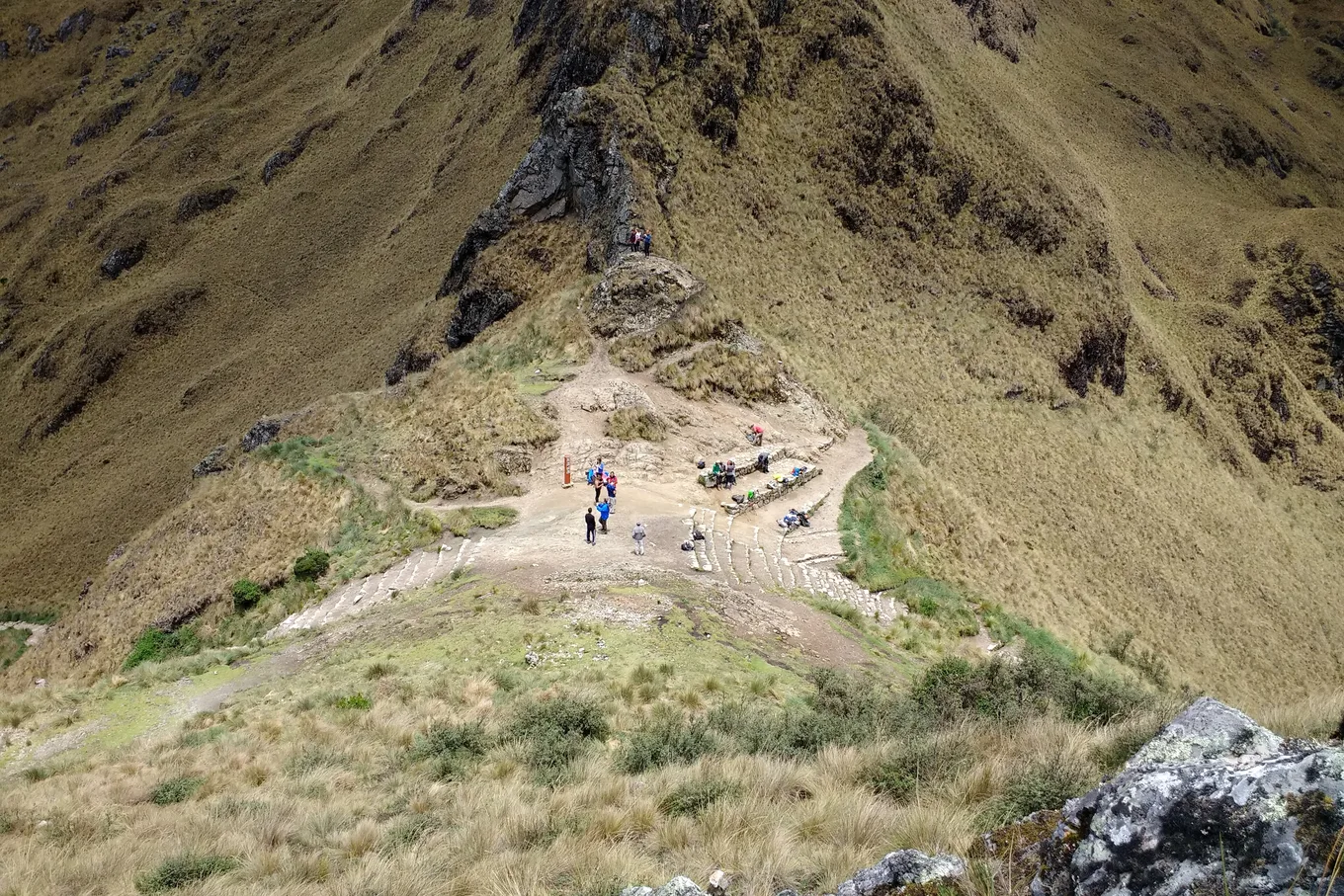
Inca Trail: the hardest climb is to Warmiwañusca, Dead Woman's Pass, the highest point of the route at about 4,215 meters according to Andina and G Adventures. Other sources give 4,200 or 4,216 meters.
Salkantay: the pass beneath Nevado Salkantay sits at about 4,600 meters. A sign at the pass gives 4,630 meters, and published figures range from 4,600 to 4,650. Nights at the first camp, Soraypampa, can drop below freezing, as Exodus and Salkantay.org warn.
Salkantay therefore climbs roughly 400 meters higher. It also takes a day longer and ends with a long descent into the cloud forest.
How each one reaches Machu Picchu
This is the part that decides it for many people.
The Inca Trail
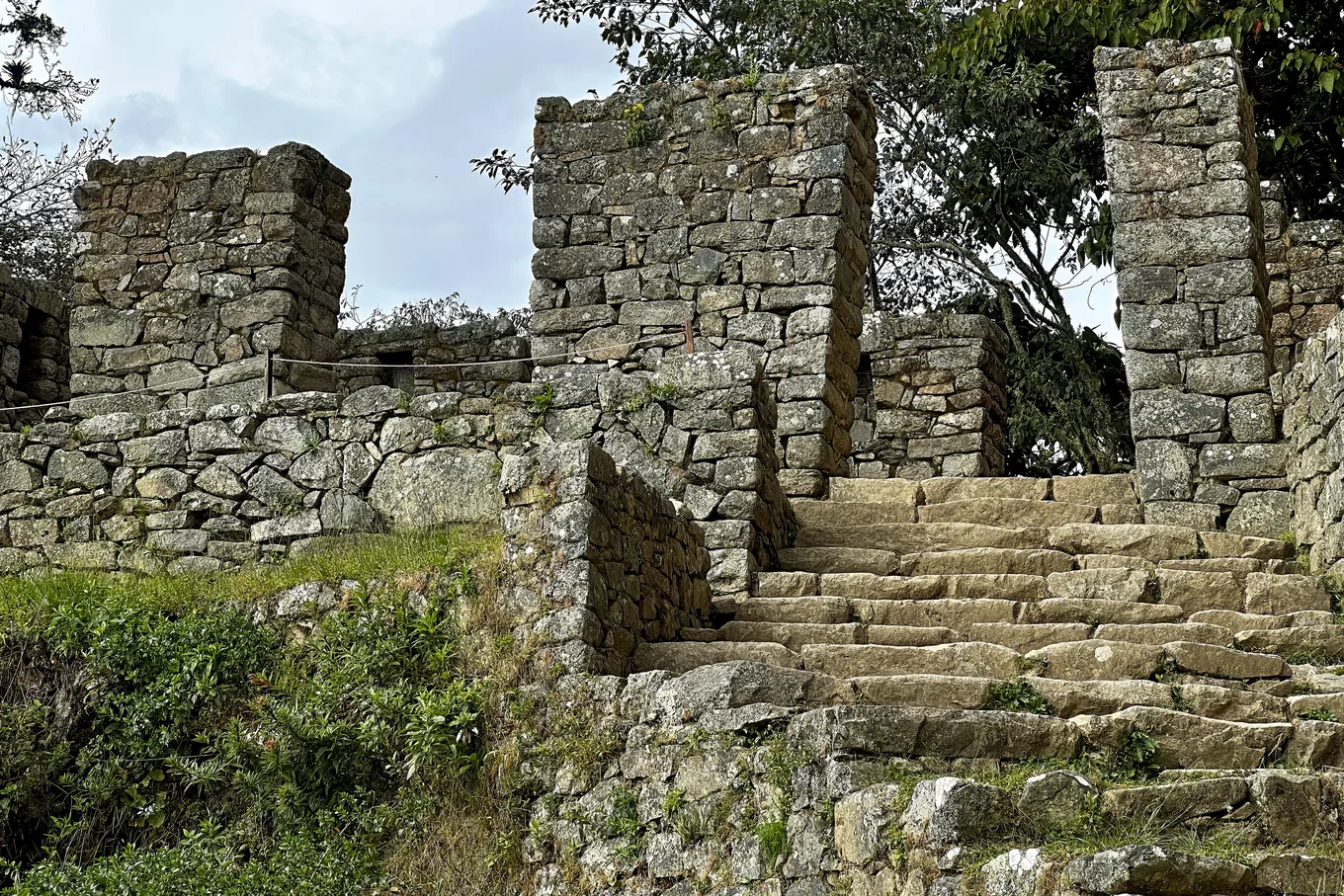
finishes at Machu Picchu itself. On the fourth morning you leave Wiñay Wayna, walk up to Inti Punku, the Sun Gate, and from there continue down to the site.
Salkantay
does not enter the site on foot. Responsible Travel notes that the route ends in Aguas Calientes, with the final 12 kilometers walked or covered by train, and you go up to Machu Picchu the next morning by bus or on foot.
February: the Inca Trail closes
The Inca Trail closes every year in February for maintenance and conservation. In 2026, El Comercio reported that it closed from January 31 to February 28 and reopened on March 1. In 2025, Andina reported a closure from February 1 to 28. As of November 25, 2026, no official dates for February 2027 had been published, so check with your operator.
February also falls in the rainy season, which in the Cusco Andes runs roughly from December to March. Salkantay stays open, but expect rain, mud, and cloud over the pass.
Safety on both trails
Both routes are well traveled, but they are mountain paths, and accidents happen. In May 2026, Infobae reported that a 53-year-old Australian hiker died after a fall of about 400 meters on the Inca Trail, on a section known as the "50 gradas," the fifty steps, between Wiñay Wayna and the Sun Gate. Prosecutors opened an investigation that included the condition of a wooden handrail. Infobae also reported that sections of the trail, including bridges and handrails, are inspected each February during the annual closure.
On either route, the practical steps are the same: acclimatize in Cusco before you start, book with an accredited operator, walk the steep and wet sections slowly, and follow your guide.
Cost
Prices change with the operator and what is included, so compare like with like.
Salkantay: as of November 25, 2026, published prices for a five-day group trek ranged from about US$480 to US$820 per person, depending on the operator.
Inca Trail: we could not find an official permit price for 2026 or 2027, and each accredited agency sets its own package price. Ask for a full breakdown of what is included before you pay.
Before you go
Whichever trek you choose, the days in Cusco around it matter as much as the walk. Our guide to the Salkantay Trek covers that route in detail, our guide to the altitude in Cusco explains how to pace the first days, and our free Cusco itineraries for 3 days, 5 days, and 7 days show how to fit the city around a trek.
Frequently asked questions
Is the Inca Trail or Salkantay harder?
Salkantay climbs higher, to about 4,600 meters at the pass against about 4,215 meters at Dead Woman's Pass on the Inca Trail, and it takes a day longer. Both are demanding multi-day treks.
How long is the Inca Trail?
The classic route covers 43 kilometers over four days and ends at the Sun Gate above Machu Picchu.
Can I hike the Inca Trail without a tour operator?
No. It must be booked through an accredited travel agency, and hiking it independently is not allowed.
Is the Inca Trail open in February?
No. It closes every February for maintenance and reopens on March 1. Dates for 2027 had not been published as of November 25, 2026.
Do I need a permit for Salkantay?
No permit is needed for the trek itself, but you still need a Machu Picchu ticket for the day you visit the site.
How much does the Salkantay Trek cost compared with the Inca Trail?
As of November 25, 2026, published prices for a five-day Salkantay group trek ranged from about US$480 to US$820 per person. We could not find an official Inca Trail permit price for 2026 or 2027, and each accredited agency sets its own package price.
Does the Salkantay Trek end at Machu Picchu?
No. It ends in Aguas Calientes, with the final 12 kilometers walked or covered by train, and you go up to Machu Picchu the next morning by bus or on foot. The Inca Trail is the one that enters through the Sun Gate.
Worth knowing
- UNESCO describes the Qhapaq Ñan, the Inca road system the Inca Trail belongs to, as covering about 30,000 kilometers across six countries.
- Traveling in February or booking late? Salkantay is the trek still open to you.
- Cash is still king. Cards work in central spots. Keep some cash for taxis, markets, and tips.