Rio de Janeiro/Destination guides
What to eat in Rio de Janeiro
Black beans on a Saturday, cheese bread in the morning, and a beach that feeds you without leaving the sand. The dishes, and the tables in our catalog.

At a glance
- FEIJOADA
- Saturdays, also Fridays
- RODÍZIO
- Forty cuts at the Palace
- ON THE SAND
- Biscoito Globo and mate
In this article
Rio eats in three places: at the long weekend table, at the counter, and on the sand. The dishes are not difficult to find, and many of them came from somewhere else in Brazil before Rio adopted them. Here is what to look for, a little of where each one comes from, and where we go to eat it.
Feijoada, the Saturday table
Feijoada is a stew of black beans with cuts of pork, cured beef, and sausage, and in Rio it is traditionally a Saturday meal, with Fridays added for the working lunch. It usually comes with the same companions: white rice, farofa scattered over the top, finely shredded greens, crisp pork rinds, and often slices of orange.
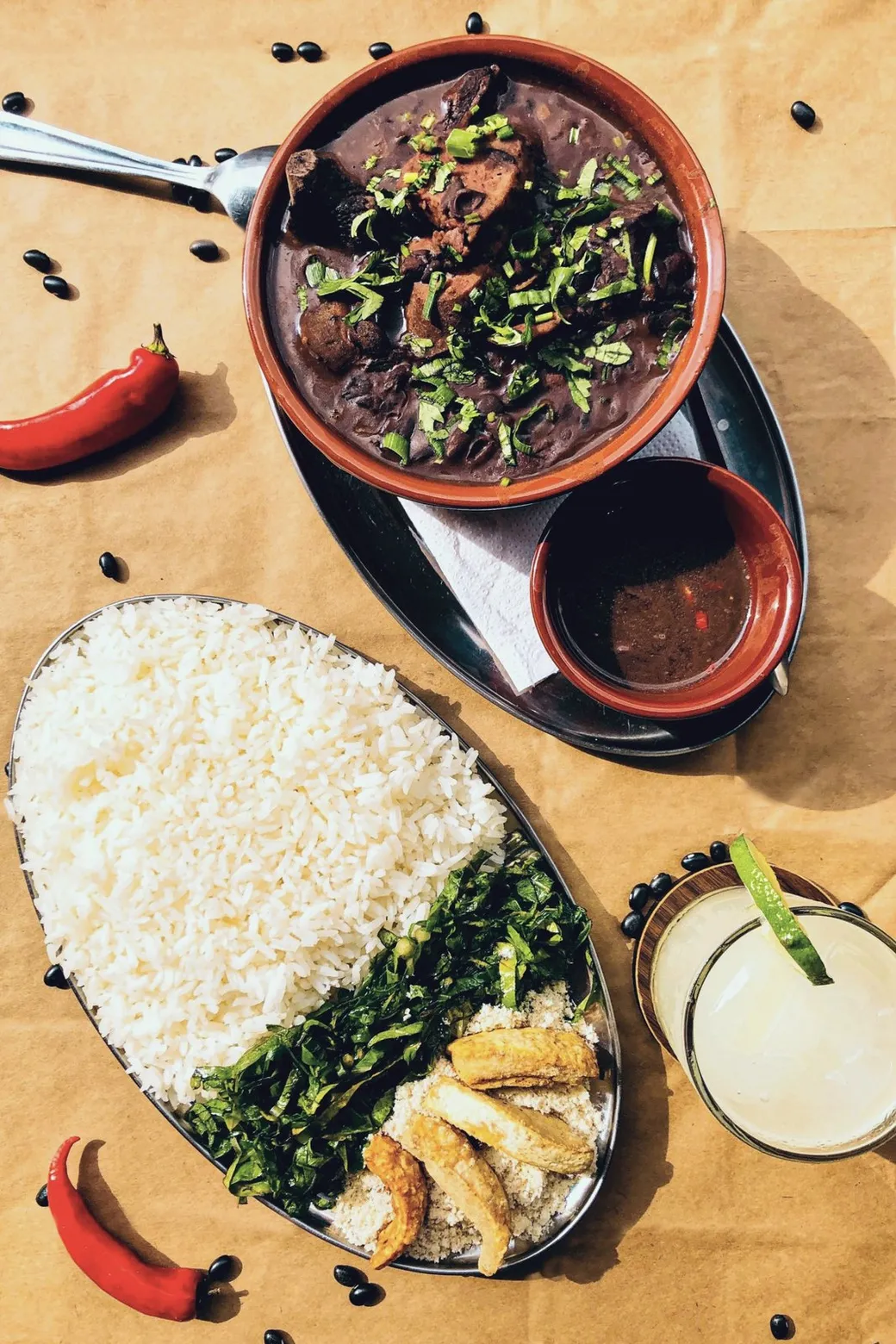
A popular story says the dish was made by enslaved people from cuts their owners threw away. Food writers doubt it. The researcher Roberta Malta Saldanha points to the bean and sausage stews Portugal cooked long before, which Brazil adapted with black beans and dried meat.
Two tables in our catalog are built around it. At Embaixada Carioca, halfway up the Sugarloaf cable car on Morro da Urca, the feijoada comes from Academia da Cachaça, a Veja Rio award winner, and it is served every day, not only on Saturdays. At Aconchego Carioca in Praça da Bandeira, Katia Barbosa's kitchen invented the bolinho de feijoada, feijoada shaped into a fried ball.
Feijoada belongs to a long afternoon, which is why Rio keeps it for Saturday.
Rice, beans, and farofa
Rice and beans are the base of many everyday plates. Farofa, toasted cassava meal, goes on top. It is salty and a little smoky, and it goes with feijoada and with grilled meat.
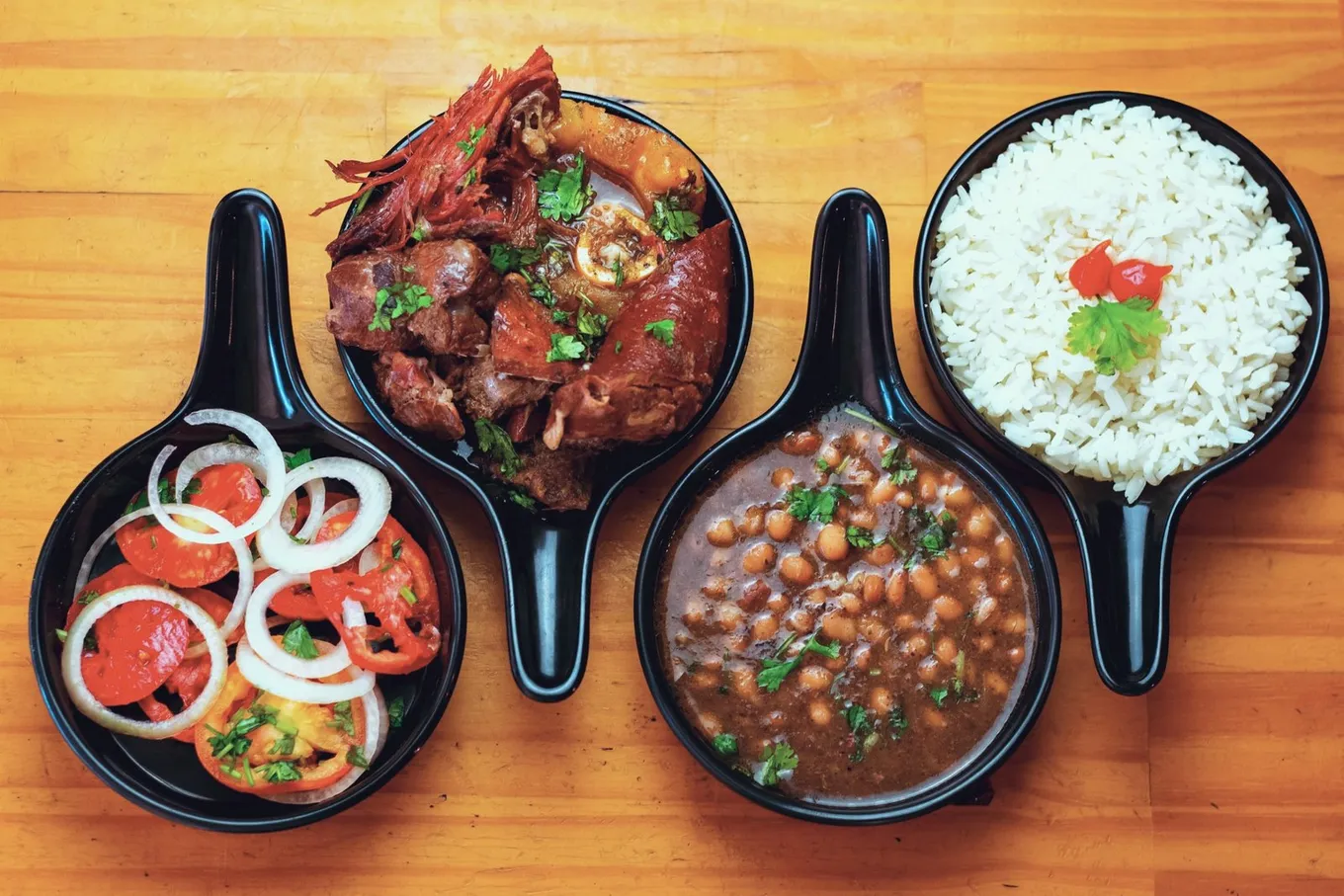
Carne seca, beef that has been salted and dried, is one of the things that can sit beside them. It is the same dried meat that Brazil put into its version of the feijoada.
The rodízio
The rodízio was the meal Aleksejs liked most in Rio. The waiters keep coming to the table with skewers and carve at your plate until you signal that you have had enough, and many places put a two-colored card by your plate, one side for more and the other for a pause.
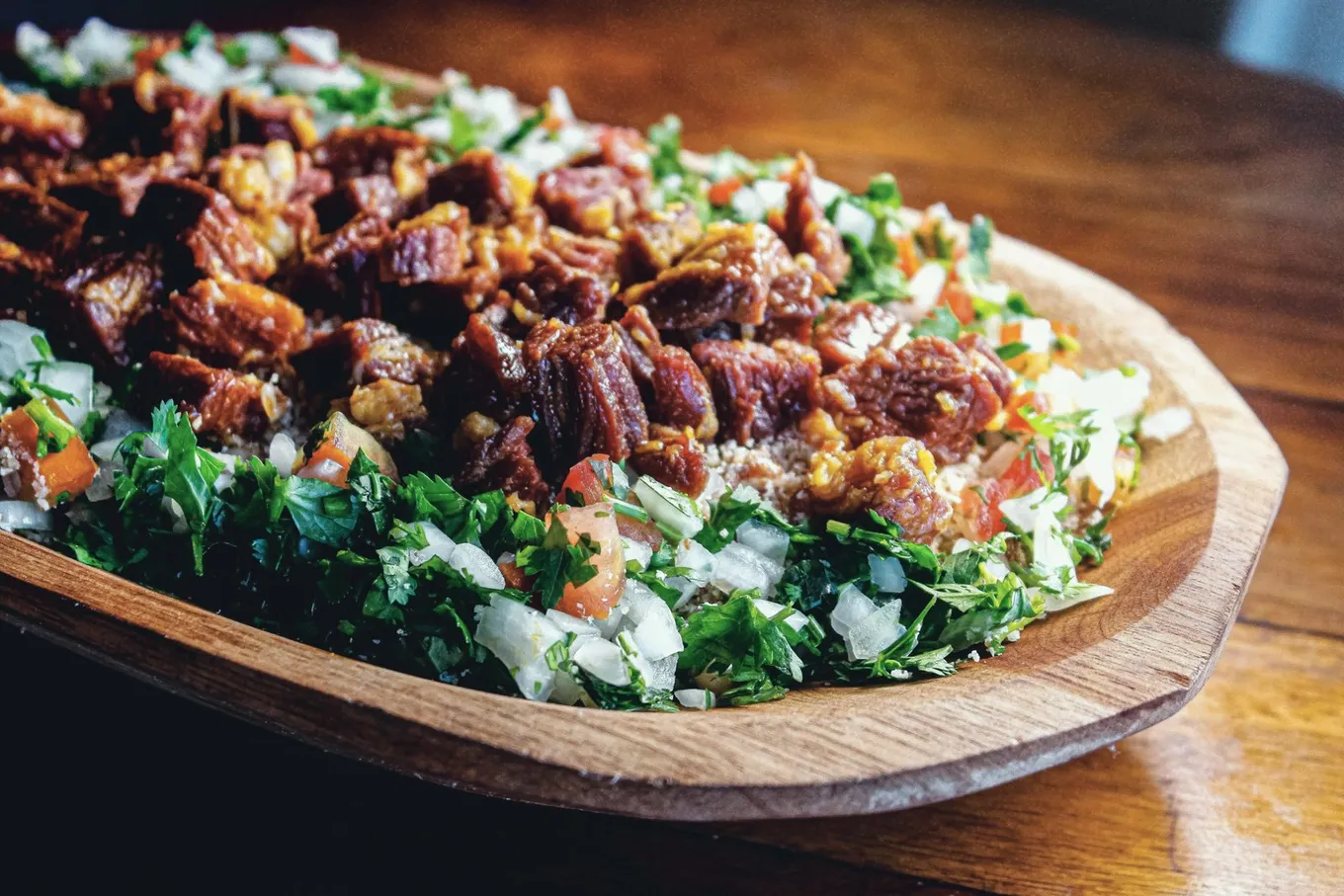
In our catalog, Churrascaria Palace in Copacabana was founded in 1951 and is listed as Carioca cultural heritage. Forty cuts come to the table, under a Bossa Nova mural. Marius Degustare, at the quiet north end of Copacabana, brings meat, fish, and shellfish in turn. In Leblon, CT Boucherie turns the idea around: Claude Troisgros has you choose one cut, and the waiters keep bringing the sides.
Pão de queijo in the morning
Pão de queijo, small rolls of cheese bread, belongs to Minas Gerais, the dairy state to the north of Rio.
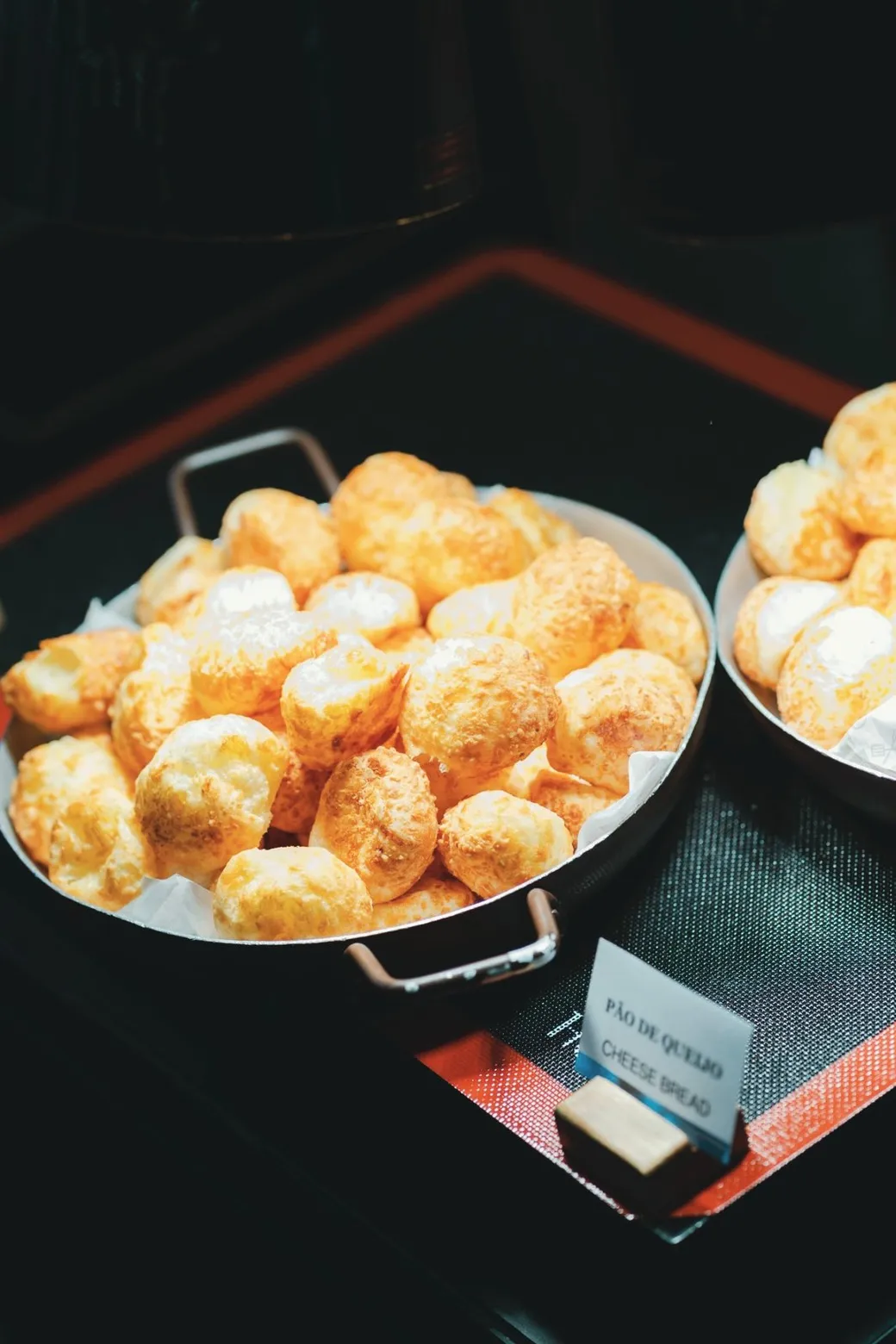
It is made with polvilho, a starch from cassava, and the researcher Vani Fonseca dates it to around 1750. Some food historians tie its creation to the strength of the state's milk and cheese trade. The story she tells is a practical one. The first versions were plain cassava biscuits, and cheese went into the dough because some was left over from the cheesemaking. For a long time the rolls were kept for important days, and they became everyday food much later. Her account comes from an interview rather than a written record, so read the date as an estimate.
Pastel at the street market
A pastel is a thin turnover of pastry, folded over a filling and fried until crisp and golden. The fillings run from ground meat and cheese to heart of palm and small shrimp, with guava and cheese for something sweet.
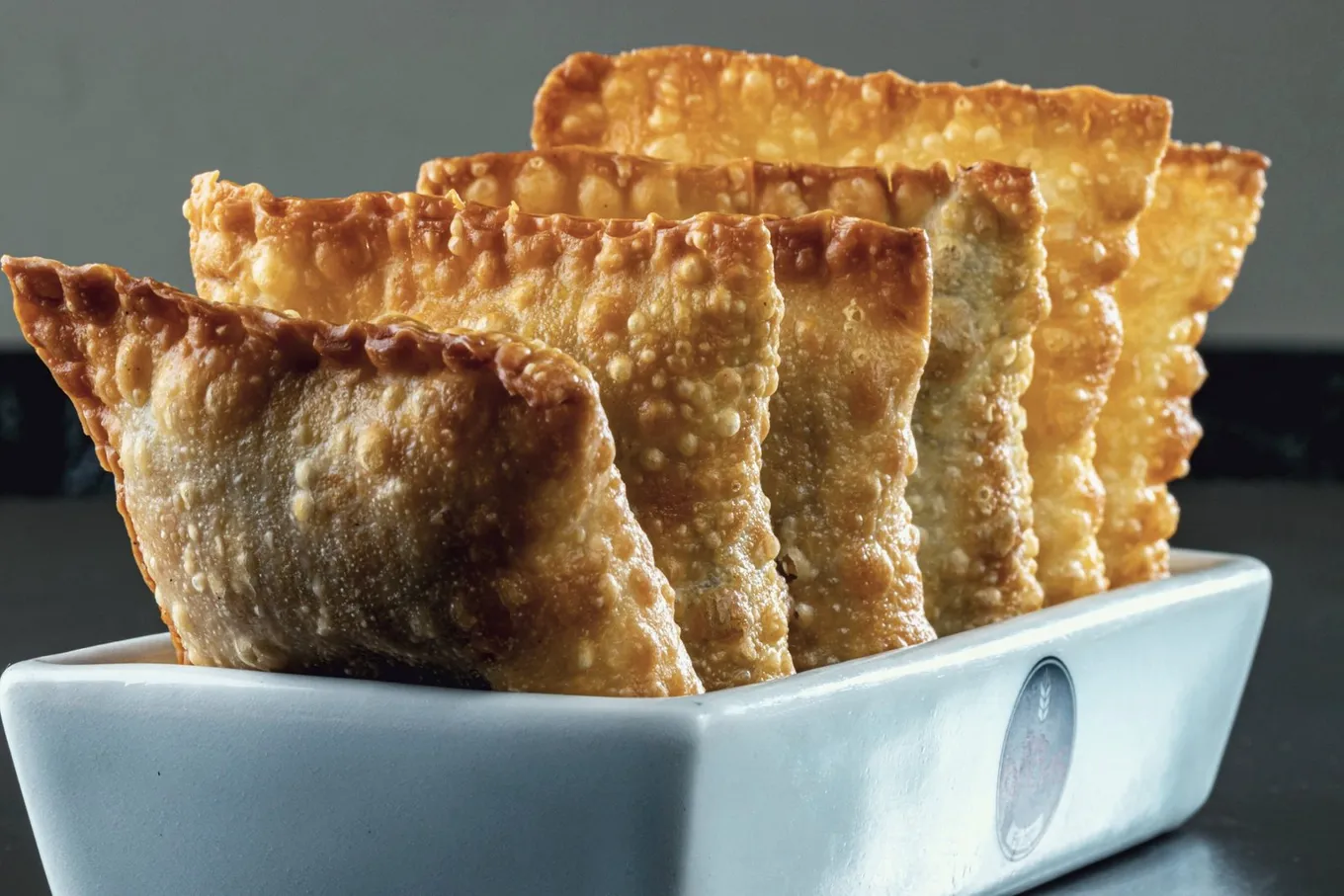
It comes from São Paulo state and is sold at the open-air street markets, the feiras, and at counters called pastelarias. The usual drink beside it is caldo de cana, sugarcane juice. Its origin is usually credited to Chinese or Japanese immigrants, who adapted their spring rolls or fried wontons, though no single account has settled it.
What the beach sells
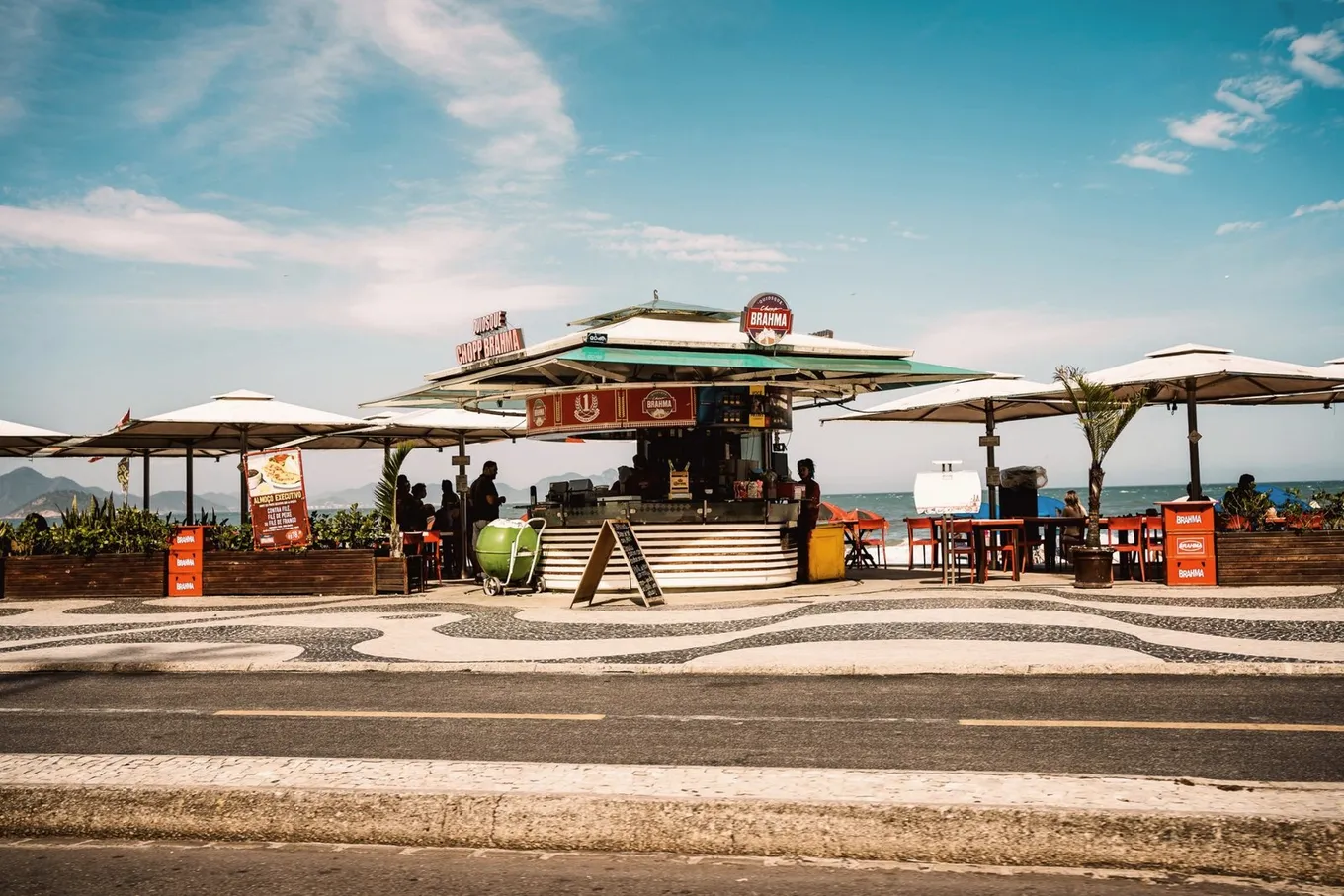
You can eat on a Rio beach without standing up. Vendors walk the sand with drinks and snacks, and the kiosks along the promenade serve food and cold beer.
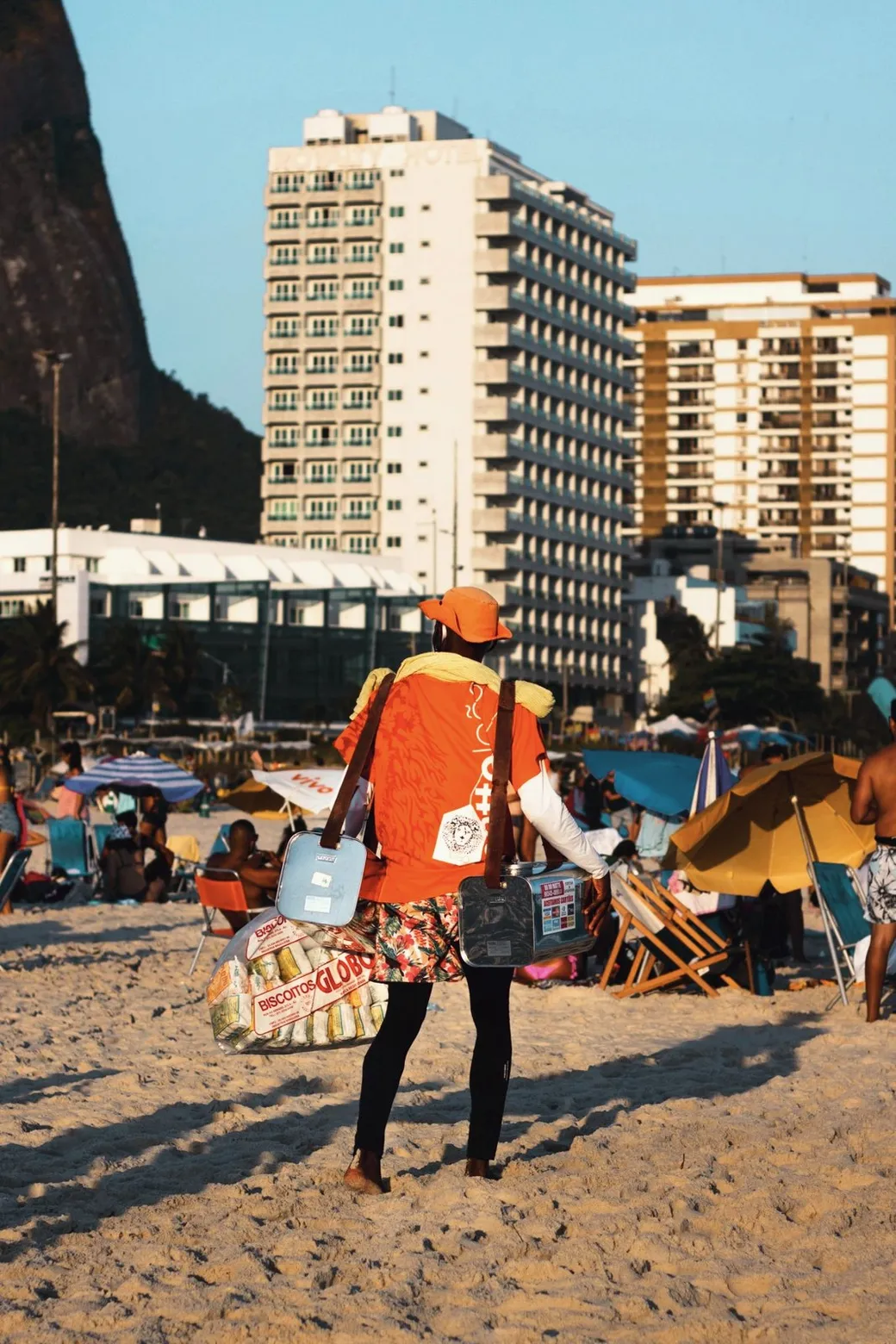
Two things go together on the sand. Biscoito Globo is a light, crunchy ring made from tapioca starch, in a sweet version and a salty one. It was created in 1953 in São Paulo, where three brothers sold it, and moved to Rio, where its paper bag became a piece of Brazilian design in its own right. The other is mate, a cold, sweet tea called out by the vendors as they pass, classically mixed with lemon. Time Out Rio calls the pair a symbol of being carioca. Açaí comes from farther north, from Pará and Amazonas. In Rio it is frozen and mashed, eaten from a bowl with granola and banana, and on the beach it comes in small cups, frozen like a sorbet.
Caipirinha
Brazil's best-known cocktail is made with cachaça, the spirit distilled from sugarcane, with lime, sugar, and ice. The International Bartenders Association lists it among its official cocktails. On the beach it comes in a plastic cup, and at Aprazível in Santa Teresa the house makes its own cachaça.
Cachaça, lime, sugar, and ice. A caipirinha needs nothing more.
Something sweet
Brigadeiro is a small ball of condensed milk, cocoa, and butter, rolled in chocolate sprinkles. Its name is linked to the 1945 presidential campaign of Brigadier Eduardo Gomes.
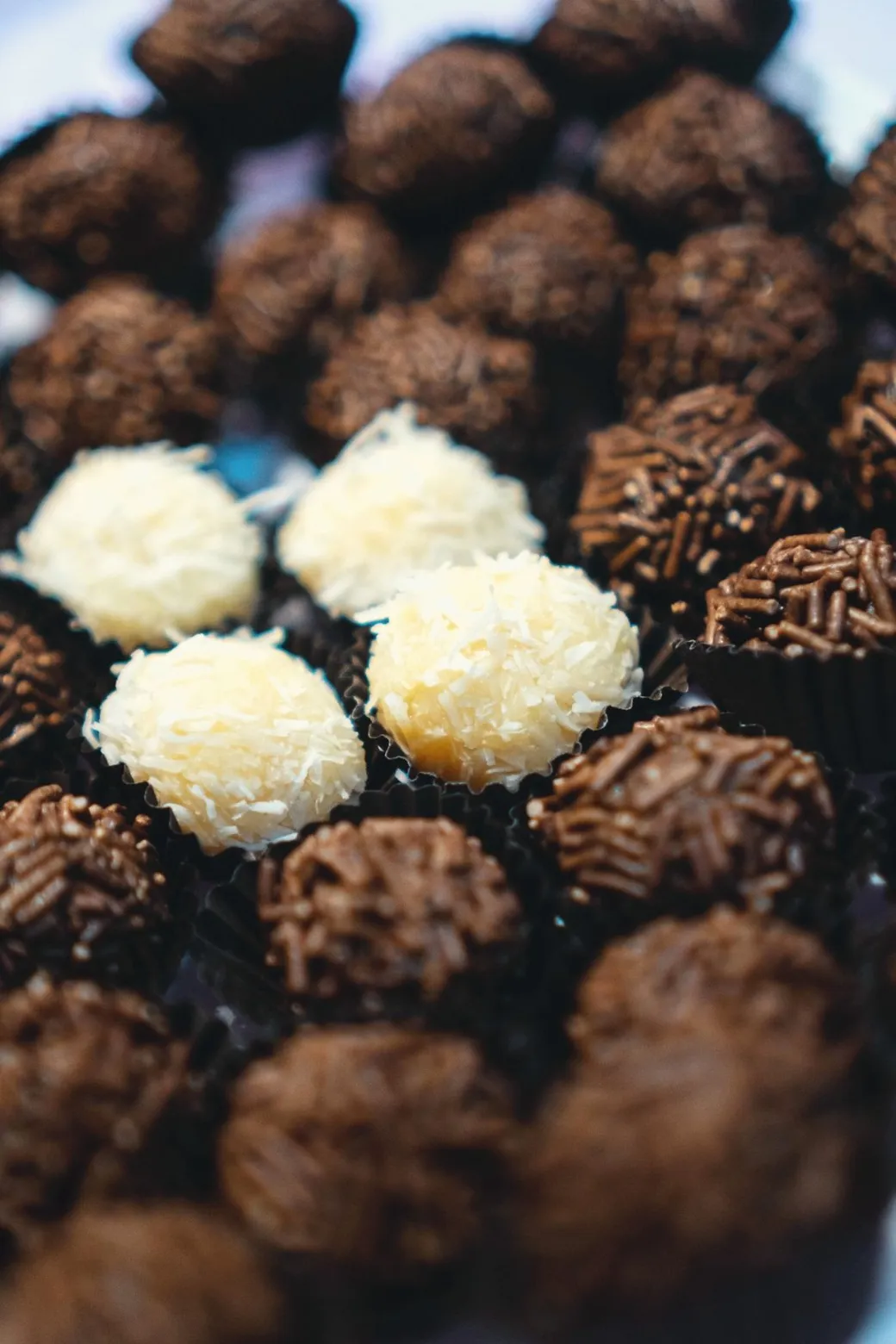
The usual story is that supporters sold the sweets at his rallies, and one account credits Heloísa Nabuco de Oliveira, who backed his candidacy, with creating it and naming it after him. Wartime rationing in the 1940s had made condensed milk a common stand-in for dessert ingredients, which helped the sweet spread. The origin is contested, as many origin stories are, and the sweet may be older than the campaign. Gomes lost the election to Eurico Gaspar Dutra, and the brigadeiro outlasted both of them. Beijinho, the small kiss, is its coconut twin, white instead of dark.
Where we eat
Our Rio catalog keeps fourteen tables, each rated on Google and mapped. A few of them, by what they do best.
Zazá Bistrô, in an Ipanema corner house, cooks shrimp vatapá with mango. Aprazível has garden tables on the hillside of Santa Teresa. Satyricon, founded in 1982, sets the day's catch on ice by the door. San, in Leblon, flies most of its fish in from Japan, and Gurumê in Ipanema serves tuna nigiri under foie gras and caramelized apple.
Oro, in Leblon, serves Felipe Bronze's tasting menus and holds two Michelin stars. Sud o Pássaro Verde, near the botanical garden, is where Roberta Sudbrack cooks over a wood-fired oven. Tempo Bistrô in Botafogo names its dishes for the city: Dois Irmãos, Mauá, Mocidade. Tutto Nhoque, also in Botafogo, makes eleven kinds of gnocchi fresh each day.
Learning it by hand
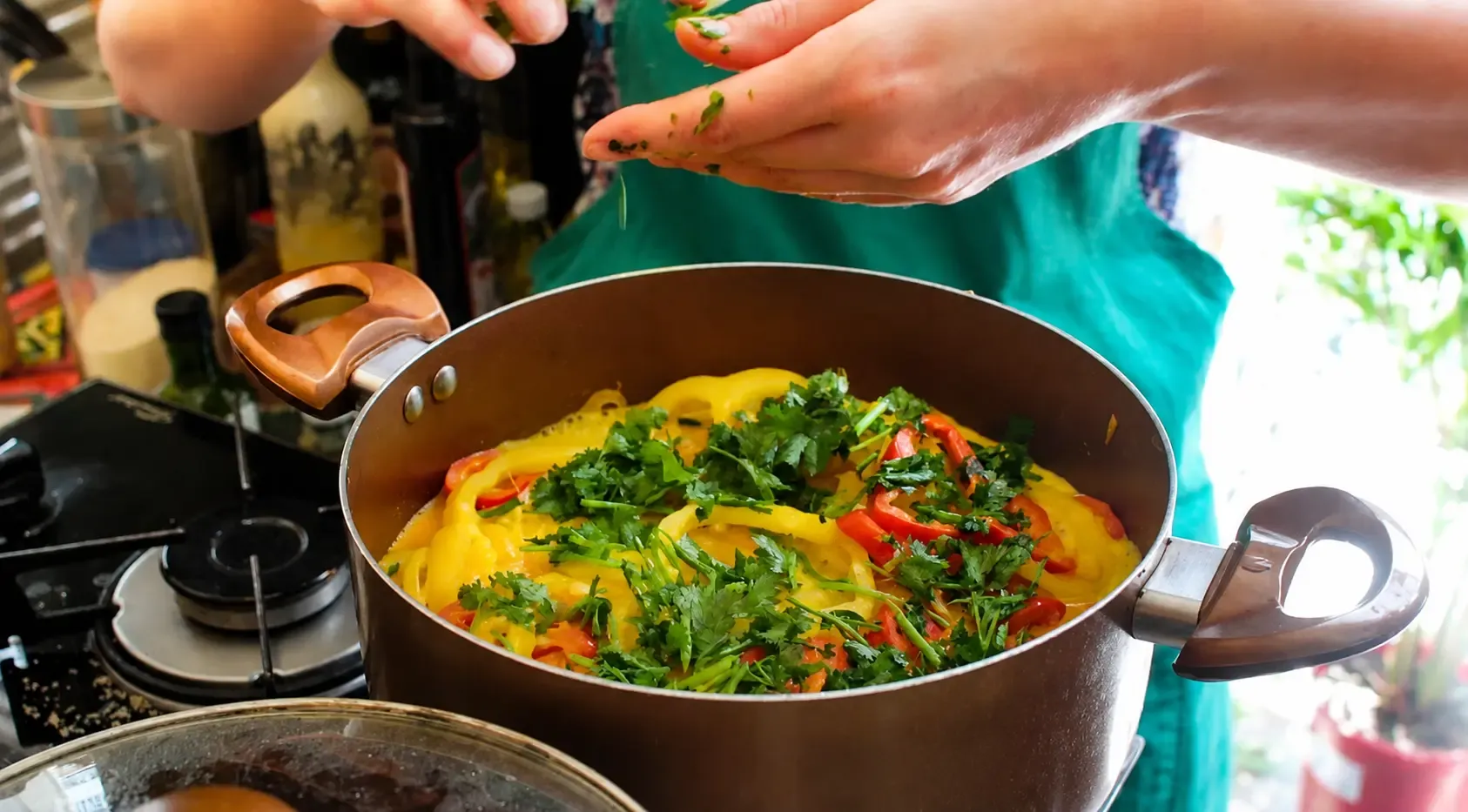
The cooking class in our catalog teaches nine Brazilian recipes in a kitchen a block off Ipanema, and the market walk is optional. Food, drinks, and the recipes are included, so the meal is the one you made.
We wrote about the rodízio, the beaches, and the Selarón Steps in Rio de Janeiro for couples, and the cooking class and the tables above have their place in our free routes for 3 days, 5 days, and 7 days in Rio.
Worth knowing
- Brazilian law names caipirinha the national typical drink: cachaça, lime, and sugar, bottled at 15 to 36 percent alcohol.
- Many rodízio tables put a two-colored card by your plate: one side for more, the other for a pause.
- Cash is still king. Cards are widely accepted. Keep small cash for beach kiosks, markets, and tips.