Cusco/Practical advice
Is Cusco safe? Scams to know before you go
What three governments say as of October 2026, and the handful of tricks that are easy to avoid once you know them.
At a glance
- US ADVISORY
- Level 2, September 2026
- ALTITUDE
- About 3,400 meters
- TAXIS
- Agree the fare first
In this article
The city of Cusco lies outside the areas the official advisories ask travelers to avoid. In the city, most of what they warn about is the risk of any busy tourist city: bags in crowds, taxis hailed from the curb, tours sold on the street, tickets that are not what they seem. The risk that sets Cusco apart is the altitude. Here is what the advisories say, and what our Cusco catalog notes.
What the travel advisories say
The US State Department rates Peru at Level 2, "exercise increased caution," in an advisory issued on September 4, 2026. It states that the city of Cusco and the sites nearby, including the Sacred Valley, the Inca Trail, and Machu Picchu, are not in the areas it marks "Do Not Travel."
The UK Foreign Office, in advice updated on October 9, 2026, names Cusco among the Peruvian cities where street crime, including muggings and thefts, is "a significant problem." Canada, in advice updated on October 15, 2026, asks travelers to exercise a high degree of caution in Peru and lists Cusco among the places where pickpocketing and bag snatching occur frequently.
Our catalog puts it plainly: the historic center is safe by day. Mind your belongings, avoid dark alleys at night, and keep valuables discreet in crowded streets.
In Cusco, the first thing to watch is the altitude, and the second is the taxi.
Advisories change. Before you fly, open the current pages of the US State Department, the UK Foreign Office, and the Government of Canada, and read the date at the top.
Taxis
All three governments advise against hailing taxis on the street. The US suggests an app, a taxi ordered by phone, or one arranged through a major hotel. The UK warns that fake taxi drivers sometimes approach arriving passengers. All three governments also mention express kidnappings, in which victims are forced to withdraw cash from ATMs, and the UK says these often involve criminals posing as taxi drivers, usually at night. Canada notes that licensed taxis are not metered, so agree on the fare before you get in.
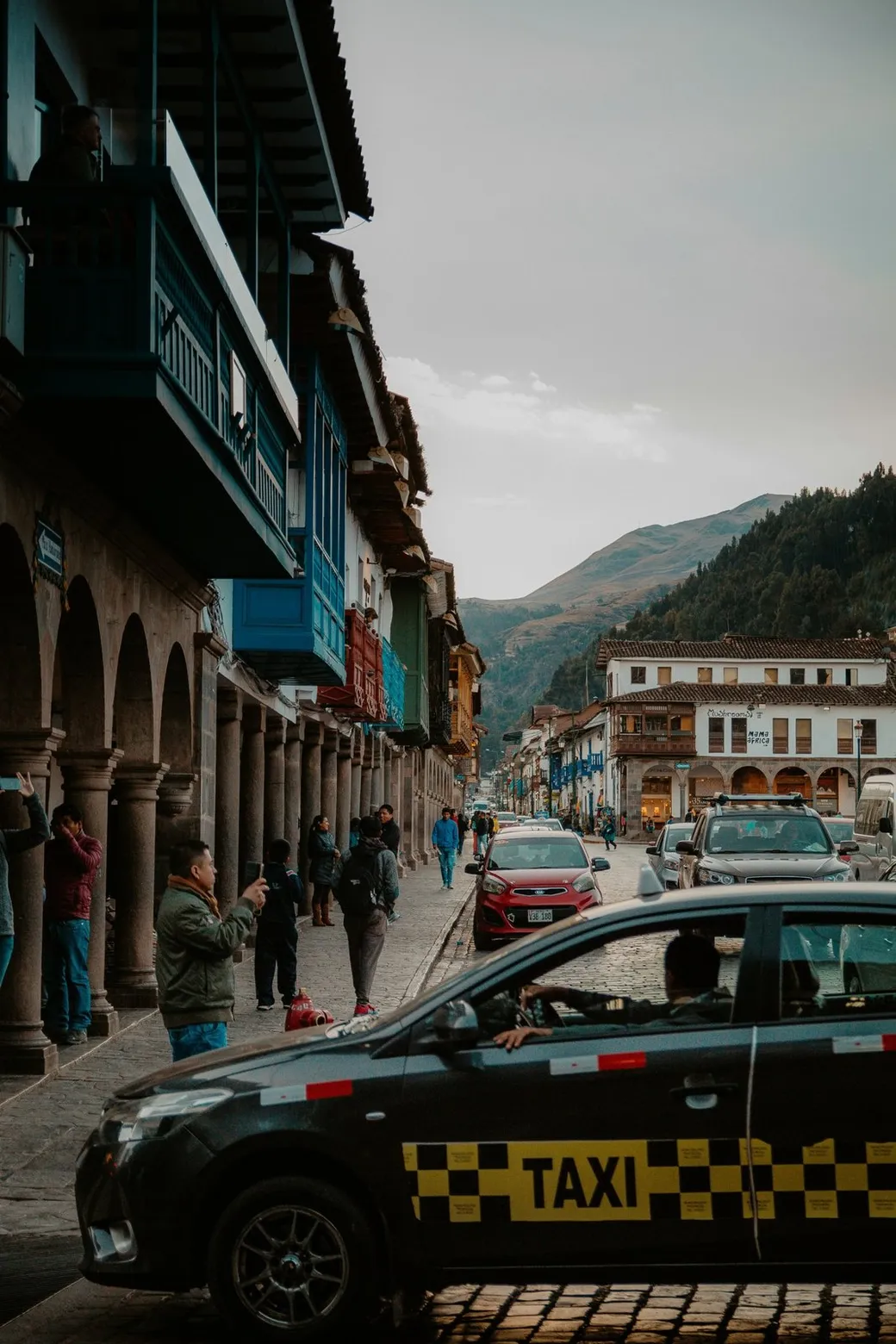
Our catalog's advice is the same: use official taxis or Uber, including for airport pickups, and prefer apps at night. Uber works well across Cusco, but in the historic center vehicle access is sometimes restricted, so confirm the pickup point before you wait. After a show near the Plaza de Armas, or an evening in San Blas, a licensed taxi back is the easy call. San Blas is quieter after dark, and the walk back down is steep. The same advice covers your arrival. Book the first ride from the airport before you land, use an app, or take an official airport taxi, rather than accepting an offer from someone who approaches you in the arrivals hall.
Tours, tickets, and the Boleto Turístico
Our catalog lists tour upselling and ticket scams among the things to watch in Cusco, with one rule: confirm the details first. The UK warns of thieves posing as tour operators who approach arriving passengers. Book with an agency you can find again, with an office and a receipt, and ask for its complaints book, the Libro de Reclamaciones, which Peru's consumer law requires businesses to keep.
Online, Machu Picchu tickets are sold only through the Ministry of Culture's site, tuboleto.cultura.pe. In 2024 the ministry warned about a fake site with almost the same name, so type the address yourself. Under a new system that began on September 22, 2026, tickets have to be paid at once and are tied to the visitor's name and ID number, according to Peruvian press reports quoting the Culture Minister. The trial period ended on October 22, 2026, and no official decision on what follows had been published by October 23, so check the rules when you book. A ticket bought from a stranger in someone else's name is the risk to avoid. Train tickets carry the same risk: in January 2025, Cusco police detained Peruvian visitors carrying forged PeruRail tickets bought from informal sellers at the airport and on the Plaza de Armas.
The Boleto Turístico, the pass for 16 sites around Cusco, is personal and non-transferable, according to COSITUC, the body that issues it. In July 2025 COSITUC warned visitors about already-used passes being sold around the Plaza de Armas. Buy it at the official counter on Avenida El Sol or at the entrance of most sites, and carry your passport.
Money
Canada calls counterfeit currency, in both soles and US dollars, a growing and serious problem, and the UK says fake notes circulate too. The UK also mentions reports of street money changers in Cusco's tourist areas passing off old Peruvian intis, a currency no longer in use. Change money at a bank or an exchange office, not on the street.
Peru's central bank teaches a simple check for notes: touch the paper, look for the watermark, and tilt the note to see the security thread change color. Cards work in central spots, our catalog notes, and small cash in soles covers taxis, markets, and tips.
Photos with alpacas
In the center, women in traditional dress often walk with a lamb or a young alpaca and offer photos. It is a paid service, not a scam. Agree on the price before you raise the camera.
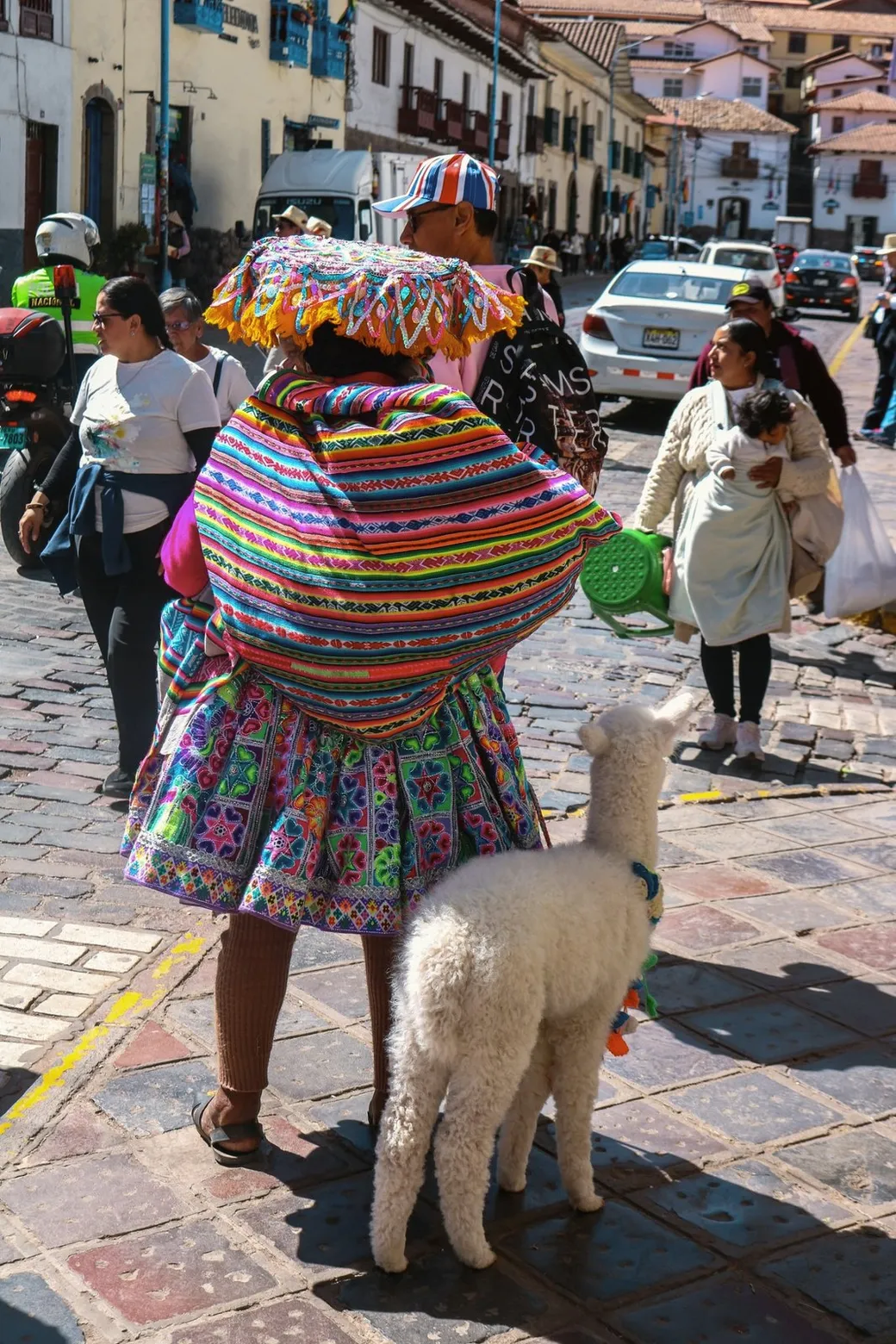
Agreeing first matters. In August 2026, Peruvian press reported that the city's municipal patrol got the money back for a visitor who said she had been asked for 50 soles after photos with an alpaca on a street in the historic center. The municipality used the case to ask for care with the animals used in activities aimed at tourists. If you would rather not pay, a smile and a no thank you are enough. If you do pay, small bills in soles make it simple, and the same habit helps at markets and with street vendors across the center. If you want a close photo of anyone in particular, ask first.
Evenings, drinks, and ceremonies
Canada warns that drinks, snacks, and cigarettes can be drugged in Peru, and the UK reports deaths and serious illness from alcoholic drinks containing methanol. Buy your own drink, keep it in sight, and do not accept drinks from strangers. Canada adds that thieves sometimes pose as police officers to gain the trust of their victims. The UK says sexual assaults are infrequent but do happen, mostly in the Cusco and Arequipa areas.
Ayahuasca and San Pedro ceremonies are offered to visitors in Peru. The US tells its travelers not to take ayahuasca, the UK says people have become seriously ill and in some cases died after taking part, and Canada advises avoiding these ceremonies.
Altitude, the part people underestimate
Cusco sits at about 3,400 meters, according to UNESCO. The US CDC says altitude illness can affect any traveler who sleeps above about 2,450 meters without acclimatizing. Our catalog's advice is to adjust slowly and use the first morning to settle in, since most day trips start early. Ask your doctor before the trip about prevention. If symptoms get worse despite rest, the CDC's advice is to descend and get medical help.
Take the first day slowly, and the rest of the week goes better.
When plans change
In early October 2026, trains to Machu Picchu were suspended after an incident between two trains, and days later a breakdown left passengers stranded for hours. A dispute over the bus up to the citadel flared more than once in 2025 and 2026. Canada notes that demonstrations, strikes, and derailments can disrupt the trains, and that violent disputes between communities regularly disrupt access to Rainbow Mountain, so confirm with your tour operator that it is open. Keep a spare day after Machu Picchu if you can, and check with your rail operator the day before.
Numbers to keep
The emergency numbers in Peru are 105 for the police, 106 for the SAMU ambulance service, and 116 for the fire brigade. iPerú, the national tourist assistance service, answers WhatsApp messages at +51 944 492 314, around the clock.
We wrote about the train day in Machu Picchu from Cusco in one day and about the seasons in The best time to visit Cusco. Our free routes for 3 days, 5 days, and 7 days in Cusco are built from the same catalog these notes come from.
Worth knowing
- From January to November 2025, Machu Picchu received more than 1.4 million visitors, about 4,200 a day, Peru's tourism ministry reports.
- Online, buy Machu Picchu tickets only at tuboleto.cultura.pe, and type the address yourself. A lookalike site was flagged in 2024.
- Cash is still king. Cards work in central spots. Keep some cash for taxis, markets, and tips.