Cusco/Destination guides
What to eat in Cusco
The city cooks with what the Andes grow. The plates, the market, and the tables we checked.
At a glance
- MARKET
- San Pedro, since 1925
- POTATOES
- Thousands of varieties
- FEAST DISH
- Chiriuchu, Corpus Christi
In this article
Most of what you eat in Cusco begins within a day's drive of it. Potatoes from the high fields, corn from the valley below, fruit carried up from the lowlands. A few plates come from farther away, from the coast and from the Chinese kitchens of Lima, and Cusco cooks those too. Here is what to look for, and where we go for it.
Start at the market
San Pedro has fed the city under one roof since 1925. Local tradition credits its iron frame to Gustave Eiffel. Inside are the aisles Cusco uses for its own shopping: grain dried on the altiplano, cheese, bread, herbs, and long counters of juice stalls. Peru's Ministry of Culture declared the market part of the nation's cultural heritage in 2024.
Go in the morning, before the aisles fill. It is the clearest way to see what the rest of this guide is made from.
Potatoes and corn
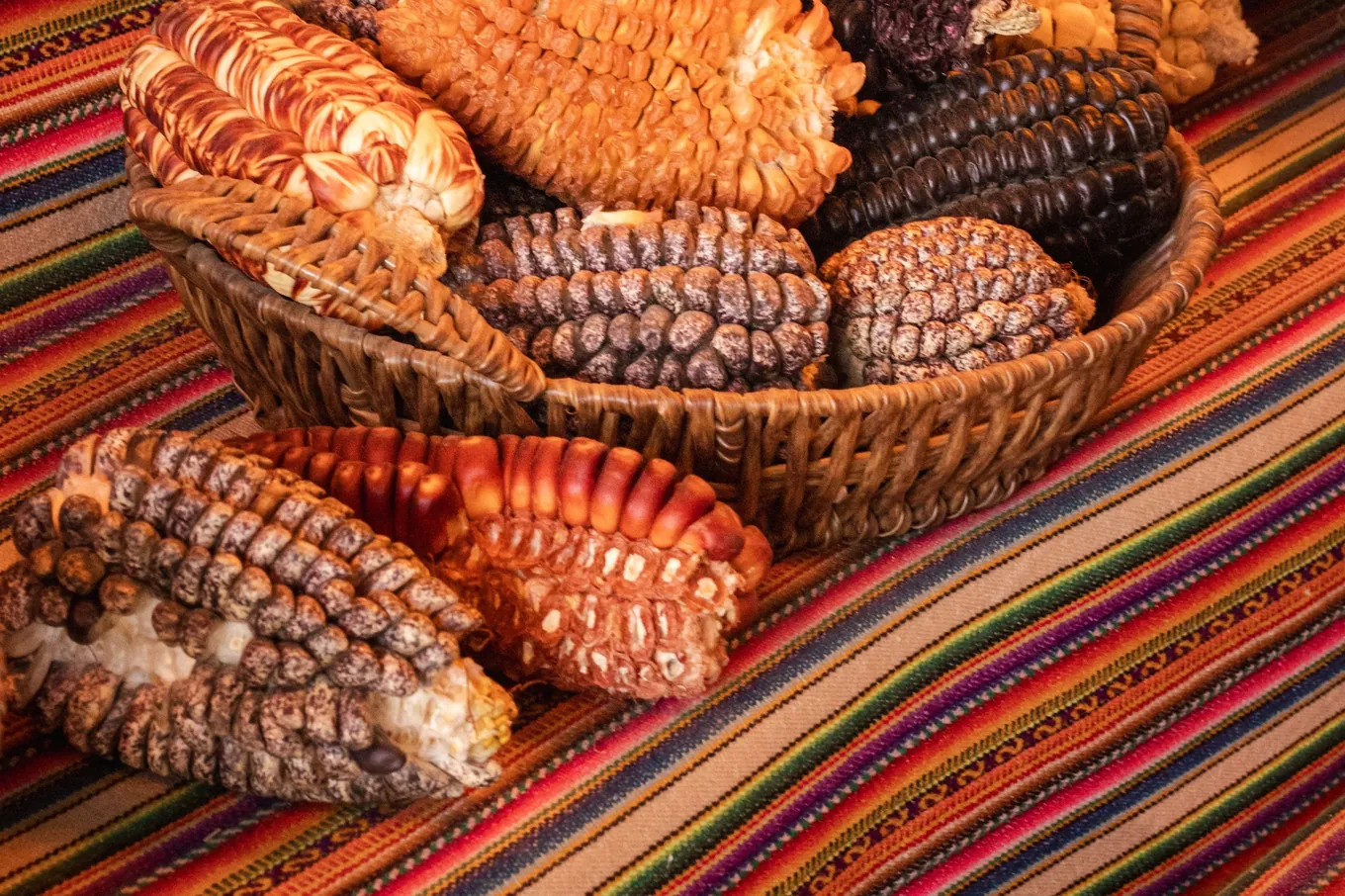
Peru grows thousands of potato varieties. On a Cusco plate they come boiled, roasted, mashed, or freeze-dried in the old way, in colors from pale yellow to near black.
Corn is the other half. The giant white corn grown in the provinces of Calca and Urubamba has carried a designation of origin since 2005. Corn reaches the table as choclo, the large soft kernels served on the side, and as cancha, kernels toasted until they crack.
In Cusco, the side dishes are where the Andes show.
Papa a la huancaína is the simplest way in. Boiled potatoes go under a cold sauce of ají amarillo, the yellow pepper that colors half of Peruvian cooking, blended with fresh cheese.
The plates you will meet
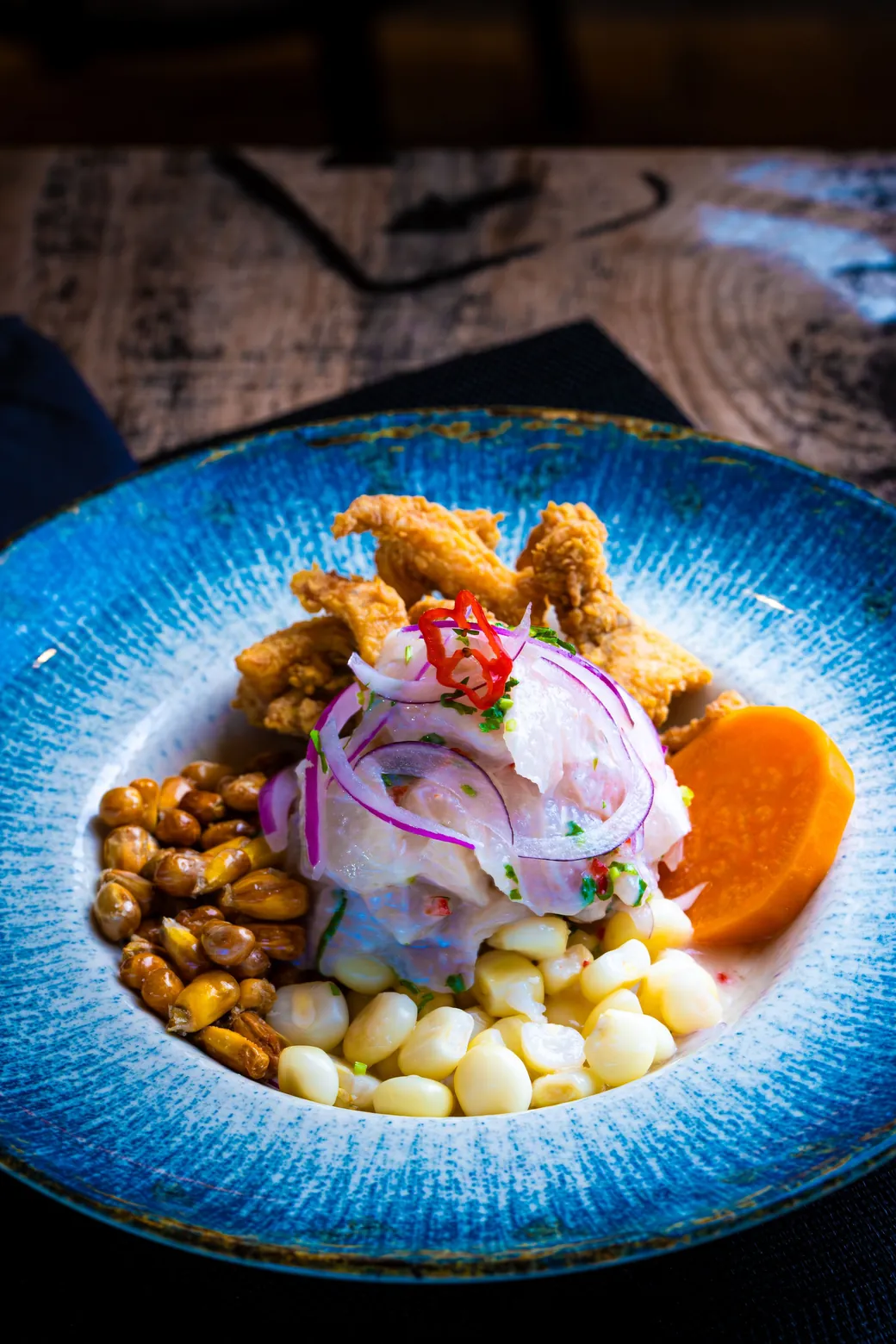
Ceviche comes up from the coast. Raw fish is cured in lime with red onion and chili, then served with sweet potato, choclo, and cancha, so the Andes reach the plate even here.
Lomo saltado is the Chinese side of Peru. Chinese workers began arriving in 1849, and their stir-fry became a national dish: beef, red onion, and tomato from a very hot wok, with soy, fries, and rice. Chifa, the Cantonese cooking Peru took in and made its own, has its own restaurants in Cusco.
Cuy, guinea pig, is feast food in the Andes, and it reached the cathedral before most visitors did. In the eighteenth-century Last Supper attributed to Marcos Zapata, the dish at the center of the table is usually read as cuy. Alpaca turns up on Cusco menus too.
A dish kept for one feast
Chiriuchu belongs to Corpus Christi, when it is sold by the plate in the historic center. The name joins two Quechua words, cold and chili. One plate holds cuy, chicken, corn tortilla, cured meat, cheese, rocoto, and toasted corn, a little of everything the region can bring together.
Corpus Christi moves with Easter and falls in late May or June. If your dates match, look for it. Outside the feast it is much harder to find.
Where we eat
Our Cusco catalog keeps twelve tables, each checked on Google and mapped. A few of them, by what they do best.
Pachapapa, in a San Blas courtyard, roasts meat in a clay oven and brings it out on ceramic platters. Inkazuela cooks Andean soups and stews in clay pots, upstairs near Plazoleta Nazarenas. Uchu sears alpaca at the table on volcanic stone. Inka Grill, a pioneer of Novo-Andean cooking, has balcony tables over the Plaza de Armas.
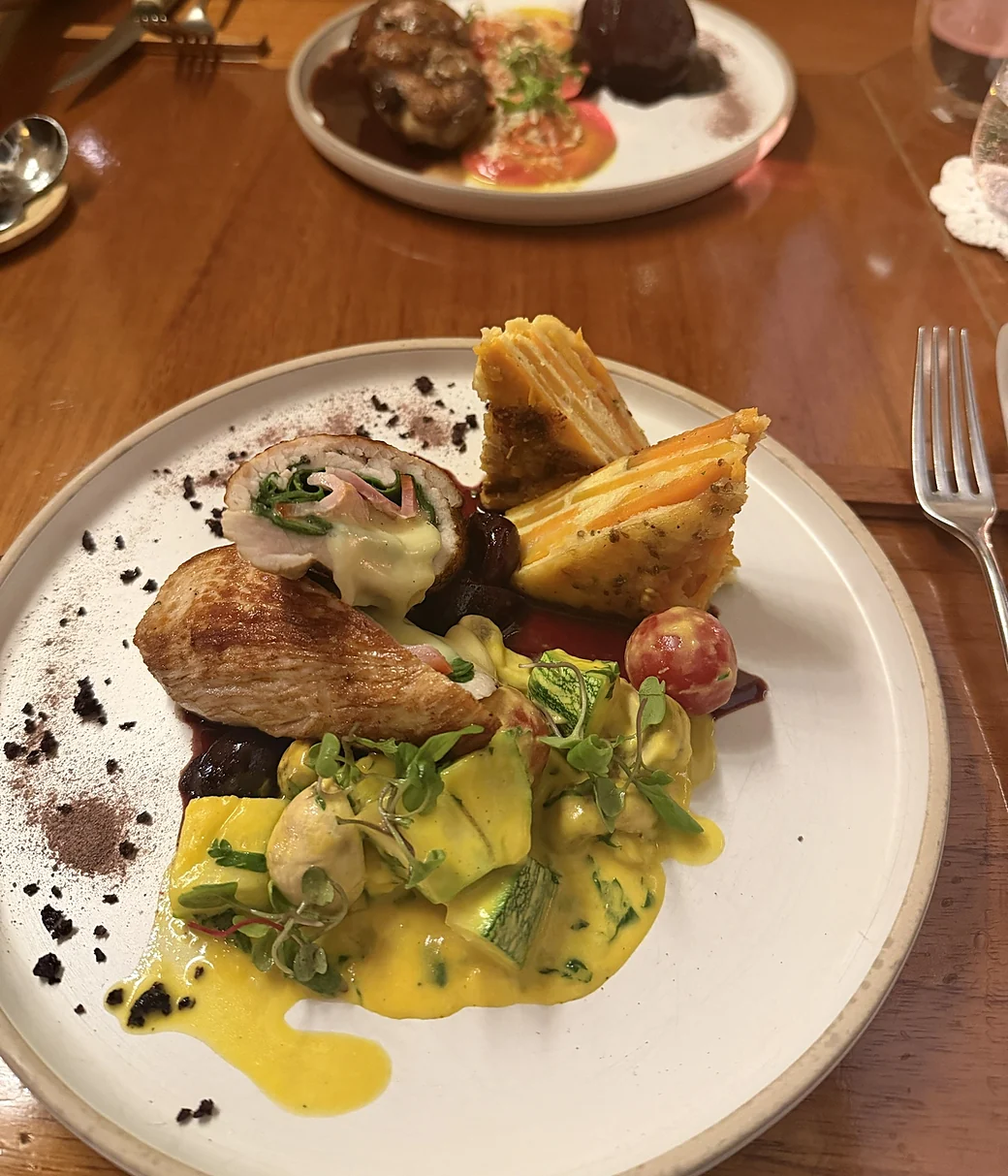
Nuna Raymi builds tasting-style plates around native crops, with Inca masonry lit by candles in the evening. Morena keeps ají amarillo at the center of generous family-style plates. Green Point, in a San Blas greenhouse, cooks entirely plant-based, and KION is the chifa above Calle Triunfo.
Learning it by hand
The cooking class starts at San Pedro with a guide, then moves to a kitchen where you cook three dishes. The meal you sit down to is the one you made.
At ChocoMuseo on the Plaza Regocijo, a two-hour workshop takes Peruvian cacao from the bean to the bar. The tasting comes first, and single-origin cacao from regions like San Martín tastes noticeably different from one region to the next.
The most useful meal of the week may be the one you cook yourself.
Tunupa, on the Plaza de Armas, serves dinner between sets of Andean music and dance. The room stays a table first and a stage second.
The first evening
Cusco sits at 3,400 meters, and the first evening is for eating lightly, drinking plenty of water, and leaving alcohol for another night. Most hotels offer coca tea, which may ease the altitude. We wrote about why in Why altitude changes the shape of a Cusco trip.
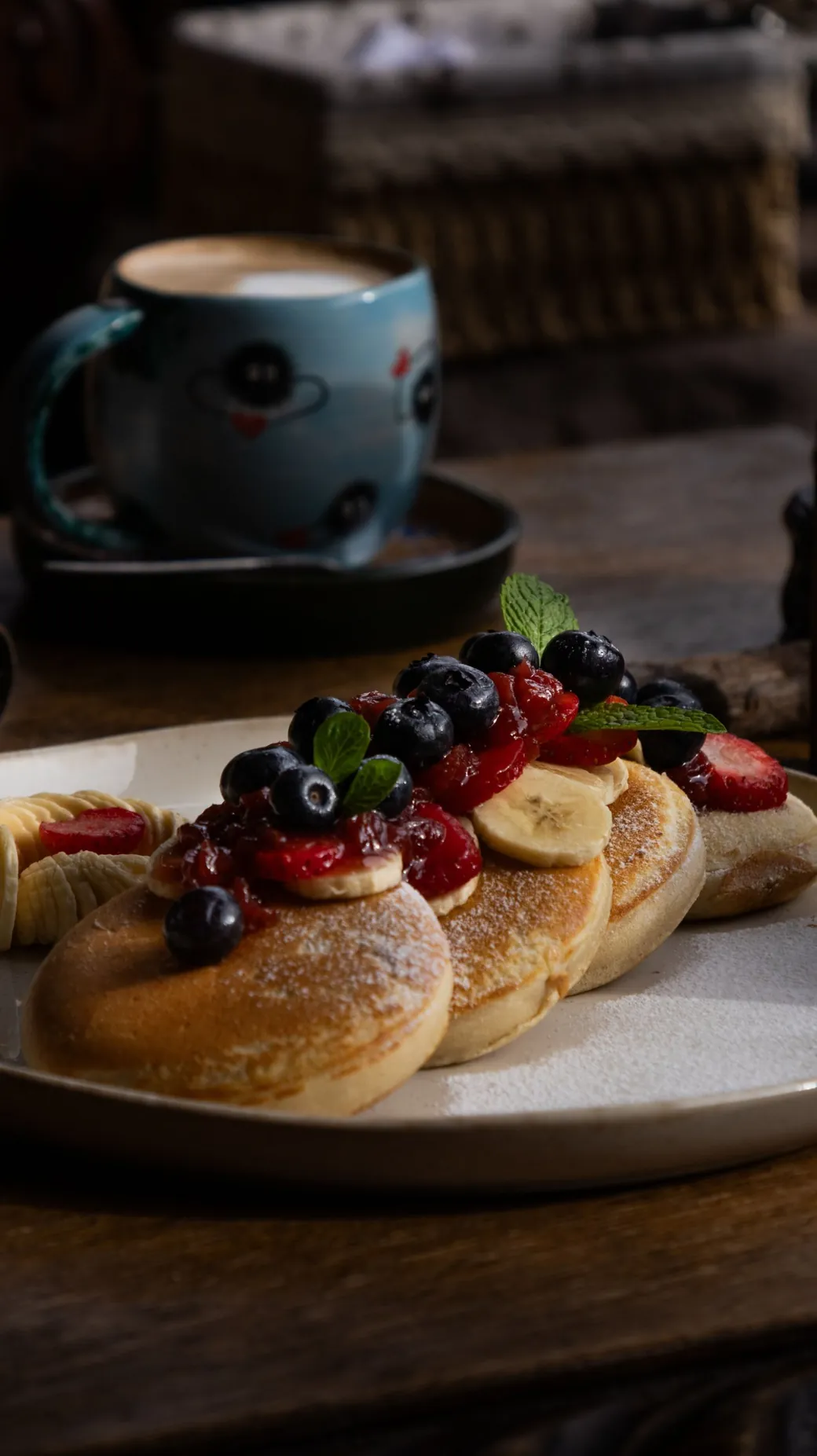
The mornings after are easier. San Blas, the old artisans' quarter, has cafés along its steep lanes, and a slow breakfast there sits well before a walk.
The cooking class, the chocolate workshop, and the Tunupa evening each have their place in our free routes for 3 days, 5 days, and 7 days in Cusco.
Worth knowing
- The potato was first domesticated around 8,000 years ago near Lake Titicaca, according to the International Potato Center in Lima.
- Go to San Pedro in the morning, before the aisles fill.
- Cash is still king. Cards work in central spots. Keep some cash for taxis, markets, and tips.